
PHOTO
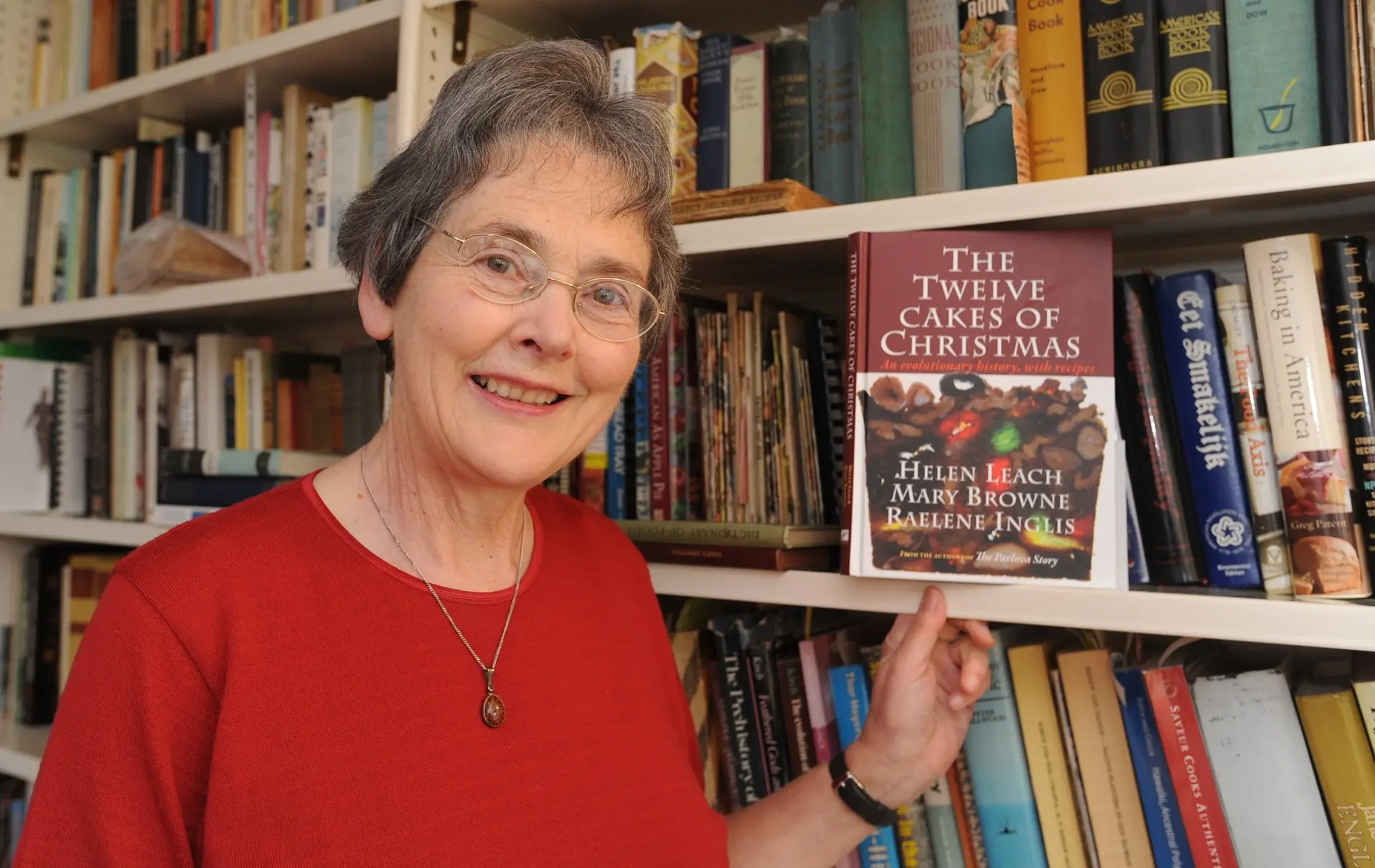
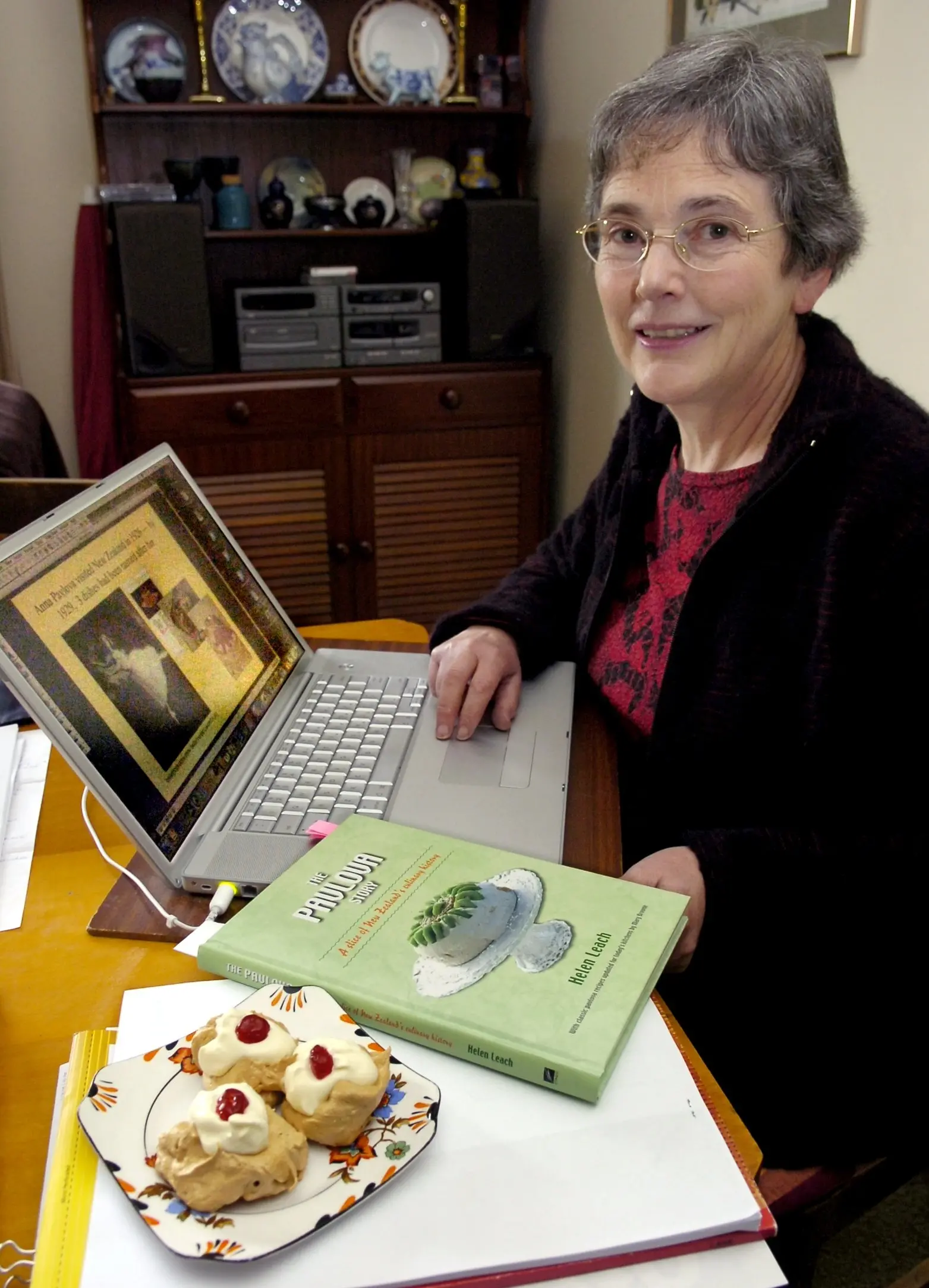
New Zealand and Australia have been arguing over the origins of the beloved pavlova for decades but that never fazed Helen Leach.
The anthropologist, who died aged 80 in Christchurch on January 23, was renowned for her research on the origin of pavlova and Christmas cakes, although that was only a fraction of her interests, which also included prehistoric horticulture, human domestication, the evolution of human diet, the history of cooking, the origins of recipes and the development of kitchens in 19th and 20th century New Zealand.
"Helen loved to take on controversial topics; the pavlova palaver is a good example of that," friend and colleague Dr Ian Frazer says.
She challenged traditions with another of her books Cultivating Myths: Fiction, Fact & Fashion in Garden History (2000).
"She was taking on the British establishment’s ideas about garden history and enjoying the intellectual challenge of dismantling long-standing myths about gardens and garden history."
Born Helen May Keedwell in Wellington on July 3, 1945, she was the youngest of three daughters of Peggy and Harvey Keedwell.
Leach attended the University of Otago, studying anthropology in the 1960s and was the first woman to gain a masters degree by thesis in this field. Prof Ian Barber says her published thesis showed Leach’s critical mind and her belief that New Zealand archaeology was about more than the moa.
"In particular, she took issue with the idea that Ngāi Tahu were simply hunters and gatherers. She said, among other things, that this was simply too general a concept to work. For Helen, there was much more nuance and complexity in that economy than was captured by that simplistic term: hunters and gatherers."
She wanted to know how the first Polynesians and later Māori had adapted to the temperate climate of the country, a thread of research she followed throughout her career.
"That was what really stimulated Helen, I think, and is an incredibly important legacy of her work."
Leach was appointed to the university’s staff in 1972. She completed her PhD in 1976, again the first woman at Otago to do so in anthropology.
She served for many years as head of the anthropology department, gaining full professorship in 2002. On her retirement in 2008, she was awarded the title of Professor Emerita.
Barber, Leach’s first PhD student, describes the major impact of her work on food production and the innovation she brought to the research. That work led to a Rhodes Visiting Fellowship, which she spent at St Hildas College Oxford in England.
In 1984, she published One Thousand Years of Gardening in New Zealand, exploring early Polynesian and later Māori, gardening and horticulture. Her own collection of New Zealand-published community cookbooks became the subject of a three-year Royal Society of NZ Marsden grant in 2005.
From that work came the book From Kai to Kiwi Kitchen: New Zealand Culinary Traditions and Cookbooks in 2010, which she co-wrote and edited, and a year later, The Twelve Cakes of Christmas: An Evolutionary History, with Recipes, co-authored with her Marsden colleague Raelene Inglis and sister Mary Browne.
Leach’s most recent book was Kitchens, The New Zealand Kitchen in the 20th Century, the engrossing history of the domestic kitchen during a period of changes in technology and globalisation.
Twelve Cakes was not the first book she wrote with a family member. Her collaboration with sisters Mary Browne and artist Nancy Tichborne (now deceased) began in the 1980s. Their books include The Cooks Garden, The Cooks Herb Garden, The Cook’s Salad Garden and The New Zealand Bread Book.
In 2008, she received a Garden History Award from the Royal New Zealand Institute of Horticulture for contributions to horticultural history and conservation. She was an Associate of Honour of the Royal New Zealand Institute of Horticulture (AHRIH), and a Fellow of the Royal Society of New Zealand (FRSNZ).
In 2018, Leach was appointed as an Officer of the New Zealand Order of Merit (ONZM) for services to culinary anthropology.
"Helen’s work is, without question, some of the most important produced in New Zealand on how technologies of food production and gardening can and should be used to direct us towards a more sustainable future in modern environments impacted by change," Barber says.
Leach was an inspiring role model for female students and her academic contributions motivated many.
"Helen was an important mentor for many of us. She really has been an extraordinary model."
Her former husband of 10 years, Prof Foss Leach, described her as the person people went to if they needed to sort out difficult "stratigraphic" problems.
"She was greatly respected for this."
Daughter Katie describes her as an incredibly supportive mother and teacher.
"She was a great believer in life skills. She taught me how to cultivate, grow and cook vegetables, darn a stocking, change a lightbulb, ride a bike and drive a car.
"She respected almost every choice that I made, even when they were ridiculous. She just wanted me to have adventures, and I could talk to her about absolutely anything."
Katie also remembers her mother’s insatiable curiosity.
"You couldn’t take Mum out for a simple picnic without her trying to find a midden or digging around in the dirt looking for clues to the past.
"She was also a true eccentric with a marvellous sense of humour. She used to say that if reincarnation turns out to be true, she would like to come back as a duck and live in the Dunedin botanical gardens where she would be safe from hunters and well-fed by the tourists."
It is perhaps not surprising that she would choose a duck, because she loved all birds.
"We referred to her as the bird lady of Opoho," Katie says.
"A small fortune was spent each week buying seeds and syrup for all the tuis, bellbirds, blackbirds and wax-eyes who attended her garden. She was almost pathologically kind-hearted to birds, spiders ... all forms of life, really. She couldn’t even pull out plants that had self-seeded in the wrong place in her garden. She felt that if they had gone to the trouble of trying to live, they had a right to life."
Leach was a supporter of many different organisations such as the Hocken Library, Dunedin museums and the Dunedin Botanic Garden. She was a devoted admirer of the university’s music department, attending lunchtime concerts week after week, and following the careers of students for years.
She was also known for her regular lunchtime soirees at the university’s staff club.
She will be remembered for her many contributions to academia, horticulture, publishing, and as a lifelong teacher and mentor to generations of students.
As friend and colleague, pro-vice-chancellor humanities Hugh Campbell says "Helen has taken with her so much knowledge but has left a lot of it behind as well".
Leach is survived by her daughter Katie, granddaughter Sophie, birth-daughter Janey, stepdaughter Penny, ex-husband Foss and sister Mary Browne. — Rebecca Fox