
PHOTO
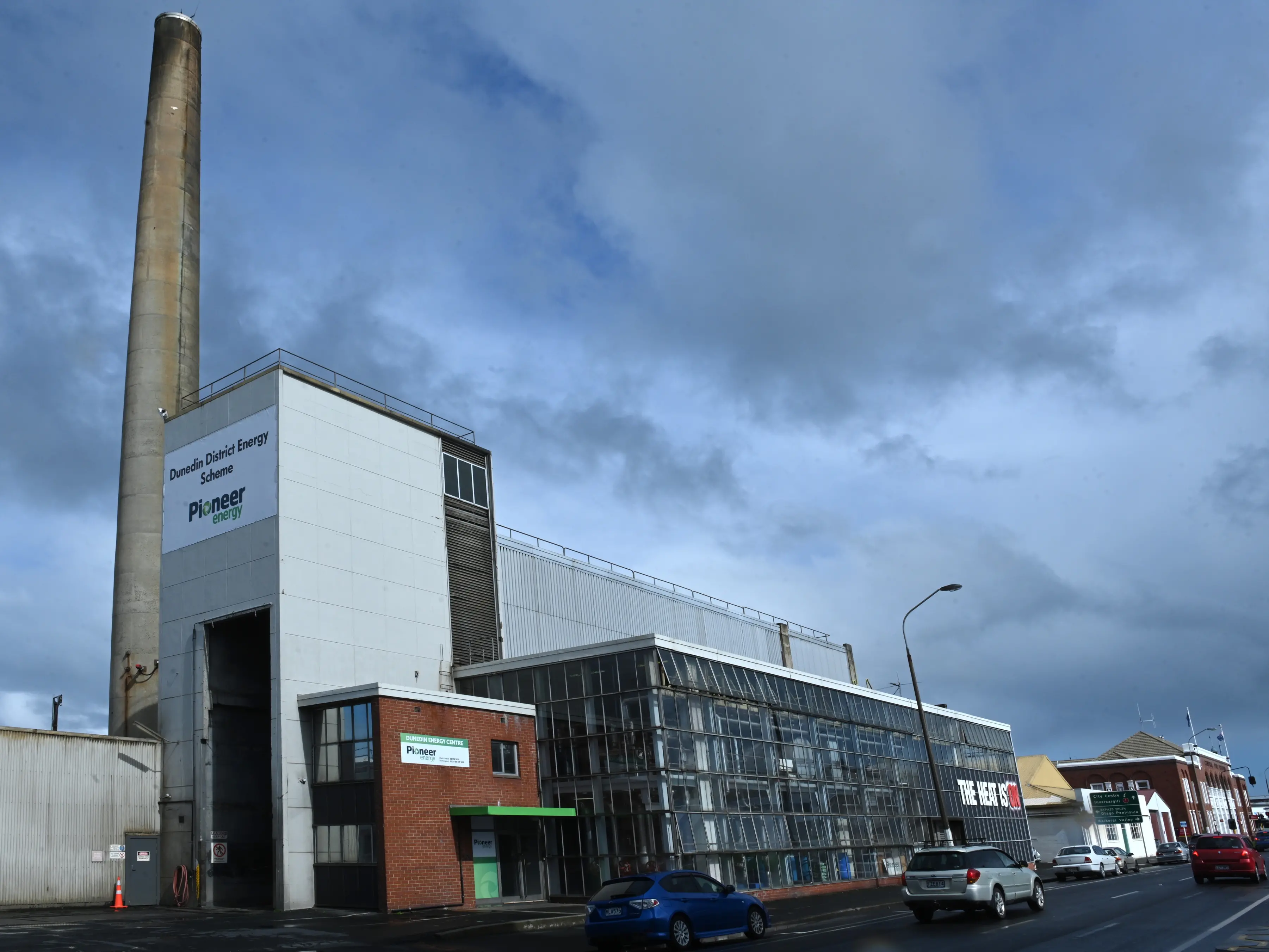
A plan to heat central Dunedin buildings with the biggest eco-heating scheme in New Zealand is set to advance to its next stage.
The system would replace the coal-fired Dunedin Energy Centre with one run by biomass, woodchip that can be sourced from local forestry residue, which has emerged as the preferred energy source.
The Dunedin Energy Centre heats the Dunedin Hospital and University of Otago buildings, and until recently, heated Cadbury.
Such boiler systems distribute hot water around a piped network, so individual buildings can use it for air conditioning or domestic hot water.
The new system could run along George St in a big expansion of its reach.
The Dunedin City Council yesterday said it would not release a recently finished business case on the scheme to the media, as it contained confidential information, but provided some information from the business case.
The scheme was announced last last year, when the council, university, Southern District Health Board and Ministry of Health signed a Memorandum of Understanding to work together on the project.
It seems while the new hospital will use the system, the health sector does not want to be a big player in its development.
DCC energy plan co-ordinator Jeremy Baker yesterday said an indicative business case had been completed by Stantec, the consultant hired to do the work.
Each of the four organisations would now review the report and consider its next step.
''There would have to be discussions around commercial arrangements.''
In the case of the council, a report would go to councillors soon with options and recommendations about how to proceed. He expected the other organisations would be doing the same.
Mr Baker said the plan took a high-level look at the project, laying out plans for an energy plant and energy centre, their size, and equipment needed.
The business case demonstrated the economic and technical feasibility of the system, and biomass had emerged as the preferred energy source.
When biomass came from sustainably managed forests, it was a carbon-neutral fuel.
Timing was an issue for the project, particularly in terms of the council's plans to upgrade George St, which would include work on underground infrastructure.
''The way we're thinking about that is to incorporate planning for the distribution pipes, as we're planning for the George St works.
''We're going to make every effort to co-ordinate the pipe installation within the other infrastructure works that are going on to minimise disruption and cost.''
It was too early to say where a new boiler house would go, once the Castle St building was no longer used.
Southern Partnership Group chairman Pete Hodgson, who is overseeing the hospital build, yesterday said while the new system was expected to heat the new hospital, modern building materials meant it would require a lot less heating than the current hospital.
He said he was not sure what would happen with the report within the SDHB or MoH, but his view was leadership for the project would rest mostly with the university and the city.
Mr Hodgson said the university was ''likely to be the main mover and shaker'' in terms of providing the energy centre itself, though it was possible another arrangement would be needed for the piping. That could be a business model with multiple shareholders, something he expected would be led by the city, as it was a bigger system running through much of the city.
A spokeswoman said the university would need to identify all other options possible for itself then initiate a ''business case process'' to assess them. That work was about to begin, and a business case was not expected until at least later next year.