

PHOTO
A matter of minutes — that was all Claudia Christie had left before meningococcal meningitis and sepsis would have killed her.
It was during a mock year 12 NCEA exam in 2022, that the then 16-year-old first felt a little feverish.
“I kind of had like chills through my body and I just thought, ‘oh no, I’m getting a bad cold.’ ”
When she got home, she took some paracetamol and tried to rest, but nothing helped.
Over the next 12 hours, her condition deteriorated.
“A headache started and then I started vomiting, and the headache just got worse and worse until after a few hours, it was so bad that I was screaming at my mum.
“I became sensitive to light, I was quite disorientated and I had this stiff neck.”
Following that, her whole body started hurting.
“It was like excruciatingly bad, which would have been the sepsis.
“I couldn’t move myself.”
It was at that point that her parents became so concerned, they took her to Dunedin Hospital.
“The A&E doctors told my dad later that at the rate my vitals were dropping, I was minutes away from not making it.
“That’s how close it was.
“Hearing that was extremely sobering — like, talking about it, it doesn’t feel real.”
She was immediately given antibiotics and put in an induced coma for about 36 hours.
After her condition had stabilised and she regained consciousness, she discovered her eyesight and hearing had been badly affected.
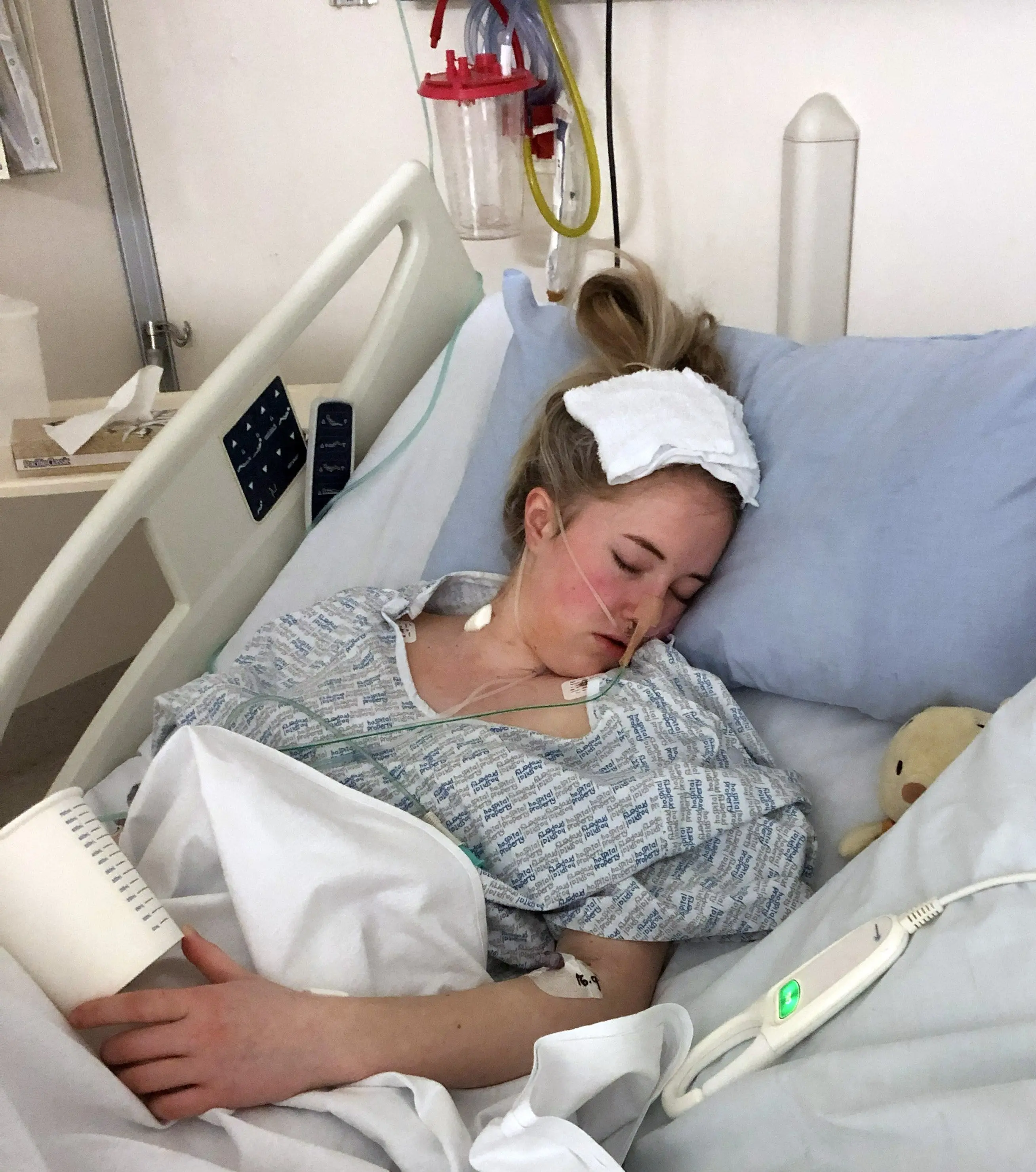
Fortunately, her hearing and sight have recovered, but she still suffers with extreme health anxiety and PTSD.
Despite the ordeal, she believed she was “one of the lucky ones”.
“The recovery was long and hard, and I thought I was going to have long-term complications, but I’ve been so lucky with how I’ve bounced back.
“So many others who have had meningococcal meningitis and sepsis, have ongoing complications.”
She knew other people who had had the disease, who had lost limbs, had organ failure and had to have organ transplants.
It was not until she regained consciousness in hospital that her doctors told her she had meningococcal meningitis and sepsis.
“I was like, ‘I’ve never heard of it’.
“None of my friends knew what it was either.
“It was something we just never talked about or anything.”
So now the University of Otago third-year marketing, management and human resources student takes time out of her busy study schedule to share her experience with Dunedin’s secondary school students.
“I’ve been going around the high schools and doing wee talks and presentations about what it is and encouraging them to get vaccinated, because it’s just not spoken about around high schools.”
She hoped that by telling her story and highlighting World Meningitis Day on Monday, it might inspire parents to have their children vaccinated against meningococcal disease.
Awareness was crucial, particularly knowing the signs and symptoms of meningitis was so important, she said.
Had she known the symptoms when she was 16, she believed she would have been more assertive about getting treatment earlier.
The Meningitis Foundation Aotearoa New Zealand said the disease was one of the country’s deadliest vaccine-preventable diseases.
Between 2021 and 2025, New Zealand recorded 240 cases of meningococcal disease, and 12 deaths.
Local research suggests more than one in five survivors are left with permanent disabilities, including deafness, brain damage and limb amputations.
As part of World Meningitis Day, landmark buildings across Otago and Southland will be lit up with purple lights in remembrance of those who have died from the disease.
The landmarks include the Oamaru Opera House, Dunedin’s Toitū Otago Settlers Museum and Forsyth Barr Stadium, and Invercargill’s HW Richardson Group Tower and Queens Park’s Feldwick Gates.
Symptoms of meningococcal meningitis and sepsis can include:
- Stiff, sore neck
- Aching joints
- Sensitivity to light
- Severe headache
- Drowsiness and confusion
- Feverish, sometimes with cold hands and feet
- Vomiting
- Convulsions or seizures
john.lewis@odt.co.nz