
PHOTO
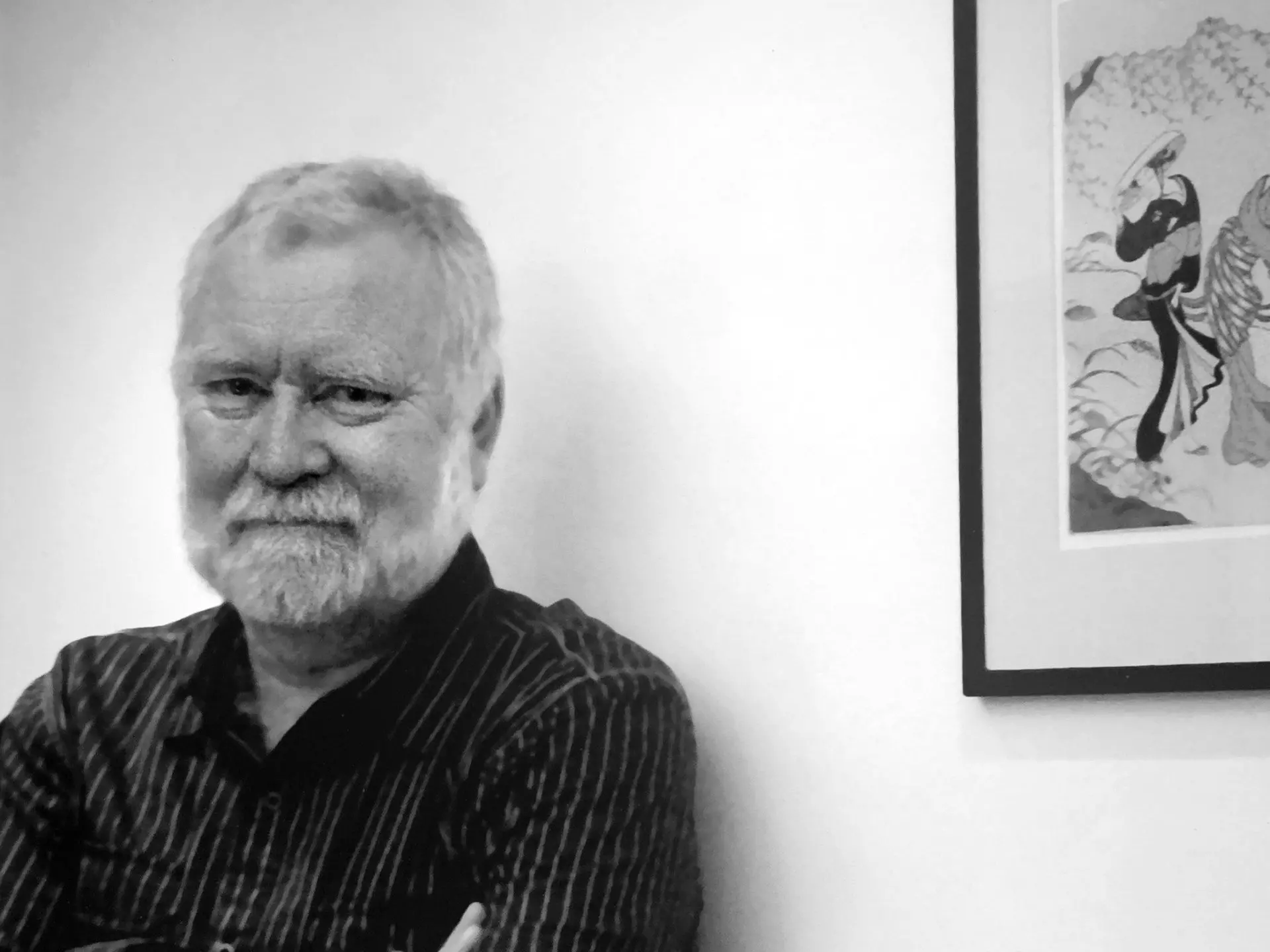
Emeritus Professor David Raymond Bell was the ultimate storyteller. You never had a quick conversation with him — he had a story for every occasion, and he loved a good debate.
All of his yarns had tangents, asides and loose connections, which would eventually lead to that wonderful phrase, delivered with a certain glint in his eye.
The University of Otago College of Education professor taught graduate and postgraduate programmes in teacher education, specialising in visual arts, art history and education theory.
He knew stuff about everything and he was never a quiet presence in a room. For those who knew him, the world now seems a little too quiet — less colourful — perhaps, more beige.
Prof Bell was born in Dunedin, on September 20, 1950 to Ailsa Margaret Bell (nee Paterson) and Raymond Linster Bell. He was the oldest of three children.
He contracted a mild case of polio when he was 2, but recovered before his brother, Stuart, arrived in 1953, and then his sister, Catherine, in 1956.
He started at Anderson's Bay School in 1956 but, a year later, his life took a difficult and defining turn when his mother gathered up the three children and left their volatile home.
While the family experienced profound upheaval, Prof Bell always had the utmost respect for his mother’s resilience and courage in making the call to leave with just two suitcases and £5 in her purse. He did not hold his father in high regard.
The family moved in with his grandfather, Alex Paterson, who became a stabilising and guiding presence during Prof Bell’s difficult early years.
During this time, he attended Arthur St School, and life found a rhythm again with Friday night library visits, Saturday art school classes and occasional weekends at Long Beach.
In 1960, the family moved into a state house in Lock St, Corstorphine, and he started attending Corstorphine School. It was there he was strongly influenced by some of his teachers.
The first was Moira Fleming, who provided project-based teaching, rooted in history and nature, with lots of research and drawing and writing. It planted the earliest seeds of his future intellectual and creative life.
In 1962 and 1963, while at Macandrew Intermediate, two more influencers stood out — Margaret Sharp, for her encouragement of painting and art; and Harry Kerr, whose love of young adult fiction writing opened up new worlds for him.
During this time, his mother remarried, and he gained a stepfather — Jim Jury. This brought significant change and a more generous home life, improved stability, holidays and weekends at Pūrākaunui.
A new sense of optimism emerged for the family, and his mother fostered a love of literature and art by paying for him to have art lessons, membership of the art society, and tickets to theatre events.
Adding to his growing interest in the arts was his maternal grandfather’s business which imported goods from Japan. It had a range of weird and wondrous objects, ranging from fabrics, umbrellas, toys, ceramics and lithographic prints among other things. The never-ending kaleidoscope of Japanese culture permeated his life.
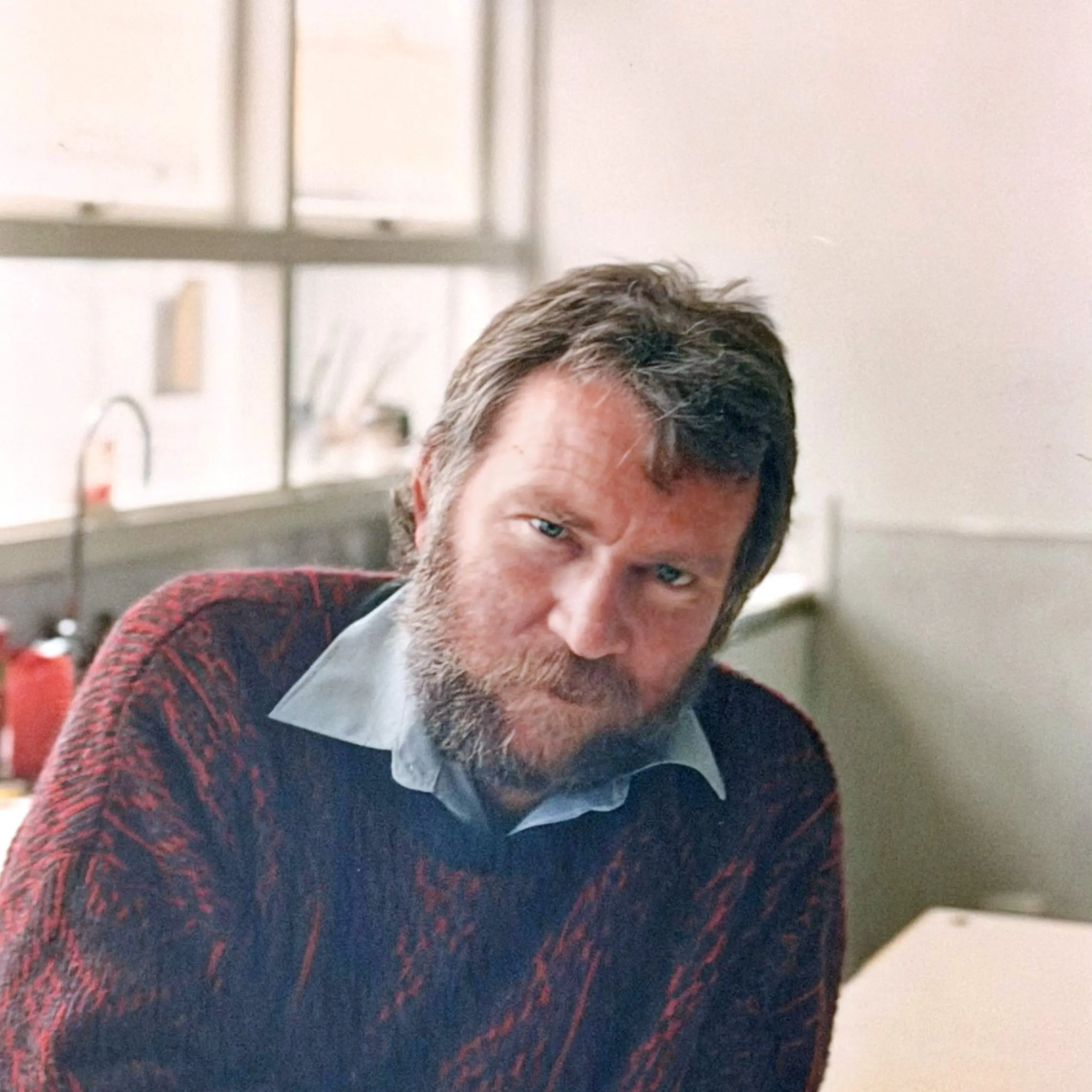
In 1964, he went to King's High School, and again, his teachers had a strong influence on his life — particularly John Huggett, a young teacher who opened intellectual and creative possibilities, fostering a lifelong love of literature, music, food and ideas.
The friendships he formed at King's lasted his entire life. One of his last visits, just a day before his death, was from a group of his King's High School friends.
In 1969, he entered the University of Otago on a secondary teaching studentship. He went on to study fine arts, discovering art history as a field that brought together his interests in storytelling, culture, and visual expression.
He also discovered Helen Ballantyne, a young education student who was about to start her studies at Dunedin Kindergarten College. She was the love of his life.
By December 4, 1971, they were married, and went on to have three children — Melissa, James and Thomas.
In 1975, Prof Bell went to the Christchurch College of Education where he completed secondary teacher training, alongside papers in history and philosophy at Canterbury University. He also worked at the Robert McDougall Art Gallery during his tech teaching placement.
In 1976, he launched his teaching career at Hornby High School, followed in 1977 by Waimate High School.
In 1982, the Bell family returned to Dunedin, where Prof Bell became head of art at King’s High School, a position he held for 14 years.
He clearly loved teaching. His knowledge and enthusiasm for art shone through, and he found ways of connecting with the wide range of boys that were at King's.
As a teacher, he focused on what mattered most — making outcomes better for students, through empathy and a clear sense of purpose.
He listened, he considered, and when he spoke, it carried weight — not because it was forceful, but because it was grounded, ethical and genuinely centred on people.
It was fair to say he loved food as well — particularly when it came to pies. When he was teaching at King’s, he had an encyclopaedic knowledge of the bakeries of South Dunedin.
But he also loved fine dining and diverse cuisines. Whether it was a pie, a Velvet Underground song, or a painting, he could think about it, he could appreciate it, he could share a thought or a novel idea about it. He was able to show people a new way of seeing things.
It was an immense gift, and it made him a brilliant educator.
In 1985, while still teaching at King’s, he contributed to University of Otago extension studies, the graduate diploma programme at the College of Education, and distance papers through Massey University.
He served on the School Certificate art marking panels, contributed to the National Curriculum Review, and played a key role in developing assessment practices in arts education.
In 1990, he was appointed to a University of Otago teaching fellowship in art history, and he embraced the research, publications, and national assessment leadership roles that came with it.
By 1993, he was serving on the Ministry of Education Curriculum Development National Advisory Board for Art.
His insatiable appetite for learning continued in 1996, when he completed a bachelor of arts in history, and postgraduate study in artistry and theory through a teaching study award.
Then in 1997, he became head of art education at the College of Education. His ‘‘rare quality of grace’’ was loved by his colleagues at the college.
He was popular because he celebrated their successes as if they were his own; he promoted them, encouraged them, and opened doors for them, with no thought that their successes would take anything away from him.
He also showed what it meant to be ethically centred in this work. He set a standard for how to behave, how to lead, and how to keep the focus where it belonged.
During this time, he also chaired the acquisitions committee of the Dunedin Public Art Gallery Society, where he later served as president and co-curated significant exhibitions, and published early monographs on artists and education.
About the mid-1990s, Prof Bell’s health started to show signs of deterioration. He was diagnosed with kidney disease, and in 1999 he had his first heart attack.
Most people would have taken the event as a cue to slow down. Instead, he started his doctorate and joined a new education development advisory team.
He completed his doctorate in 2003, but in the same year, his kidney function had deteriorated to the point where he needed to have dialysis for up to six hours a day.
Remarkably, he was able to continue his academic endeavours. Because he was stuck to a machine for long hours, he couldn’t go anywhere, so it allowed him to be more focused and his academic writing actually increased.
He produced significant publications on Japanese art, including the book Ukiyo-e Explained and Hokusai's Project: The Articulation of Pictorial Space.
He published five books and many dozens of articles and conference presentations on Japanese art.
In 2006, a major turning point in his health came. Prof Bell’s little brother, Stuart, donated one of his kidneys, which gave him 20 more years of freedom from dialysis — something he and his family were forever grateful for.
The transplant was a total life-changer. It restored his energy and vitality, enabling renewed engagement in teaching, research, and travel.
His service across many roles also continued, including the Dunedin Public Art Gallery Society, the Aotearoa New Zealand Association of Art Educators, advisory roles at the Dunedin School of Art and the Otago Kidney Society.
Another health issue slowed him down again in 2020, when he had to undergo a triple heart bypass during the Covid-19 lockdown — an experience he described as both ``a challenge and a renewal’’.
His drive, resilience and work ethic, amidst the health challenges he faced, was awe-inspiring.
During his career, he produced 161 research publications as part of his legacy.
And his work continues. Later this year, Personal Connoisseurship: Making Art Meaningful— a book he wrote with Dr Pablo Tinio and fellow University of Otago Emeritus Professor Jeff Smith — will be published.
Prof Bell’s life was characterised by a love of scholarship, of telling stories and of mentoring others. He was committed over the long haul to engagement in the arts — not just for students, but for those working alongside them.
That kind of sustained commitment is rare these days, and it has made a difference in ways that will continue long into the future.
For many, he was a kind of touchstone, someone whose judgement you could rely on, someone who helped steady the way forward.
In 2021, he received the Aotearoa New Zealand Association of Art Educators Award for sustained innovation and outstanding leadership in visual arts education. It was one of his proudest achievements.
Prof Bell was the most generous of humans — though rather unforgiving when it came to people who failed to return his books.
He died on April 29, 2026, aged 75. He is survived by his wife Helen; children Melissa, James and Thomas; and his grandchildren Nico, Max, Vivian and Roy. — John Lewis