PHOTO
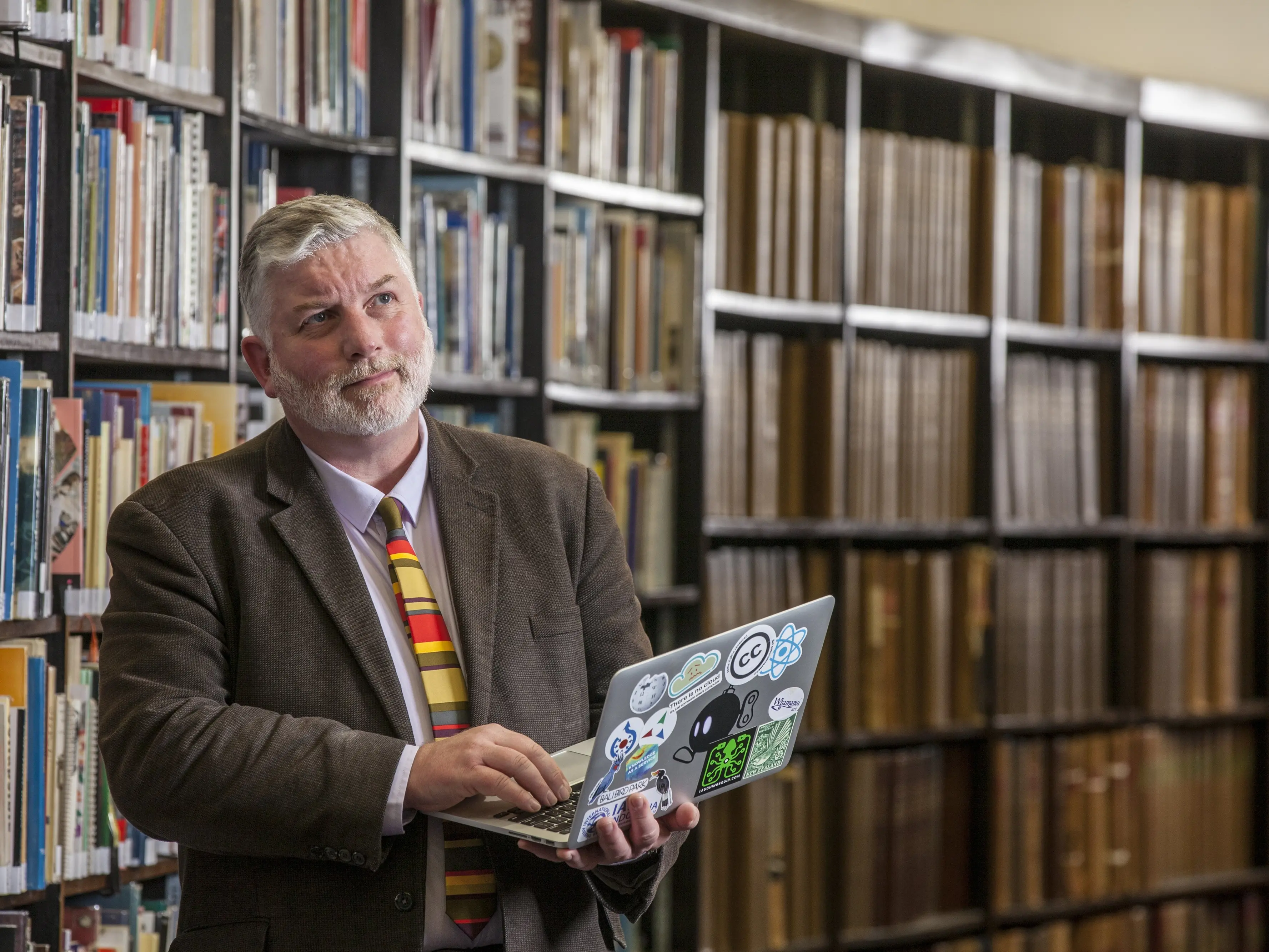
An unpaid army keeps the internet honest.
A quarter of a century after Wikipedia was founded, about 250,000 volunteer editors guard its 65 million articles.
Wikipedia editor Dr Mike Dickison will lift the lid on how the site defends itself against AI slop in a talk next week, part of the New Zealand International Science Festival’s Nanofest.
The free online encyclopedia was the "foundation stone" of the internet’s "information edifice", Dr Dickison said.
"It is now also one of the last corners of the internet that has not been polluted by AI-generated text.
"So it is extremely valuable in that it is entirely a human creation."
Because anyone could edit the site, many people assumed it was easy to fill it with nonsense, he said.
In reality, teams of anti-vandalism patrollers kept articles on watchlists and suspicious changes were quickly flagged.
These included simple shenanigans such as schoolchildren putting the word "poo" into a page.
Software could detect and undo that kind of mischief within seconds, he said.
More sophisticated hoaxers targeted the pages of high-profile people who had received an award or recently died, hoping journalists racing to Wikipedia would repeat fake details.
"So there’s attempts to vandalise it in that way."
While anyone could edit Wikipedia, every change had to cite a trustworthy published source.
"That is the strength of the encyclopedia.
"It is why it works so well."
Trying to write articles with a large language model was a fast way to get banned, Dr Dickison said.
"Wikipedia is actually very resistant to any kind of AI."
The companies that created large language models such as ChatGPT were "incredibly dependent" on Wikipedia.
"It is one of its main sources.
"These are multibillion-dollar companies that are reusing content that was created for free by volunteers in their spare time over 25 years."
Dr Dickison hoped to encourage more people to become involved in editing pages, in particular to ensure a wider balance of articles.
A group called Women in Red was devoted to creating biographies about women, Dr Dickison said.
The name came from the red colour of a Wikipedia link that led nowhere because no article existed.
"They are slowly shifting the gender balance of articles about people back away from this overwhelmingly male bias."
Another initiative aimed to work with Māori organisations to help people see the worth of Wikipedia as a public face for te ao Māori.
"To help train up editors so that they can take some ownership over this."
Wikipedia’s greatest asset remained its huge pool of human editors.
"Because it is a volunteer activity you can recruit so many more people than you could possibly if it were an organised professional encyclopedia.
"And that, amazingly, is why it has succeeded so well," Dr Dickison said.
Nanofest 2026
How to Vandalise Wikipedia with Mike Dickison
Friday, July 17
5.30pm-7pm
Te Whare o Rukutia, 20 Princes St, Central Dunedin