



While the statistics are good news for the southern regions, surf lifeguards hoped it would not make the region’s swimmers "complacent".
Surf Life Saving New Zealand (SLSNZ) general manager Andy Kent said we were now just over halfway through the summer patrol season, and across the rest of the country, there had been a concerning rise in the number of rescues.
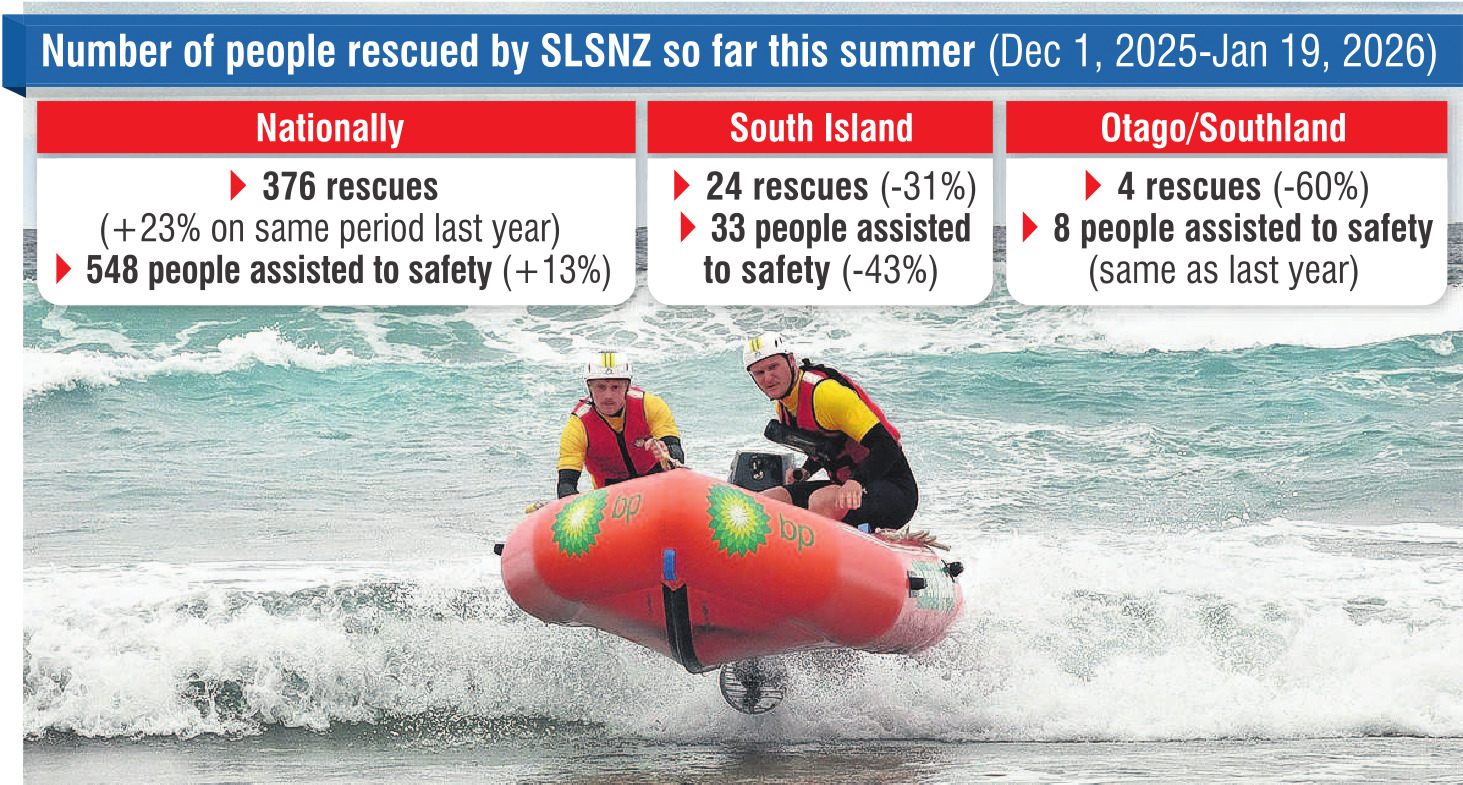
Nationally, there had been 376 rescues so far this season (up 23% on the same period last year), and 548 people had been assisted to safety (up 13%).
In the past weekend (January 17 and 18), surf lifeguards performed 24 rescues in the North Island — nine of them at Raglan, as festival-goers celebrated Soundsplash.
However, SLSNZ Otago Southland club support lead Felix Cook said there had only been four rescues in the southern regions for the season so far (down 60% on the same period last year) and just eight people had been assisted to safety — the same as last year.
Despite the significantly lower numbers, Mr Cook said there was still a long way to go before the end of the season.
"So we shouldn’t be complacent about our numbers.
"The weather in the last few years has turned really nice in that February and March period, and it seems to be when we do a lot of our rescues — especially on weekdays, evenings and after hours when there's no lifeguards on patrol.
The number of beachgoers would grow, particularly at unpatrolled areas, putting increasing pressure on patrols.
Many rescues occurred outside flagged areas, where conditions such as rip currents could quickly catch people out.
Mr Kent said proactive lifeguarding remained critical as the summer progressed.
"Our surf lifeguards are working incredibly hard to identify risks as early as possible, direct people to swim in the flagged area, and respond quickly when things go wrong.
"But the safest choice beachgoers can make is to swim at a patrolled beach and always stay between the red and yellow flags."
Volunteer patrols at southern beaches will finish towards the end of March.
Mr Kent recommended beachgoers use the Safe Swim webpage to check conditions, and to confirm whether a beach is patrolled by surf lifeguards.