

PHOTO
Big thinkers from across the University of Otago and around the country are sharing knowledge through a new sustainability initiative.
Launched this week, the Te Uru Institute for Sustainability brings together more than 100 researchers across 40 disciplines, with a strong focus on indigenous knowledge.
The areas of research covered include climate change, energy, public health, human behaviour, tourism, education, law, economics, business management, ecology, food, theology, geography, freshwater and marine science.
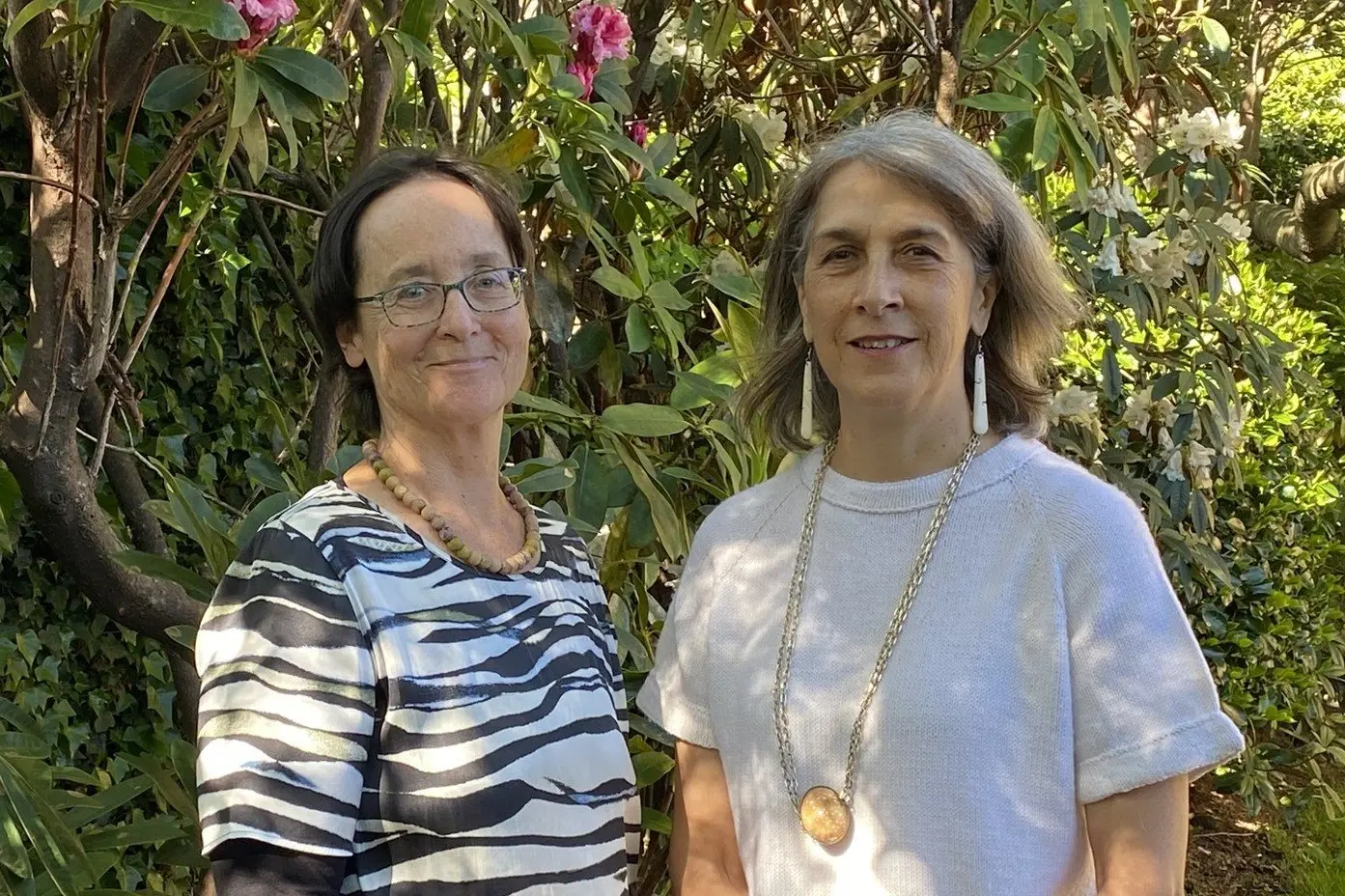
The Te Uru Institute for Sustainability is founded and led by co-directors Professor Janet Stephenson, Research Professor at the Centre for Sustainability Research, and Associate Professor Katharina Ruckstuhl, Associate Dean — Māori in the Otago Business School’s Te Maea: Māori and Indigenous Economy and Enterprise Network.
Professor Stephenson said the establishment of the Te Uru Institute for Sustainability was a great opportunity to encourage connection and collaboration among researchers to the benefit of all.
“There is so much knowledge held within the many research groups and the institute helps make it easier to share it,” she said.
Assoc Prof Ruckstuhl said the launch of the institute was funded through a grant won in last year’s University of Otago Sustainability Research Grand Challenge.
“And now that we are up and running, we are really keen to make progress and to get researchers sharing their knowledge with each other and the community,” she said.
“There are a lot of big issues to be solved, so we need to work together and to listen as well as talk to communities
“And we need to interact more with the people dealing with the issues day-to-day, whether they are communities, councils, or government agencies, and to be able to help with knowledge when needed.”
Prof Stephenson said the research groups involved in the institute were both local and global, which meant there were huge databases of knowledge available.
“Sustainability is a big tent, and there are issues across the board that people are concerned about,” she said.
With undergraduates, Masters and PhD candidates and Post Doctoral researchers also involved in the institute, it also had a strong focus on the next generation.
“We want it to highlight the importance of research to the wider community, not just as an individual pursuit,” Prof Stephenson said.
Assoc Prof Ruckstuhl said the Te Uru Institute for Sustainability also incorporated indigenous knowledge through strong Māori and Pacific caucuses, and support from local runaka.
“These are communities that are very much at the pointy end of sustainability issues, so their input is vital,” she said.
Prof Stephenson said, in its inaugural year, the Te Uru Institute for Sustainability had funding for 10 summer scholarships through partnership with the Dunedin City Council and Otago Regional Council.
“The students will be working on applied local projects, which is excellent experience for some of our future sustainability leaders,” she said.
As the Te Uru Institute for Sustainability gathers momentum, Prof Stephenson and Assoc Prof Ruckstuhl hope to expand its reach to include affiliated research organisations and business groups across the globe.
“We are just a seed at the moment, but we are growing and the future looks exciting,” Assoc Prof Ruckstuhl said.