
PHOTO
The ACT Party wants to wind up the Waitangi Tribunal, saying its contemporary inquiries have become increasingly ideological and expansive.
The party is campaigning on four reforms that it says will end the tribunal's contemporary jurisdiction and move the country on.
ACT leader David Seymour, who has previously branded the tribunal as "increasingly activist", said on Thursday that though the tribunal had made an important contribution - particularly in helping address historical grievances - the entity that existed today was different to the institution established in 1975.
"The original need for the Waitangi Tribunal has evaporated as our country has matured into a place with strong property rights, the rule of law, and restraints on the use of military power," Seymour said.
"The historical claims were clearly wrong to anybody; the government of the day illegally used military power to take away people's property. It won't surprise you I'm opposed to that, but it's not dealing with issues like that anymore.
"To have a Waitangi Tribunal that openly says 'well, actually, we don't think that the government is acting legitimately, despite putting in place perfectly legitimate elective policies', that goes beyond simply being an adviser".
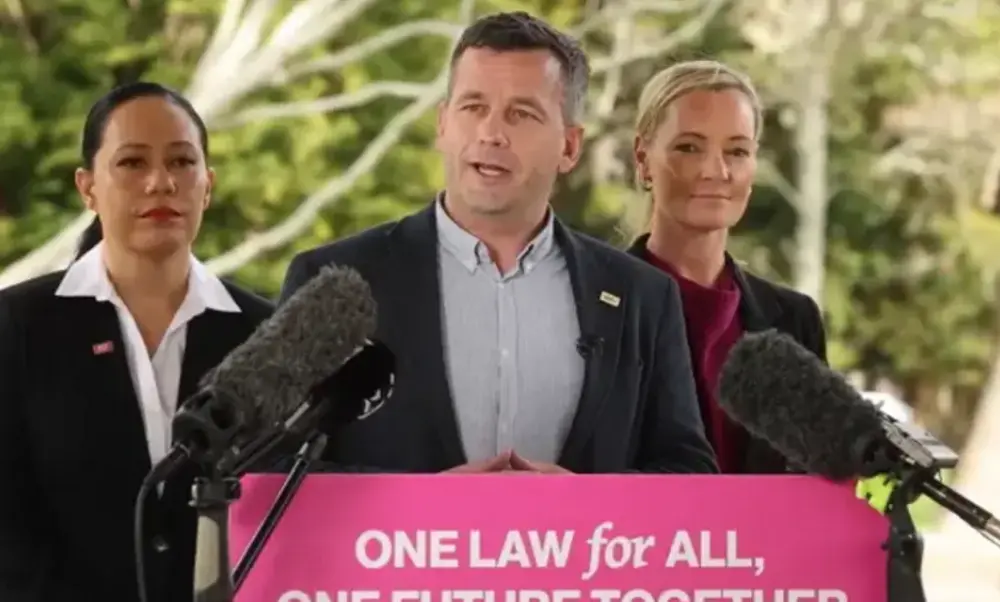
ACT's policy document said every historical claim lodged before September 1 in 2008 should be heard and resolved, but any lodged after would not be including contemporary or kaupapa claims.
"That was the time that Treaty settlements had to be lodged so that they could be settled," he said.
"There are some iwi - most notably my own Ngāpuhi in the Far North of the country - who have not yet come to a mandate amongst themselves to settle with the Crown, but we hope that as time goes on and as new generations come to the fore within Ngāpuhi, that it will be possible.
This would end the tribunal's power to inquire into contemporary government policy, conduct and decisions - a power which has been used more under this government than any other in history.
Seymour denied shutting that down would be an attempt to avoid further scrutiny.
"Not at all. The government has put in place its elected mandate in a democratic society... anyone is free to make recommendations, but we don't need a statutory taxpayer-funded organisation to do it.
"The allegations of breaches are things like 'there's not enough Māori involvement in geothermal energy... I don't believe that's a breach. We have in our country a system of courts and democratic governance that upholds people's rights, and it has evolved."
He said the tribunal had been "incredibly inventive in saying that Treaty breaches are still occurring" and pushed back on the idea a group with independent expertise was needed to identify what government actions may constitute a treaty breach.
"They're clearly not expert or independent. They appear to be on a mission that includes creating equity - well, I'm sorry, but no government in history has created equal outcomes for all people despite some pretty spectacularly disastrous attempts by socialist governments around the world."
Te Pāti Māori has a "bottom line" policy to amend the Treaty of Waitangi Act 1975 to make Waitangi Tribunal recommendations binding on the Crown, giving the tribunal more power to investigate and enforce breaches.
Seymour said that approach would make the Tribunal an unelected alternative governance system.
"That is an affront to every single New Zealander which - it shouldn't need to be said, but - includes every Māori New Zealander, who wants to be able to vote for the government that they want, and more importantly, vote out governments and policies that they dislike."
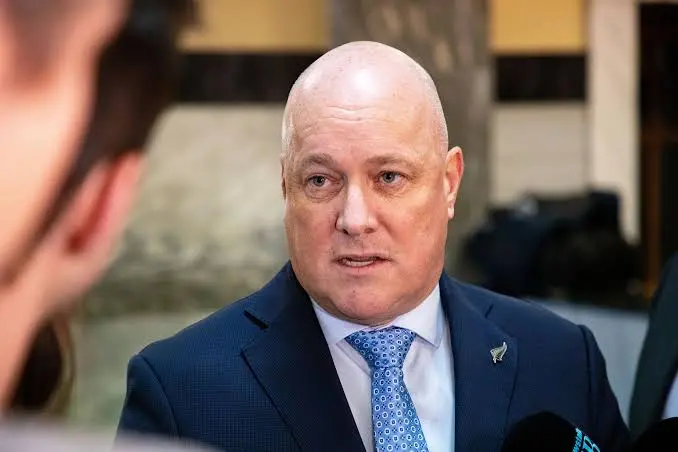
National's leader Christopher Luxon said he had not seen ACT's policy but the coalition took the Tribunal's advice onboard.
"As a government we listen to it and we have strong Treaty obligations ... the best way we can deliver those obligations is improving outcomes for Māori."
Luxon said good progress had been made for Māori in education, housing, and law and order over the past two and a half years.
The government has already launched a major review of the Tribunal's functions, but it is yet to be released publicly.
The review, which was part of National and New Zealand First's coalition agreement, promised to "refocus the scope, purpose, and nature" of the tribunal's inquiries back to their "original intent".
Newsroom has reported the unreleased review does not recommend a curtailing of the Tribunal's ability to launch kaupapa inquiries.
Luxon said the review was now with Māori Crown Relations Minister Tama Potaka, who would "have more to say on that in due course".
He did not want to predetermine the outcome of the review but said many commentators wanted the tribunal looked at as Treaty settlements came to an end.
"On either side of that debate there is a question as we get through Treaty settlements as to what the future role of the Waitangi Tribunal is."

Carwyn Jones, a lecturer for Māori Laws and Philosophy at Te Wānanga o Raukawa, previously told RNZ that by examining contemporary issues, the tribunal was focused on what the legislation intended, and it was unclear what the government meant by original intent.
"The historical claims are, of course, winding down, and in fact, the tribunal can no longer accept claims which relate to historical matters.
"So the tribunal, when it was originally set up, was designed precisely to assess contemporary Crown policy, law, action, through the lens of the principles of the Treaty," he told RNZ in August.
