PHOTO
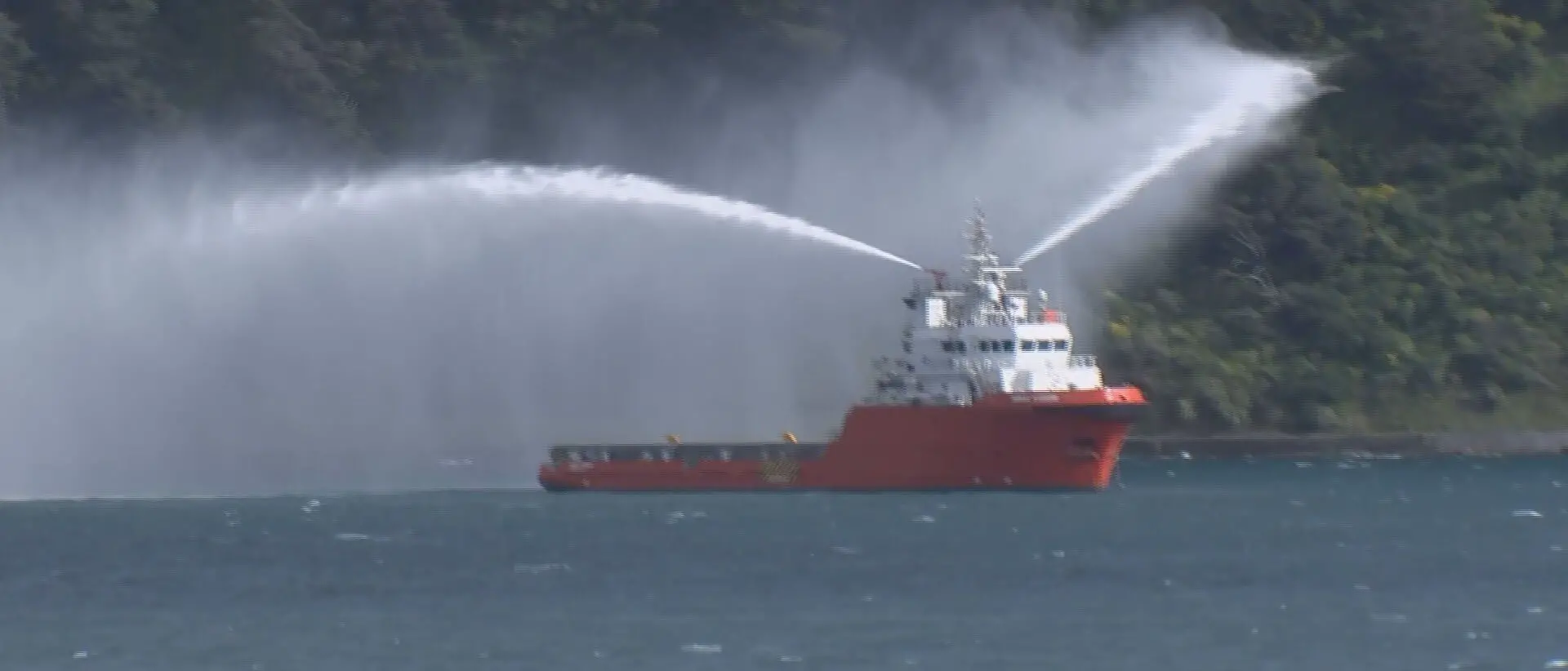
Marlborough’s mayor and the chairperson of the Greater Wellington Regional Council say not having a dedicated open-ocean rescue tug for Cook Strait is putting lives and economic lifelines in peril.
But Transport Minister Chris Bishop says their comments are “long on rhetoric and short on engagement with the facts”.
Cook Strait, between the North and South Islands, has been left without a tug capable of ocean rescue for more than a week.
The contract for MMA Vision was ended on February 4 by the government, along with plans for a permanent replacement in November after a $600,000 business case concluded that costs meant a dedicated ocean tug would reap little commercial benefit.
Instead, the responsibility to rescue any stricken ship in the strait - from ageing ferries to cruise ships and fishing boats - now falls on tugs from Wellington’s harbour or commercial options.
More than one million passengers and $14 billion worth of freight sail the strait each year.
In a letter to Bishop last week, Marlborough mayor Nadine Taylor and the Wellington regional council’s chairperson, Daran Ponter, said harbour tugs could not be relied on because they were not equipped or crewed for open water work.
In case of an emergency, the closest ocean tug would be at least five days away.
They urged the government to boost the emergency response in the area because human safety, financial stability and environmental health were at stake.
“The absence of a dedicated emergency tug or rescue capability in the Cook Strait poses unacceptable risks,” the letter said, adding the passageway was one of the most dangerous complex stretches of water in the world to navigate, especially in poor weather.
More extreme weather from higher ocean temperatures would amplify the strait’s treacherous nature.
“Until then, we rely on an ageing fleet of ferries, plagued by a well-documented history of breakdowns, to carry thousands of New Zealanders and visitors between the North and South islands,” Taylor said.
Ponter said enhanced safety features on the new Interislander ferries - arriving in 2029 - did not guarantee immunity from trouble.
“The Wahine was only two years old when it capsized and sank in the mouth of Wellington Harbour.”
A Cabinet paper submitted by Bishop in November last year said the business case concluded the risk in the Cook Strait was “very small” and did not justify buying an ocean tug, as the 23 incidents over the past five years were handled without government-funded towing capability.
There was only one case, where the Bluebridge ferry Connemara was left adrift for more than two hours after losing power in September 2024, that an ocean tug would be more suitable than the Wellington Port tugs, the Cabinet paper added.
Bishop told Local Democracy Reporting the commentary from Ponter and Taylor was “long on rhetoric and short on engagement with the facts”.
“I encourage them to read the detailed business case, which makes it clear that the costs of an emergency response capability are large and outweigh the benefits."
During its stint in New Zealand, MMA Vision towed stricken oil and chemical tanker Golden Mind to Timaru after it lost steering west of Stewart Island/Rakiura in September 2025.
It also pulled the Westland Mineral Sands barge Manahau to Nelson when it ran aground near Westport last August.
- By Justin Wong, Local Democracy Reporter
Local Democracy Reporting (LDR) is local body journalism co-funded by RNZ and NZ On Air