
PHOTO
While Oranga Tamariki is admitting fault and failure in the Tom Phillips case, police are pushing back on the finding that it could have been prevented or ended earlier.
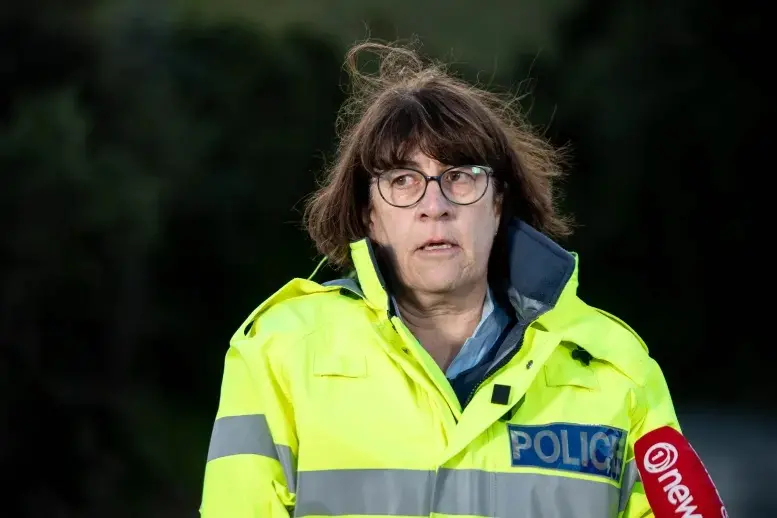
Police Deputy Commissioner Jill Rogers said she remained proud of what police investigators did to recover the children.
Phillips died in a shootout with police a year ago, nearly four years after disappearing from Marokopa with his children.
Government ministers apologised after the release of the damning report into the handling of the case on Tuesday afternoon.
Multiple instances of missed opportunities were found, including police failing to begin a search after disappearance and again after the discovery of Phillips' ute, failing to pass on details about Phillips' alcohol use and concerns about his safety with firearms, and Oranga Tamariki dismissing concerns raised by the children's mother and failing to inform the Family Court of those or the police investigation.
Agencies working together, the inquiry found, could have prevented the children's disappearance and brought them back sooner.
Oranga Tamariki chief executive Amanda Malu told Checkpoint host Lisa Owen they had "failed the children and the mother and older sisters".
"We did not listen and pay anywhere near as much attention as we should have to what the mother and sisters were telling us, and we didn't speak with our police colleagues anywhere in anywhere near enough detail," she said.
"This is one instance, and it had awful consequences for these children, and I'm deeply sorry about that. I do know that we have made a number of changes since ... that really addresses any concerns around implicit bias and ensures that we are taking the views of all family members into account."
Malu, who was appointed to head Oranga Tamariki in December, said there was still work to do there, "and that's why I am here".
"I understand the concerns, and it simply isn't good enough ... I am seeking some further answers."
She said she had not been chief executive when an affidavit from an older sister of the children was ignored by the social worker who received it.
"I can't speak to why they were ignored. I can tell you though that you know I I am absolutely blown away by their perseverance and the courage that they showed.
"It's not acceptable. We've been down this road before, and I'm not prepared to go down it again. I think we need to step up our game as government departments."
She had written to the children's mother and older sisters "giving a full apology to each of them" and was seeking further answers about the case.
Rogers said the report highlighted "occasions when we didn't get things right, but I will point out that it also highlighted just how complex this investigation was."
She acknowledged that did not excuse police failings in the case, calling the report a "learning document and a lessons identifying document", but pushed back on the idea the children's disappearance could have been prevented or ended early as the report claimed.
"We don't know that there would have been different outcomes. We had an extremely determined father there. He had nothing to lose, and so every activity that we did was couched in the full awareness of the risk that he posed," she said.
"We've publicly said that we accept the recommendations. But we are also aware the report acknowledges the effort and the diligence of those investigators and what they did over those four years.
"The outcomes, we just don't know what, and when it would have ended."
She said police regretted not following up a sighting of Phillips in May 2023, saying that had been a "golden opportunity" to narrow down the area he was in, but "it was never as simple as just going into the bush to get him out".
"It was picked up at a later stage by another officer ... it was too late but we don't know that that changed the outcome or the timing of when we recovered the children."
The discovery of Phillips' abandoned ute had been "assumed that that was another staged effort by Tom Phillips to divert us away from his activities".
Owen: "There's a few assumptions going on here, Jill."
Rogers: "There are, and I understand how that sounds when you add them all together. But what I would say is the report also highlights over the four years the extensive work that shows that despite some delays, the activities that the investigative team did do didn't bring up any of the results that people thought or assumed would come from a normal investigation."
Rogers acknowledged it was "stark reading" to see the magnitude of failings but said "this was a complex, unique, and never-anticipated event".
She said that did not justify the mistakes made, and there was "such a degree of sadness amongst those investigators".
Rogers: "Did we get some things wrong? Yes. Did we miss some opportunities? Yes. Were we slow to react to some things? Yes. But would it have changed the outcome? No.
Owen: "How do you know it wouldn't have changed the outcome ... you can't know that."
Rogers: "Yeah, our mission was always to recover the children. That was always our priority, and you know I remain proud of what those investigators did in recovering the children."
