

PHOTO
Global warming beyond 1.5°C is now inevitable and the world must limit the 'overshoot' as much as possibly before reversing it, a new report says.
The UN Environmental Programme report, 'Limiting Overshoot', is the first UN-level report to acknowledge that keeping warming below 1.5°C is no longer possible, even if countries honour all of their current emissions pledges.
Best-case scenarios now showed global temperature increases would peak at about 1.8°C - likely beyond the threshold for some 'tipping points', like the loss of the world's coral reefs.
The world needed to make deep emissions cuts to limit that warming peak and its duration as much as possible, and ramp up carbon dioxide removal from the atmosphere, the report said.
Getting to carbon-zero, and then to carbon-negative, might be able to bend the temperature curve back below 1.5°C by the end of the century, it concluded.
"This is by no means an acceptable or preferred pathway; it is simply the best remaining option."
Years of inaction had already exposed the world and its population to unavoidable changes that would have to be adapted to, the report said.
Global temperatures have increased by about 1.4°C since the pre-industrial era. In 2024, the annual average exceeded 1.5°C for the first time.
"Extrapolating current trends, global warming may reach 1.5°C around the end of this decade," the report said.
That would keep increasing until emissions reached net-zero.
"Every five years of high emissions adds 0.1°C to peak warming."
Under the Paris Agreement, countries have pledged to limit warming to well below 2°C and pursue efforts to limit the increase to 1.5°C.
A 2024 International Court of Justice opinion confirmed that 1.5°C was the primary target.
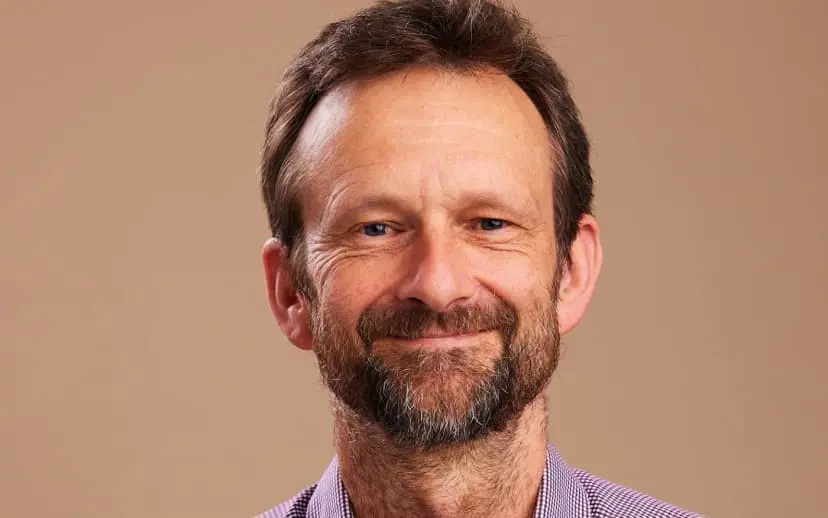
New Zealand climate researcher Andy Reisinger, one of the report's lead authors, said 1.5°C was "not a magic number", but it was what the world had agreed was needed to avoid the most catastrophic consequences of climate change.
"Even a world at 1.5°C isn't safe at all, as we're seeing from the heat waves, from the massive flood events that we're seeing around the world," Reisinger said.
"The risks keep escalating as we go beyond that."
A higher peak temperature could mean faster sea-level rise, a greater likelihood of ecosystem collapse, more extreme heat and wildfires, and profound changes to the world's icy regions, the report said.
Small island nations and low-lying cities "face partial or complete submersion", and food security and water supplies would be affected.
Even if temperature increases could be returned to less than 1.5°C, many communities would face "irreversible losses and permanently changed conditions".
That was not a reason to give up on returning to the 1.5°C target, though.
"Avoiding every additional fraction of a degree of global warming and reducing the time in overshoot decrease risks and damages and increase the chances of bringing temperatures back down," the report said.
"Overshoot is therefore not an argument for resignation, but for urgency."
The "first and immediate task" was to ramp up cuts to greenhouse gas emissions, Andy Reisinger said.
"There's no two ways about that."
Globally, the focus should be on reducing carbon emissions from energy use, transport, and deforestation - things the world already had the solutions for, he said.
"We're seeing the success stories of solar combined with batteries, electric cars, that demonstrate that it's not all a cost."
New Zealand already had high renewable energy use, but it should be maximising that, he said.
"In New Zealand, transport is still a very large emissions source, and - especially because of our renewable energy electricity generation - rapidly accelerating uptake of EVs instead of relying on fossil fuel-powered cars would be a significant area of improvement."
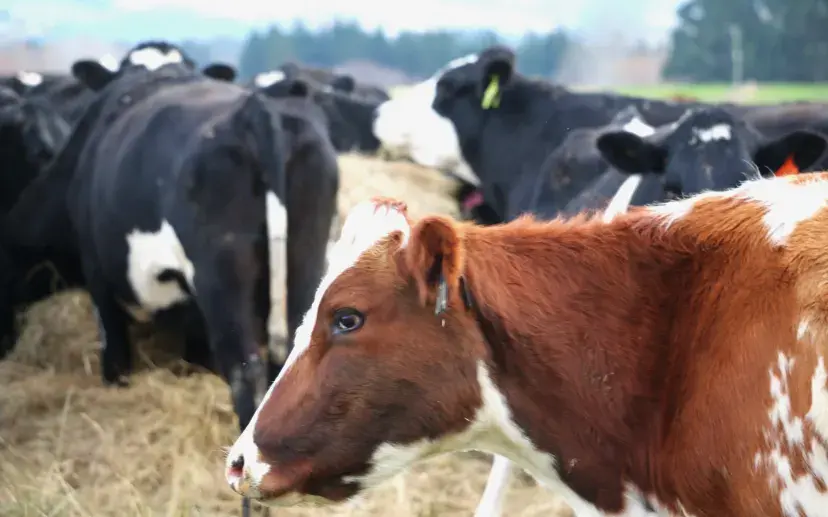
The report also singled out methane, saying large reductions in the short-lived but potent greenhouse gas could help to limit warming immediately.
In the near-term, the focus should be on preventing methane emission leaks created by fossil fuel exploration, extraction and infrastructure, Reisinger said.
"These are fugitive emissions that simply don't have to happen."
Methane emissions from agriculture - which contribute nearly half of New Zealand's total climate pollution - were harder to abate, but should not be ignored.
"There are some emission reductions that may be possible right now at limited cost, limited effort," he said.
"The very deep reductions ... will rely on developing additional technologies, like the methane vaccine that's receiving investment, including from New Zealand."
New Zealand's membership in the Paris Agreement has come under scrutiny this week, with both ACT and New Zealand First raising doubts over the country's continued involvement.
NZ First leader Winston Peters said the problem with the agreement was that four countries - China, Russia, the US and India - were responsible for the majority of global emissions.
It was easy for a small nation like New Zealand to claim it did not matter to the bigger picture, Reisinger said.
"[But] there's a lot of small players who collectively add up to a fair chunk of global emissions. So even the collection of small countries add up to a significant scale."
New Zealand had a leadership role to play, too.
"We have enormous capacity, given our expertise in agriculture, in running a highly renewable electricity system, to actually demonstrate how one can make this work."
Carbon removals necessary for warming reversal
At the same time as cutting emissions, the report highlighted the need to ramp up carbon dioxide removal (CDR), through planting forests and other technologies that store carbon from the atmosphere.
"CDR will be needed in addition to, not instead of, sustained reductions in residual greenhouse gas emissions."
It was necessary to offset emissions that were difficult to abate, such as aviation fuel, and to start reversing global temperatures.
That was because without physically removing CO2, it would continue to warm the atmosphere for centuries.
There were limits and risks to carbon dioxide removal (CDR), the report warned.
"Land-intensive" techniques like afforestation could compete with other land uses like food production, and many novel methods - including marine carbon dioxide removal - were uncertain and challenging.
"Even optimistic CDR scaling is unlikely to deliver a temperature reversal beyond a few tenths of a degree this century," it said.
"This emphasises the importance of focusing on reducing greenhouse gas emissions now."
Mitigation and CDR went hand-in-hand with adaptation, the report said.
"Adaptation remains essential because climate impacts are already occurring and additional warming is unavoidable."
Some adaptive measures - such as increasing urban tree cover - could also help to mitigate warming.
Insufficient adaptation, that only focused on a "reactive disaster response", was draining countries' ability to pay for proactive adaptation and mitigation to limit warming in the first place, Reisinger said.
There was a limit to how far the world could adapt.
"The challenge is to adapt to the unavoidable impacts of climate change, but to mitigate so that we can avoid the unmanageable impacts."
