
PHOTO
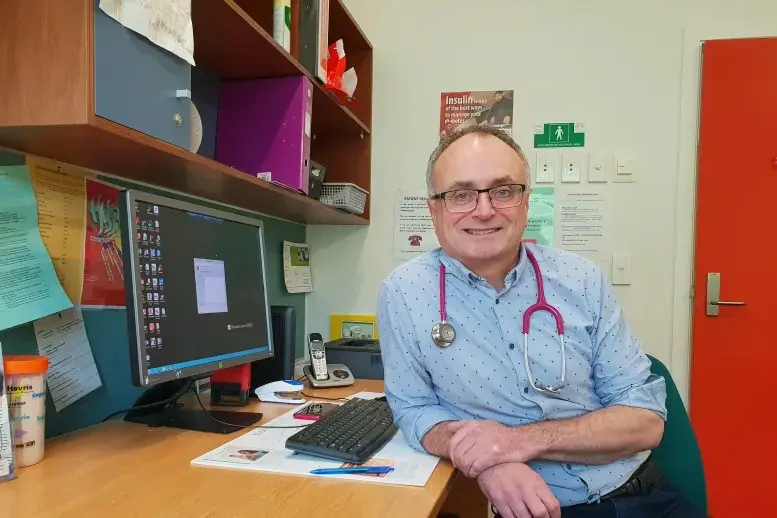
“It's just the flu" is a phrase Dr Bryan Betty hears regularly in his clinic, and one he wishes people would stop saying.
Influenza A is spreading at extraordinary rates, filling GP clinics, after-hours centres and hospital emergency departments, and while this strain may not be producing more severe illness than usual, it is the sheer volume of those being infected that is the problem.
"What's unusual about this outbreak is the infectiousness of the outbreak", says Betty, a specialist GP who has been inundated with cases.
"It's a variant of influenza called subclade K, and what we know about it is it's highly infectious, so it spreads very easily."
It's a crucial distinction, he says, because while the flu itself isn't necessarily more dangerous, when huge numbers of people catch it, even a small percentage developing severe illness creates a significant burden on the health system.
"Generally, you expect about two to three percent of people who get influenza to get severe disease," Betty says.
"So, if you have 100,000 people getting the influenza over a season, you could expect two to three thousand to get quite severe illness."
And that is what is putting the pressure on our health system.
"We've seen this issue around the number of people coming down with influenza very, very late in the winter season, and that's putting big pressure on the hospitals, big pressure on general practice, and big pressure on after-hours medical centres."
For most people, influenza will mean a "miserable week or so" - fever, headaches, muscle aches and exhaustion.
But for others, particularly the elderly, pregnant women, people with underlying conditions and very young children, it can be devastating.
The complication doctors fear most is pneumonia.
"That's probably the one that really does land you in hospital, and for some in ICU as well."
Children can face another serious complication - dehydration.
"They can get vomiting and diarrhoea with the influenza," Betty says. "And they require hospital treatment often for rehydration or getting the fluids back into them."
That is why Betty believes New Zealanders underestimate influenza at their peril.
"I often hear in the clinic, and it's probably a common thing that I do hear, 'Oh, look, it's just the flu. I don't need to get a vaccination'.
"For most people, absolutely, it can be very unpleasant. It can knock you about for seven to 10 days."
But for vulnerable groups, he says, flu can actually be very severe. And occasionally he says they do see younger, fit, healthy people who get the flu, and their immune system overreacts to the virus.
"They do end up in ICU and, in very rare cases, can end in death, which is tragic. So, it is a serious condition that we shouldn't take lightly."
The simplest protection, he says, remains vaccination, yet uptake of the flu jab remains stubbornly low - even among groups eligible for a free vaccine.
"We do have a hangover from Covid and a lot of the stuff that was out there about vaccination. There's a lot more hesitancy amongst a certain part of the population."
Aged care workers are among those who seem vaccine hesitant.
Tracey Martin, chief executive of the Aged Care Association, told The Detail that Covid has had an impact on staff attitudes towards vaccination, with some workers choosing not to take up free or subsidised flu jabs.
"And then there's the myth that when you get the vaccination, you get sick from the vaccination," she says. "It's very hard to break that myth.
"There's a very high percentage of our residents who have had the influenza vaccination, but our staff levels are lower than people would like them to be."
And that creates a different problem.
"It's actually staff illness and having to try and backfill those roles," Martin says is an issue. "All of the residents that are still well need to have all of their other comorbidities and other services provided to them at the same time.
"It's a 24-7 business, obviously."
She says while facilities are seeing influenza A, her members are not reporting that it is worse than previous years. But they are dealing with other sickness woes and viruses circulating right now.
Dr Betty says RSV, which is common in winter, is also putting pressure on the system, particularly among children and older people, while Covid is still circulating.
The result is a cocktail of respiratory illnesses creating pressure right across the health system.
"Our hospitals are actually, as we've seen, full. The EDs have a lot of pressure, after-hours centres are full and our general practices are also full."
Betty's own clinic is now fully booked with acute appointments.
"I did an after-hours shift a week ago, and boy, it was excessively busy … mainly with flu-like illness."
His message is simple - prevention is better than treatment.
