

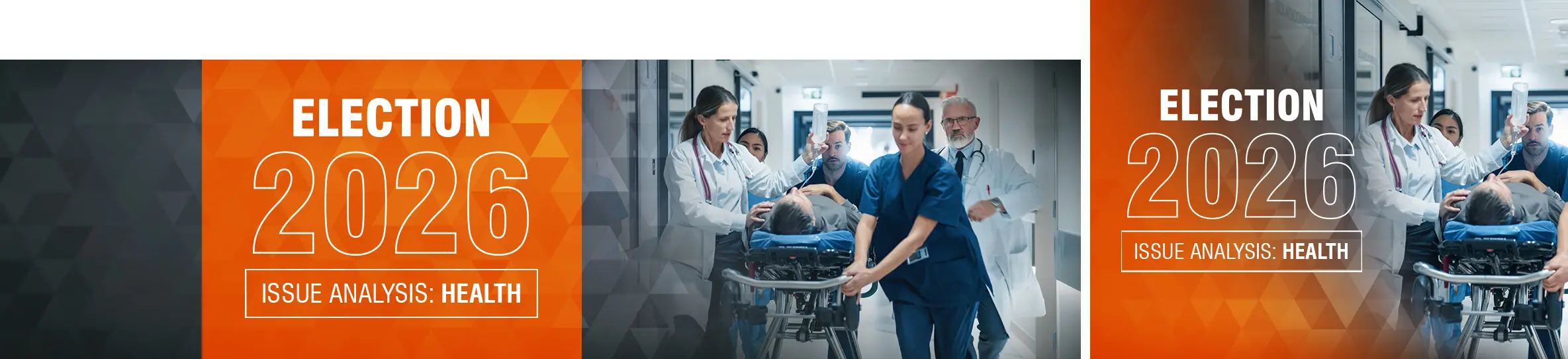

PHOTO
Election 2026 is going to be a cost of living election — how to make ends meet is overwhelmingly the issue uppermost in New Zealanders’ minds.
Health is a perennial second place-getter in issues surveys, as our political parties are well aware; for the past three years the government’s health ministers have been sparring with their opposition counterparts over how the sector is faring.
In theory, everything should be rosy, given that in Budget 2026 the government spent a record $34.2 billion on health.
However, great expenditure does not always, seemingly, equate to great results.
A virulent influenza season this past winter resulted in emergency departments nationwide being crammed to the rafters with patients.
People found themselves marooned in hospital corridors waiting to be seen by overworked clinicians, let alone have a bed found for them.
A percentage of those waiting might potentially have been seen by their GP — except that for many New Zealanders getting in to see the family doctor often took weeks rather than days.
The pressure on hospitals meant that some emergency patients ended up dying while waiting to be seen, creating the sort of headlines that no government touting its record on health wants to see.
One of the first things the government did upon taking office was reintroduce health targets.
The validity of the statistics is disputed; some of them can be altered by management rather than actual improvement.
On paper, the numbers are trending in the right direction — of five targets set for 2030, all improved in the last quarter.
While there has been a marked improvement in elective surgery, progress in areas such as faster cancer treatment, waits for first specialist appointments and shorter wait times in emergency departments has been more modest.
The government will cite those numbers that its plans are working, but it is fighting a perception battle whether things are really getting better or not.
The Opposition will be hoping that the public places greater credence in the health unions, who point to a staffing crisis across the entire health sector, rather than a government arguing ‘yes, things are tough but they are improving under their watch’.
One area which has improved under this government — and which will improve whoever wins on November 7 as all parties are promising budget increases of varying magnitude — is drug funding.
Pharmac has more money than ever to spend on buying prescription drugs for New Zealanders, but it still battles to provide the newer and more expensive therapies, or to make treatments for rare conditions more affordable.
Mental health too, seemingly, has benefited this term.
The sector has a dedicated minister and plenty of funding.
But it too struggles to fully staff its wards and questions remain over the quality of both facilities and treatment — Dunedin’s Wakari Hospital being an example of that.
Even the glittering jewel in the health crown, the new Dunedin hospital, comes with controversy.
While the outpatient building is now open and is a welcome upgrade on the former building, the inpatient building is only now starting to be built — and it is still planned that not all its rooms will be ready for patients on day one.
As bad as things are, or not, in the health sector, everyone is aware that the demographic bulge of older people — with all the associated extra health needs and demand on aged care facilities and dementia care — is still to be fully felt.
To solve these ailments, National is prescribing a hike in funding for prescription drugs and a greater emphasis on screening programmes — lowering age limits for current ones and beginning trials for new ones.
Labour, meanwhile, has placed its health money on the primary care runner, promising three free GP visits per person per year — a laudable goal but one which raises questions about how to expand capacity in an already overworked sector.
Act New Zealand is also primed to pump more money in to Pharmac but it has also come up with one of the campaign’s more left field policies, a "starship’’ cancer hospital.
Clinicians have questioned the need for such a facility, but those treated in it and their families, should it ever be built, would likely not be complaining.
The Greens are also promising more screening, as well as promoting mobile health clinics to bring care to remote areas.
They have also revived a popular promise from the 2020 election, pledging free dental care for all.
Primary care is at the centre of New Zealand First’s health policy, pledging to bring health coaches and a greater focus in preventive medicine to the sector.
NZ First was outspoken on the need to scrap the Māori Health Authority; Te Pāti Māori would restore it, as well as give Māori greater say in grassroots health provision.
Should Opportunity make it to Parliament, it would like to bring health squabbling to an end, through a cross-party, 10-year health plan which lifts government funding on health to 9% of GDP.
Given the heated words exchanged over health by the various political parties, good luck managing to find consensus among them in this battlefield policy area.