
PHOTO
New Zealand Food Safety assessments found health risks associated with a pesticide on food, despite telling the public there were none, documents obtained under the Official Information Act reveal.
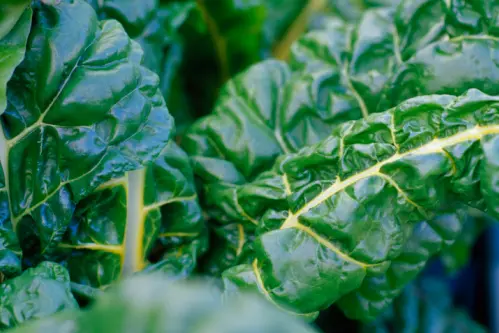
The annual 2022-2023 New Zealand Food Safety (NZFS) report showed the pesticide methamidophos was detected on one grower's silverbeet at 360 times the legal limit, or maximum residue limit (MRL).
The pesticide was not authorised to be used on silverbeet at the time, and its use was banned in New Zealand in 2024.
Internal documents show the silverbeet had already been harvested and distributed by the time the grower was contacted by NZFS, and no recall was issued.

The NZFS risk assessment showed the exposure was more than twice what could be safely eaten in 24 hours without presenting a health risk. However, the watchdog's public reports stated there were no food safety risks that year.
RNZ revealed in 2025 that NZFS had not issued a fine, prosecution or recall for food with illegal levels of potentially harmful agrichemicals in at least five years, despite dozens of breaches.
At the time, NZFS deputy director-general Vincent Arbuckle said none of the 75 breaches posed food safety risks.
"For each of these detections we conducted a rigorous scientific food safety assessment to ensure there was no risk to consumers, which is standard practice," Arbuckle said in a statement.

NZFS documents obtained by Greenpeace under the Official Information Act (OIA) show the ministry identified health risks it did not report publicly in at least one case.
NZFS initially declined Greenpeace's July 2025 OIA request for copies of the formal investigations into 30 pesticide breaches discovered during the annual Food Residues Survey Programme, on the grounds it would require substantial collation or research.
But when Greenpeace then requested three specific investigation and risk assessment reports - of glyphosate breaches in 2015-16, acephate breaches in 2017-19 and methamidophos breaches in 2022-23 - NZFS declined the request for information on the glyphosate and acephate breaches, arguing the documents did not exist or could not be found, though it provided brief risk assessments in both cases.
NZ Food Safety also supplied the investigation and risk assessment for the 2022-23 methamidophos breach, which found that residue on a silverbeet sample was above the ARfD or "acute reference dose", which is the amount a person can eat in 24 hours without appreciable health risk.
The methamidophos residue was 106% of the reference dose for adults and 232% of the reference dose for children.
New Zealand Food Safety's risk assessment concluded this meant "a human health food safety risk for children cannot be excluded" and that 64 grams of silverbeet would be dangerous for a 23kg child.
According to the United Nation's Rotterdam Convention on hazardous chemicals, methamidophos is an "extremely toxic organophosphate which causes serious adverse effects to human health".
The World Health Organisati
Greenpeace executive director Russel Norman said NZ Food Safety told the public there were no food safety issues - but their own risk assessment warned the breach was more than twice the safe level for children.
"Every parent across the nation would feel a chill going up their spine reading the internal risk assessment stating their children were at risk from food highly contaminated with dangerous pesticides.
“Meanwhile, the government agency responsible for protecting food safety was telling people that everything was safe. It wasn't," he said.
NZ Food Safety's 2022-23 Food Residue Survey Programme found illegal residues in 9% of the food samples tested.
Norman said the number of non-compliant tests and the number of non-compliant food samples were quite different.
"In 2022-23, they tested 300 food samples out of the billions of food samples that New Zealanders eat every year. They did 500 tests on each of those food samples, so it sounds like there's a lot of testing under way, then they say 'we only found bad results on 0.02 percent of all of those'," he said.
"What they don't make clear to people is that nine per cent of all the food samples had illegally high levels of pesticides, so one in 11 of the fresh food items in your shopping trolley were found to have illegally high levels of pesticide residues on them.”
Greenpeace believed there was a conflict of interest in New Zealand Food Safety sitting within the Ministry for Primary Industries (MPI), which has a dual role promoting exports and regulating agriculture.
"This creates tensions because if MPI finds serious wrongdoing it can damage the 'clean green' export brand. MPI is chronically exposed to industry capture and the temptation to downplay or hide bad news," Norman said.
"Having the food safety agency located within a government mega-ministry committed to promoting agribusiness exports is a particularly problematic conflict of interest."
He said the group wanted the food safety role to sit within the Ministry of Health, focused on protecting human health from pesticides.
Norman also pointed to NZFS's move away from testing for glyphosate after finding a third of wheat samples had levels exceeding the limit allowed, some by 50 times, during 2015 testing.
In its 2016 report, MPI said "none of the wheat samples posed any food safety risks".
Since then, NZ Food Safety has not tested for glyphosate.
Norman obtained its risk assessment of the glyphosate breaches under the OIA, which was three pages long and heavily redacted.
"They found very high levels of glyphosate and so their response was to never test again. The risk assessment was very short and concluded everything was fine.
"We don't know how much glyphosate is in our food because the regulators simply stopped testing it once they found very high levels.
"If you had a regulator that was actually concerned about food safety and consumers' health rather than about the reputation of agribusiness, when it found high levels of glyphosate - much higher than are legally allowed - you'd think the response would have been to pay even more attention to the issue."
New Zealand Food Safety deputy director-general Vincent Arbuckle said while it identified "potential food safety risks" from the methamidophos breach, following a "rigorous risk assessment, these detections were not found to pose a food safety risk".
While a NZFS toxicologist assessed a food safety risk could not be excluded for chronic or ongoing exposure, "in this instance the exposure would have been a one-off", Arbuckle said.
Arbuckle said studies had shown that washing silverbeet before eating could reduce residues by a quarter and that methamidophos breaks down in temperatures above 80°C.
"Given the above context, it was considered that there was no immediate or ongoing food safety risk.”
Arbuckle said the grower was contacted to "establish the facts" and "educated about the rules and our expectations".
"In our experience, the few occasions in which MRLs have been breached have been accidental or the result of incorrect use. Farmers and growers do not intentionally use these compounds in such a way that residues would exceed MRLs and there are generally no advantages to them doing so," Arbuckle said.
"NZFS takes a stepped approach to enforcement that is proportionate to the risk to consumers and in line with international best practice. Each case is considered separately and takes into consideration the circumstances."
In a statement, the New Zealand Vegetable Council said 99.9% of plant-based food sold in New Zealand was compliant with the Food Act according to New Zealand Food Safety's most recent testing.
The 2024/2025 report found six domestic food samples, including lettuce, spinach and beans breached the legal limits for ten different chemicals, such as Imidacloprid, which is banned for crop use in the European Union and United Kingdom and some US states, and Indoxacarb, Bifenthrin, and Acephate, which are banned in the EU and the UK.
