
PHOTO
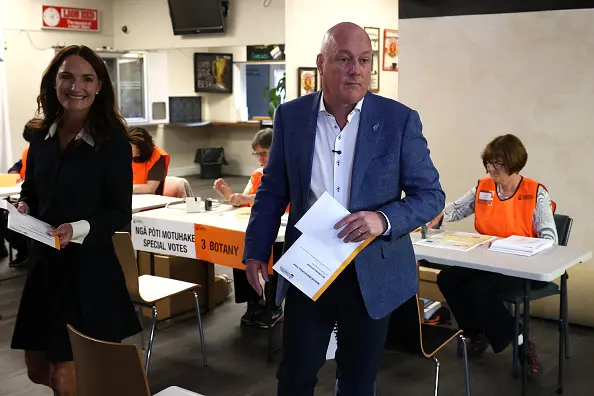
National's leader Christopher Luxon expects enrolment rates will be higher this year than in previous elections, despite changes to enrolment rules.
Labour is promising to reverse the changes to enrolment.
People can no longer enrol or change their details for this election after enrolment closed on Sunday, as a result of changes the coalition made to end the ability for people to enrol and vote on the same day.
As of Friday, 92.4% of people had enrolled - short of the 94.7% in 2023, leaving about 300,000 eligible voters unenrolled.
The Electoral Commission is expected to release the latest enrolment data on Monday afternoon, and Luxon told RNZ’s Morning Report programme he was not worried some people whose details may be incorrect or who did not realise they were not enrolled may be excluded.
"People have had about a year since we announced those decisions, they've had plenty of time to get organised, it's been a very easy process to do so."
He said it was no different to the approach taken in Australia, the United Kingdom, Ireland and France.
"I think we've got pretty comparable, probably we'll end up with some higher, enrolment levels than what we've had in recent elections as well, so no, it's been a very good process.
"I've seen the provisional numbers, I think they're going to have final numbers out at the end of the week, but ... already I think higher than or around where we were in 2017, 2014. Obviously, 2020 was a different election with respect to Covid."
The enrolment rates in 2014 and 2017 were 92.6% and 92.4%.
Morning Report host John Campbell pressed Luxon over whether he was worried about people not being able to vote, given former Attorney General Judith Collins had warned that appeared inconsistent with the Bill of Rights Act stating every over-18 New Zealander should be able to vote.
"No, look ... people have had plenty of time ... there's been a huge promotion campaign from Electoral Commission to get people enrolled. It's been very easy to do so."
The rule change was partly aimed at preventing increases to the time taken for the Electoral Commission to formally count the vote.
Luxon said it was "an overwhelming experience" for the Commission to simultaneously encourage enrolment and voting, run voting booths, and count the vote.
"I can understand that's why other countries have a have a gap between enrolment before you actually do the voting and the count and the running of the election, so I don't think that's unreasonable. And I think when you look at our enrolment numbers, they are good and healthy."
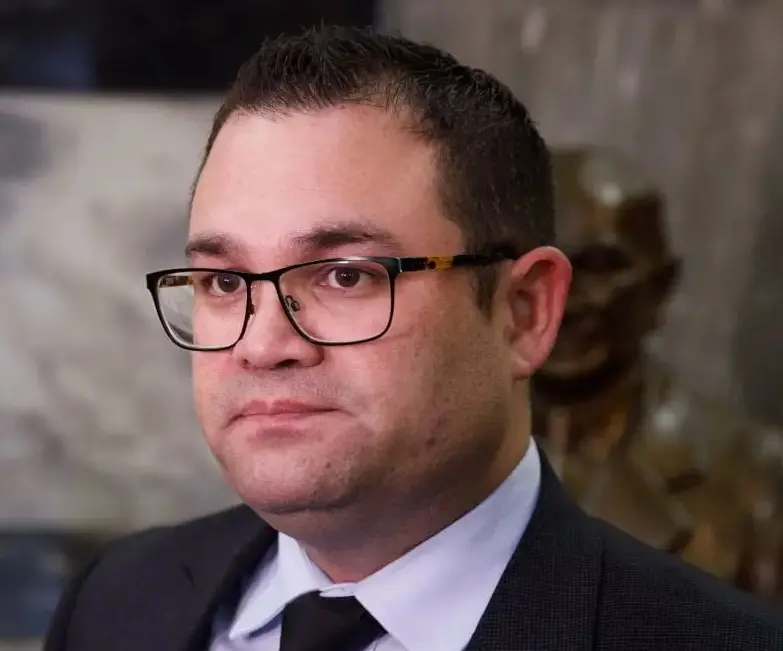
Labour's Tangi Utikere, who was standing in for leader Chris Hipkins, said the coalition had "done everything they can to make it harder for people to vote".
"What we are seeing is a particularly anti-democratic approach from the National government. We've indicated we will ditch those undemocratic changes whilst in government.
"Many voters actually will show up to a polling booth and they'll realise that perhaps they're not able to vote and they'll be more than unhappy, I think they'll be furious that they can't do that where they have done in the past. This is an extremely undemocratic approach from National, and it's something that is completely wrong."
He said people had still been enrolling at 9pm on Sunday, just three hours before the close of enrolment, and there had been queues at the voting booth the next day.
Utikere was also questioned about Hipkins' plan for his first week as prime minister if elected on November 7.
A social media post had listed lowering transport bills, cutting student debt, cracking down on unfair prices, making GP visits affordable, getting hospitals more staff, and tackling the crisis in Emergency Departments as week-one actions.
Asked if that was misleading - with several of those unable to be achieved by the end of the first week - Utikere said it was not.
"What it actually does is it acknowledges and accepts that cost of living and healthcare are key issues ... they are five sets of actions that would be taken by Chris Hipkins as Prime Minister.
"If we're looking at the the lower transport bills, for example, you know that's around ensuring that there is an instruction to the transport minister to get the public transport fare cap in place by July 2027. It is very clear."
He said in the first week there would be a Cabinet meeting where the prime minister would set the direction of travel, and the social media post was setting out those priorities.
