
PHOTO
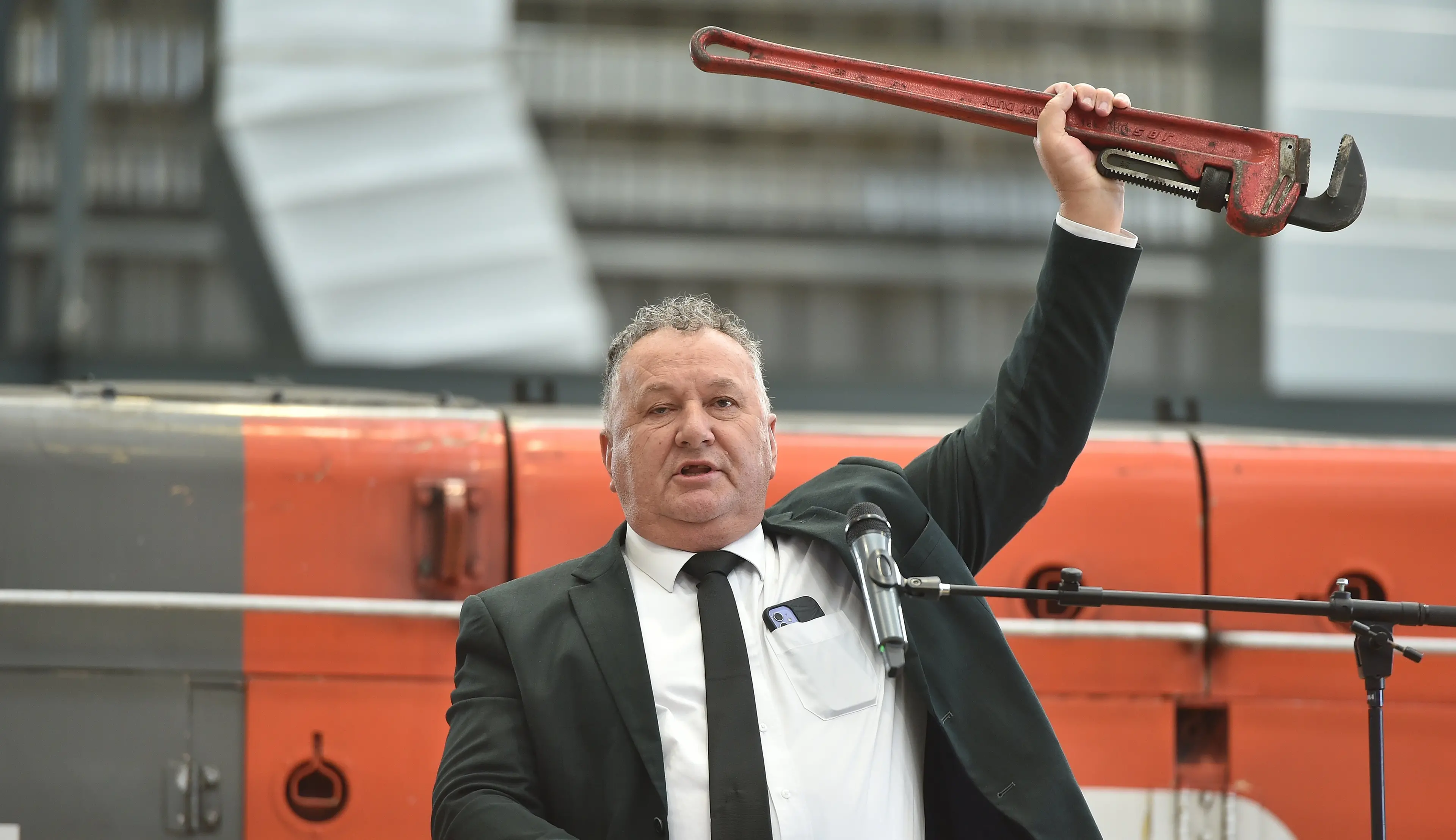
It takes a lot to overshadow New Zealand First leader Winston Peters, but with his florid rhetoric and determination to mine at all costs, his deputy leader, Shane Jones, had made a decent crack at it during this parliamentary term.
Whether calling the Otago Regional Council "the Kremlin of the South Island"or waving goodbye to Freddy the Frog, Mr Jones is never short of a front page-worthy one-liner.
The clearest difference between the government and the opposition is about management of natural resources.
In the battle between "getting stuff done"and protecting the environment, Mr Jones has been loud and unapologetic voice for the former.
"If I focus on what’s arguably the sharp end of these debates, mining, obviously I have lead with my chin a bit," he said.
"But I have had a mandate from Winston Peters and my senior Cabinet colleagues to get out there and shift the pendulum. I fully accept that probably there are not a lot of politicians who would have carried the challenge the way I have — some of the hyperbole has certainly hurt people, including the Wellingtonian who is representing the Tarras ginger group.
"However, I think that you need to be fair and recognise that there has been some equally as shrill rhetoric over the past few decades against mining, so I felt that we needed to treat this as a contest of political will and deploy as many devices as possible, whether it’s theatre, facts, science, rhetoric, oratory, and now I genuinely know that the pendulum has swung back to the centre."
Ironically, as a Parliamentary staffer in the late 1980s, Mr Jones — now Minister for Oceans and Fisheries, Minister for Regional Development, Minister for Resources, associate Minister of Finance, and Associate Minister for Energy — was involved in the passing of the original Resource Management Act.
"It has reached its end of usefulness date. It is such a big contributor towards governing relations in society between communities, industry, investment, so it needs to have a good airing at select committee," he said.
"With broader RMA issues, I fully accept that there is a deeper question: what is the primacy of a person’s property rights, what is the role of the existence values of the environment so that they pervade well beyond our current generation, and I would say to you that it’s never ever going to be fully settled because each politician and political party comes with their beliefs as to where that pendulum should swing."
The MMP pendulum has swung back and forward over the 5% threshold for NZ First for its entire existence, often being the making or breaking of the party. It has been burned by being in government before — losing all its MPs in 2020 being the most recent example.
This term, however, despite the expectations of plenty of naysayers, NZ First has held its polling steady at well above the threshold for the past two years.
While there has undoubtedly been moments of friction between National, Act New Zealand and NZ First, the latter has maintained its identity.
Having ticked of a good proportion of its coalition agreement conditions it now has tangible benefits that it can show its supporters.
"I think this time around that there is a solidity to the support that Winston and our party has," Mr Jones said.
"The platform that we stand upon, in the three years of coming out of Covid debt, has attracted a lot of support because we have been really lucid and focused on jobs, on community optimism and regional resilience . . . one thing about Winston is that you can show humanity, but humanity without responsibility is never going to lead to wellbeing, and that I think is at the pith of what Winston’s gospel has been for a long, long time, a sense of responsibility and a certain sense of discipline.
"That’s how we grew up in the Far North and I do think that approach has resonated with a lot of Kiwis who want to move on from what Winston and I regard as that era of our history when wokeism was the main currency."
As for the 2026 election campaign, expect more of the same, Mr Jones promised.
NZ First had had to be "ultra pragmatic" in abiding by its coalition agreement to pledges made to National and Act, but the party would unapologetically be promoting its own agenda this year.
With Mr Peters having senior ministerial responsibilities, much of that agenda will be promoted by Mr Jones.
"There is an evergreen quality about Winston, but the senior strategists in the party who are planning how to deploy our resources in the election campaign, they have already identified that I will be doing a lot of the public interaction so that he is able to focus on those key areas where there will be a major dividend.
"I will go to the nooks and crannies and relatively small villages, but 28,000 votes is 1% and we shouldn’t be dismissive of going to those areas. Every area has voters and they will appreciate us giving care and attention to them."