PHOTO
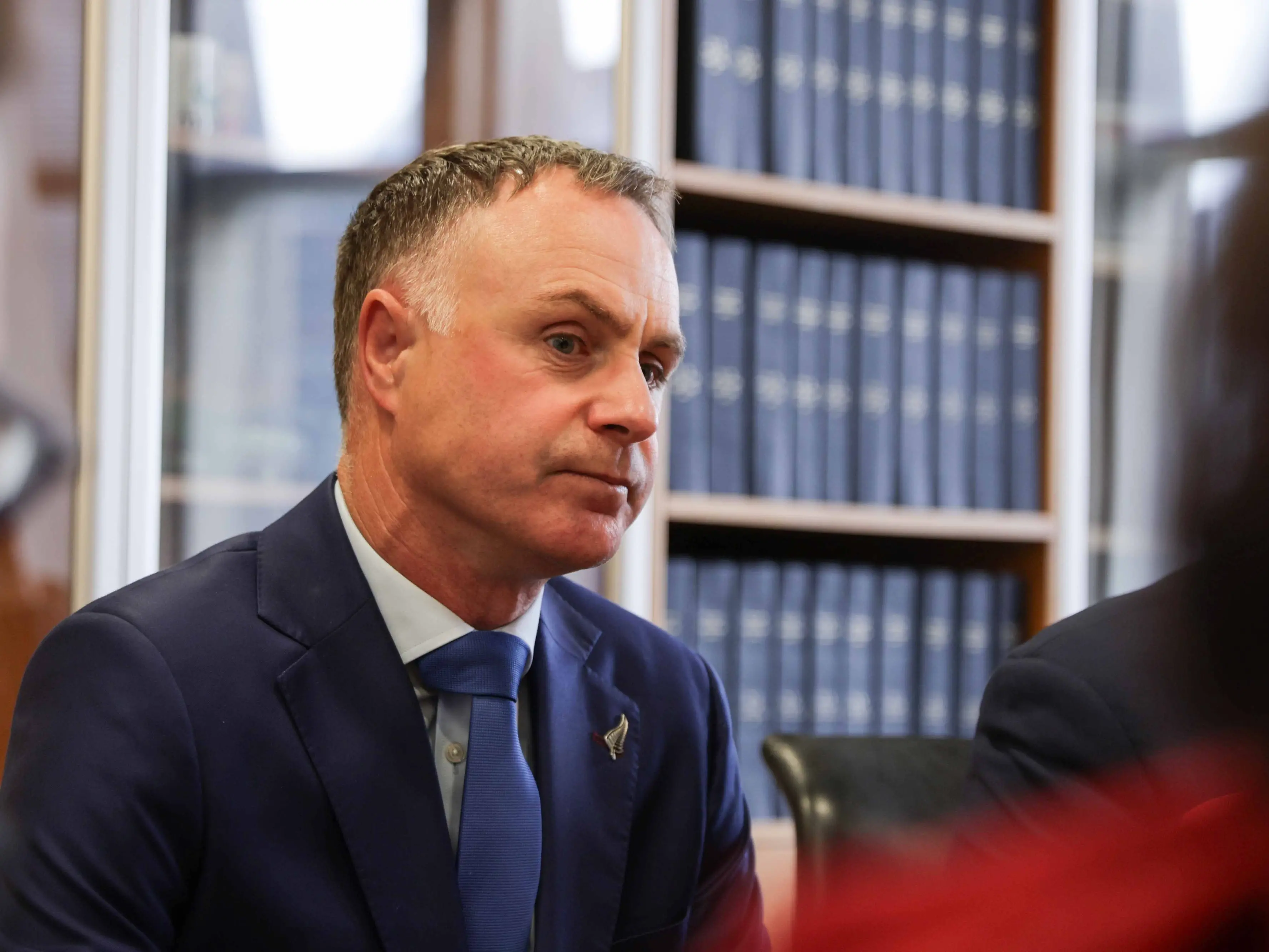
Local Government Minister Simon Watts said the three-month window is designed for councils that are “ready and willing to move quickly to develop an outline proposal”.
“Head Start is a voluntary pathway for councils that want to move earlier on changes to simplify local government.
“Ministers are looking for mayors and councils to provide local leadership.”
Watts confirmed the proposals only need the majority support of directly affected councils, either by number of councils or by population represented.
“Proposals do not require the unanimous support of affected councils.
“A council may be included in a proposal if the proposal meets the eligibility thresholds.”
That means councils can be included in a proposal without agreeing to it, if the eligibility thresholds are met.
“Proposals must demonstrate how local voice will be maintained through fair and effective representation, including balancing urban and rural interests.
“Proposals will only be accepted where it makes sense for the region as a whole.
“To be clear, the majority is required to submit a proposal for consideration. It is not a final decision.”
From August 9, all proposals will be assessed by officials and Cabinet will decide in September which proposals are agreed in principle he said.
“The councils involved will have the opportunity to consult with communities on their full proposal before any final decisions are made by Cabinet in May next year.”
For areas that don’t come forward with a proposal, the Government will implement a “backstop process" to ensure reform still happens across the country, he said.
This will be a standardised approach, including "transitional governance arrangements", while changes are put in place.”
Final decisions on local government reform for those councils will be taken by Cabinet in 2027, with changes expected to take effect for the 2028 local elections.
Council’s are also aware that between September and May is a general election and potential for a change in Government.
Selwyn Mayor Lydia Gliddon and Ashburton Mayor Liz McMillan both said they do not expect Canterbury councils to submit a proposal without consultation.
“We don’t anticipate this approach from our good friends north or south of us,” McMillan said.
Gliddon said the Canterbury mayor’s “realise that this is a challenge, and actually, you've got strength and numbers, too.”
South Island Minister and Rangitata MP James Meager had an additional take at a public meeting in Ashburton on May 8.
Meager said there was potential for a council to remain intact as a unitary authority as a third party to a proposal.
However, he clarified that a proposal must be submitted by two or more councils and include the consolidation of at least two territorial authorities into one entity as part of the proposal.
“Within that context, it is not precluded that another participating council could become a unitary authority while retaining its existing boundaries.
“That element must sit within a proposal that delivers on the reform objectives, including simplification, and meets the Government’s criteria.”
He suggests a proposal could have two councils amalgamate and a third become a unitary on its existing boundary, as long as “the overall configuration clearly demonstrates delivery against the reform objectives"
This includes economies of scale and simplification, rather than enabling the third council to effectively retain the status quo.