
PHOTO
Wellington residents affected by April's flooding say they're still traumatised, displaced and unable to sleep five months on.
On Thursday, Wellington City Council committed to producing a public report into the disaster, with one councillor apologising if the council's response had failed.
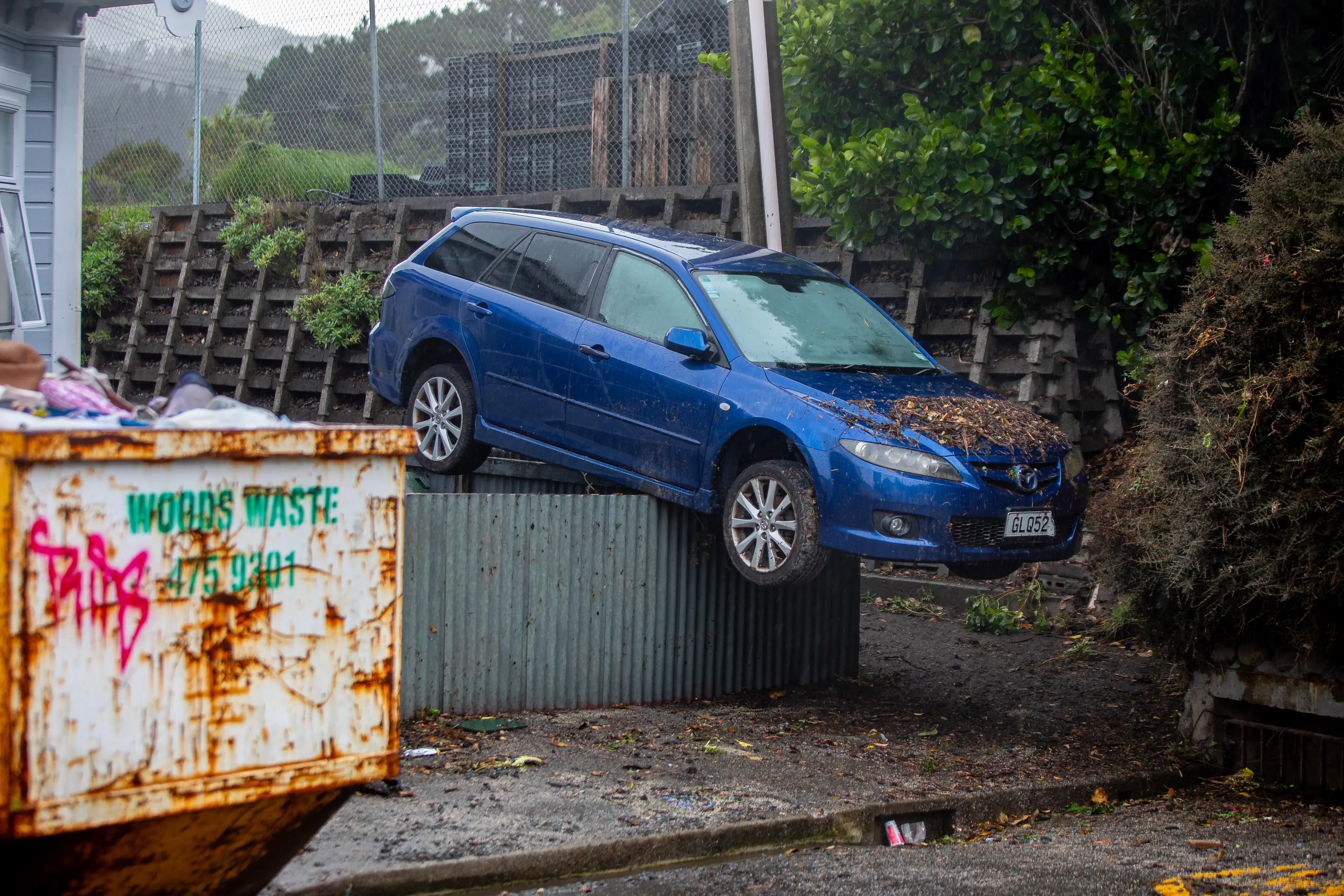
Hundreds of Wellingtonians were affected by extreme rain in the early hours of 20 April, with flash flooding, landslips, and damage to homes and businesses leaving one person dead and triggering a state of emergency,
Bronwyn Croxson said when it rains, she can't sleep.
The Berhampore resident was jolted awake at 4am on 20 April, as floodwaters inundated her home on Royal Street.
"I woke my family then trying to get out of the house, and couldn't. Eventually we got out, the water was chest-high and we managed to get up out, down the side."
Croxson said the muddy torrent hitting her house was so strong it was like being in a washing machine, sweeping up her fridge-freezer.
Months on, she's still out of her home, which she now needs to raise by over two metres - the cost of which isn't covered by insurance or the natural hazards commission, she said.
She wants the council to consider a buy-out scheme, similar to what was done in Auckland following the anniversary floods.
Communities on the city's South Coast are still dealing with the trauma of the disaster, she said.
"Not only are our houses damaged, in Island Bay businesses and livelihoods are damaged.
"Our well-being is damaged."
Residents spoke out after a report by officials recommended the council map landslip risk, create a slip hazard policy and work on actions to reduce flooding of the Ōwhiro Bay stream, which flows through some of the city's southern suburbs.
In a briefing earlier this month, officials said a lack of trained staff at the council compromised its response to the emergency, and that they were not fully prepared for another disaster.
Julian Butler, who represents a group of flood-affected residents, said the council needed to conduct a thorough investigation into April's flooding.
He said there were 20 houses on his block sitting empty because residents could not return.
"The report doesn't cover the loss of property, how many houses were affected, where they were affected, it doesn't clarify the mechanism of the flood, it doesn't offer any statistical information about the peak water flow or what the immediate remediation effects could be."
Butler said the issue was urgent, with extreme rainfall becoming more common, as well as townhouse developments in the suburb.
"We need the council to collect the required data, decide a response and execute on a plan. Climate change doesn't sit around discussing roles or clarifying responsibilities or advocating on behalf of anyone."
As well as the report, Wellington City Council has committed to looking at issues and infrastructure in the Paekawakawa stormwater catchment in Island Bay, and working with new water entity Tiaki Wai on improvements, with a plan to report back to the council next year.
Southern Ward councillor Laurie Foon said the council could not drop the ball when dealing with communities in crisis.
"I would like to apologise on behalf of the council if there are things we've fallen short of for you. I know it's created extra stress you haven't needed."
Fellow southern ward councillor Nureddin Abdurahman said the council's work was only just beginning.
Mayor Andrew Little said residents did not want to hear that "everyone's responsible, yet no one's responsible" for the disaster.
"They are our residents, we are the council and we must take responsibility for leading the change, the resolutions and solutions... that need to happen."
