
PHOTO
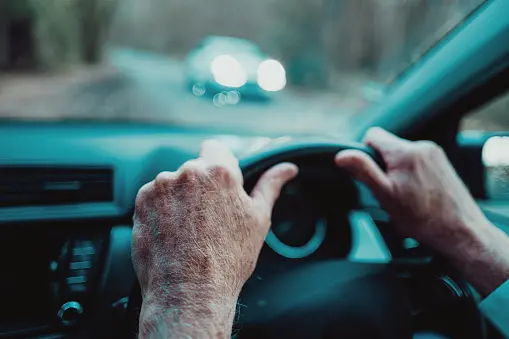
Older drivers will no longer be required to take a cognitive test in order to keep their driver's licence.
New clinical guidance for health practitioners allows them to assess a person's fitness to drive individually.
When people reach 75 years old they must get a medical certificate to renew their licence and then again at 80 and every two years after that.
While cognitive screening is still an option, doctors will consider a person's overall health and driving history.
The changes follow an independent University of Auckland review of cognitive testing and driving safety which found that available evidence did not support screening otherwise healthy older adults as part of fitness-to-drive assessments.
It found that commonly used cognitive screening tools were not reliable predictors of driving ability.
Grey Power president David Marshall told RNZ’s Nine to Noon programme on Thursday his group had been campaigning for the test to be dropped on the basis that they could find no evidence that it predicted someone's driving ability.
"Many of our members have reported that they've had their licence cancelled purely on the basis of the cognitive test."
Grey Power worked with the New Zealand Transport Agency and the Office for Seniors to commission a study by Auckland University to look at the literature, he said.
"And that's come up saying 'look it's not predictive and should not be used as the sole reason for failing someone's licence.'"
It would be up to GPs to make the decision about whether an older person was competent to continue driving, he said.
"What we have been concerned about is that everyone was given a cognitive test and not everyone remembers an address or can suddenly recite 20 items in a supermarket which seem to be quite apart from driving ability."
He said hopefully the focus would now be more on issues such as a person’s feeling of confidence with driving, any accidents they may have had, along with medical issues such as their sight.
GPs would still have the option of using a cognitive test, he said.
"If someone's clearly got more advanced dementia and they shouldn't be on the road, we don't want them on the road."
But GPs could use the test if they thought someone was showing early signs of dementia and then go on to do further evaluations, he said.
"But to use it to screen normal healthy older people is quite discriminatory because of its lack of discrimination in determining whether someone is fit to drive."
