
PHOTO
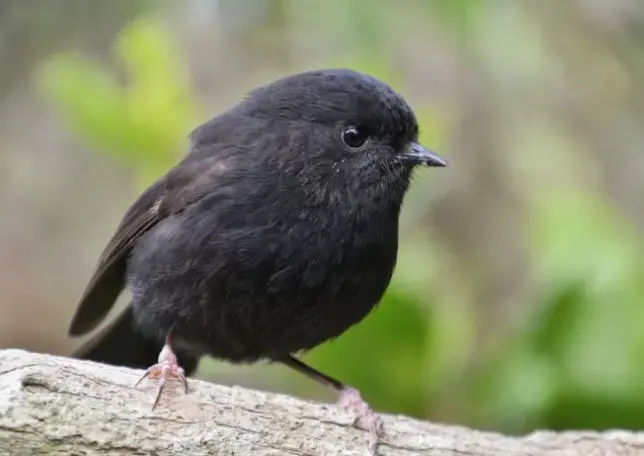
A shy, little black robin from the Chatham Islands which weighs less than an AA battery has been crowned New Zealand’s Bird of the Year.
The karure black robin received the most votes to claim the title, while the kākāpō was second, leaving the kārearea in third. Fourth and fifth went to the kea and takahē respectively.
It was the first time the karure has topped the polls in the Forest and Bird-run competition, despite coming close several times.
This karure took the crown with more than 25,500 votes.
The jet black feather puffball weighs less than an AA battery. In 1980, it was near extinction, with just five birds left.
Found in lowland coastal forests in the Chatham Islands, the shy birds are a conservation success story, going from just five birds in the 1980s to about 350.
Every one of those 350 adults is descended from a single breeding pair — Old Blue and Old Yellow.
The Chatham Island community and the karure's campaign manager, the Chatham Islands Landscape Restoration Trust, are now creating more habitat for the species to expand into and move beyond the two restricted nature reserve islands they currently inhabit.
Forest and Bird group manager Rebecca Hatch told RNZ that despite the success, the karure black robin was critically endangered.
"While the birds live on predator-free islands, those small islands are nearly at capacity in terms of good black robin territory," she said.
"For the population to keep growing, a third population needs to be established on another island."
A project was under way by the Chatham Islands Landscape Restoration Trust to remove feral cats from Pitt Island (Rangihaute / Rangiauria).
Feral cats were one of the biggest predators for black robin, Hatch said.
Bird of the Year had its biggest homegrown turnout this year. The election has been running since 2005.
"People have really turned out for nature in record numbers this year - participation has soared," Hatch said.
“This year has seen record numbers of votes, with 105,000 people choosing their favourite manu at birdoftheyear.org.nz.
"In particular, New Zealanders have really shown up for nature. Roughly one in every 50 Kiwis voted in Bird of the Year 2026.
“It's no wonder. Our Bird of the Year team, including our incredible volunteer campaign managers, helped to make so much noise for our manu this year.”
After an early lead from kākāpō, karure black robin finished at the top of the pecking order with 26,610 votes.
Last year, the election drew more than 75,000 voters from across 123 countries.
In 2023, Bird of the Century had more than 350,000 votes — nearly 300,000 of those were for the pūteketeke after a campaign was run by US talk show host John Oliver.
Top 10 birds
-
Karure, black robin - Shy Birds - 25,610
-
Kākāpō - Floor Birds - 19,445
-
Kārearea, New Zealand falcon - High Birds - 17,423
-
Kea - High Birds - 16,511
-
Takahē - Floor Birds - 14,511
-
Ruru, morepork - Night Birds - 13,923
-
Tawaki piki toka, eastern rockhopper penguin - Sea Birds - 12,948
-
Pīwakawaka, fantail - Tree Birds - 12,769
-
Toroa ingoingo, northern royal albatross - Sea Birds - 12,658
-
Hoiho, yellow-eyed penguin - Sea Birds - 11,822
Hatch said the top three birds were from the “Shy Birds, Floor Birds and High Bird parties”. But the Tree Birds took the top perch for the party vote. These 16 birds are also winners, including underbirds pōpokotea whitehead, mohua yellowhead, and pīpipi brown creeper.
Final votes by party
-
Tree Birds - 100,793 votes - 22.9%
-
Shore Birds - 88,248 votes - 20.0%
-
Sea Birds - 76,016 votes - 17.3%
-
High Birds - 53,693 votes - 12.2%
-
Floor Birds - 53,274 votes - 12.1%
-
Shy Birds - 53,164 votes - 12.1%
-
Night Birds - 15,396 votes - 3.5%
“The jokes are funny and this year’s meme game certainly didn’t disappoint, but underneath it all there is a serious message – 80% of our manu are in some or serious trouble.
“This holds true on the leaderboard as well – eight of the top 10 finishers are in serious trouble.
"One thing we heard again and again from voters was, 'I didn't realise how many of our birds are in trouble.' New Zealanders love nature but often assume it's doing okay.
“That's exactly why Bird of the Year matters. It helps people discover, connect with, and fall in love with the incredible diversity of New Zealand's wildlife, while shining a light on the real challenges nature is facing.
“Now that the wildest election of the year is decided, we can make sure we’re showing up for nature on November 7. The decisions our leaders make have a huge impact on our native species.
“Karure black robin can’t vote. But we can.”
Record-breaking voter turnout
"This year's growth came from reaching new audiences, especially children and young people. Bird of the Year even went into the wild, with pop-up voting booths, connecting with people who might never have encountered the competition otherwise.
“New Zealanders have embraced the chance to have their say for nature, with 88% of votes coming from within Aotearoa. That's the reverse of 2023, when the majority of votes came from overseas. So while this may not be the very biggest Bird of the Year on record, it is the very biggest homegrown result in Bird of the Year."
-Allied Media and RNZ