
PHOTO
Whether it is nine new taxes, one new tax or no new taxes, tax has become a pivotal argument in Election 2026.
While some parties might not regard the subject as a priority, there is no doubting its central importance to both the governed and those doing the governing.
Every person and company pays tax, whether it is the GST on the groceries in the weekly shop, the PAYE on one’s personal income or corporate tax on their business-related income.
Tax rates and tax thresholds directly affect how much money businesses and families have to pay their bills, their workers, and to cover the cost of essentials. Movements up or down immediately impact how much cash you have, and in a challenging situation where the cost of living is concerned, every dollar matters.
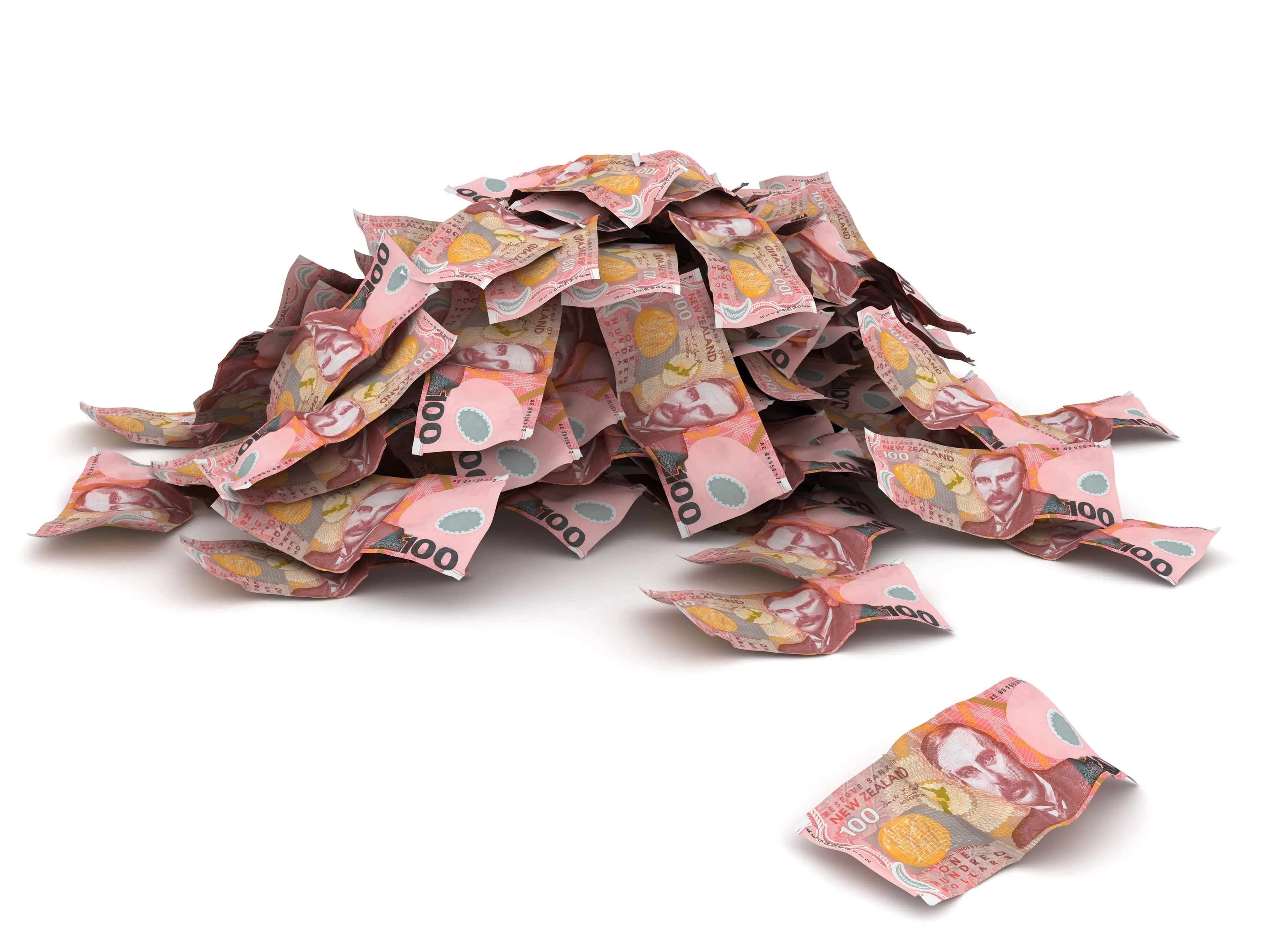
But tax is also crucial for government, as it is by far and away its main source of revenue; in the most recent government accounts taxes, at $125 billion, accounted for the lion’s share of $172.4b overall revenue.
Expenditure in the same accounts were $182.8b, meaning the government either has to draw upon reserves, spend less, tax more or borrow from somewhere to balance its accounts — and therein is the debate which has dominated politics this parliamentary term.
Current Finance Minister Nicola Willis and her National Party are definitely in the spend less, tax less camp — although government spending and borrowing have both been high during her three years overseeing the country’s accounts.
She, Prime Minister Christopher Luxon and any National MP near a microphone have repeated the ``no new taxes’’ slogan as often as they can so there is little doubt where National stands on the matter. The one fly in the ointment is the long-planned boost in the fuel excise levy, which may — or may not — constitute a new tax, depending how you define these things.
Where things start to get more obscure is the other National tax proclamation — that Labour will introduce ``nine new taxes’’.
This is believable only if you assume that Labour wins the election by forming a four party coalition, and that it then agrees to implement every single tax proposition advanced by its governing partners. Which is feasible, but only if Labour leader Chris Hipkins is a spectacularly bad negotiator — which, on available evidence, he is not.
Having said that, Labour is indeed campaigning to introduce one new tax — a narrow and targeted capital gains tax.
Such a tax has been the talk of the Labour Party for decades, having variously ruled it in, ruled it out, opted to consider it, or defer any decision to a working party.
The battle, for now, appears to have been won, likely due to Mr Hipkins closely aligning any revenue it earns to funding public health initiatives such as three free doctor’s visits for all.
The tax, from which the family home and farm will be exempt, would be set at 28% on profit on any property sold, based on a July 1 2027 valuation.
This immediately raises questions as to whether it will earn enough to fund the promises it is paying for, but Labour finance spokeswoman Barbara Edmonds says that it is expected that its earnings will increase incrementally over time and that this has been factored in.
However, it has long been argued that any kind of capital gains tax is anathema to the voters in the middle part of the political spectrum who decide the result of elections. Labour is banking plenty on that being the case no longer.
Then there are the parties who have no fear of new taxes whatsoever, and in fact would welcome them . . . parties which have found themselves conflated into National’s nine new taxes claim.
The Greens are National’s prime suspect; National’s campaign manager Simeon Brown delightedly issued a press release last week which proclaimed that the Greens were literally campaigning to introduce nine new taxes.
While that is a little hyperbolic, the Greens absolutely do want to introduce some new taxes and are quite unapologetic about it.
The party has ambitious spending aims and it is quite clear who is going to pay for them: the ``super rich’’, who will be asked to pay ``their fair share’’ of tax.
Critics would argue that this already happens thanks to the progressive tax regime, but the Greens do have a case that taxation as a proportion of income is greater for those on lower rather than higher incomes.
Essentially, much depends on what one defines as ``super rich’’ and a ``fair share’’. For the Greens that is a tax of 2.5% on net wealth over $10 million — others may beg to differ.
Te Pāti Māori are also unambiguous about their plans to take on the wealthy and, they claim, reduce
income tax for 97% of people.
New tax brackets would be added (42% on earnings between $180,000 and $300,000 and 48% on earnings above that. In addition GST would be taken off food, a wealth tax would be introduced on people with an average net worth of $6 million and the corporate tax rate would also be hiked.
To say the least, this is anathema to Act New Zealand which is rather clumsily labelling itself as the ``OG no new taxes party.’’
Not only does Act not want to introduce any new taxes, it is also campaigning on a programme which which is promising to cut more from public expenditure than its proposed new spending.
Fiscal restraint is all very well but it may well find its governing partners want to splash a little bit of cash to satisfy their promises to voters.
Its fellow coalition partner New Zealand First is one of those. While one of its central philosophies is that New Zealanders should pay as little tax as possible, it also has some expensive policies — such as the regional growth fund — to be paid for.
Remember though, ultimately it is your money — the tax payer — and you get to say who will be spending it.