
PHOTO
- NEW: Minimum wage to lift by $1.50 to $22.70 an hour from April 1, in line with inflation.
- GONE: Merger of RNZ/TVNZ - RNZ, NZ on Air to get more funding instead.
- GONE BUT MIGHT BE BACK POST 2023: Social insurance scheme. Off the table until economy improves.
- GONE: Biofuels mandate.
- HALTED, MORE WORK: Hate speech legislation. Will be withdrawn and considered by Law Commission.
The new Prime Minister has tossed a series of policies on the bonfire, admitting the Government had tried to do “too much, too fast”.
Chris Hipkins’ new Cabinet met this morning to sign on what he called “an immediate reprioritisation” and the torching of policies was unanimously agreed to.
The merger of Television New Zealand and RNZ has been scrapped, as well as the Government’s social insurance scheme and biofuel mandates.
Proposed changes to hate speech legislation would be kicked to the Law Commission - and the Government was also going to refine the Three Waters programme.
Cabinet has also asked the new minister of Local Government to report back on how to refine the Three Waters reforms, he said.
“The Government is refocusing its priorities to put the cost-of-living front and centre of our new direction."
Hipkins said he would prune back Labour’s reform programme, in his first speech as Prime Minister after the resignation last month of Jacinda Ardern, saying it was clear that the Government was trying to do too much all at once.
He has said his priority would be on the immediate issues facing New Zealand households, rather than pushing through other reforms.
There will be an increase to the minimum wage, from April.
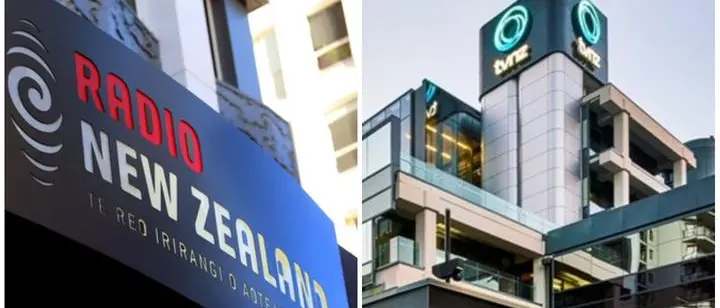
TVNZ/RNZ merger work to stop
The Prime Minister said work on merging state broadcasters Television New Zealand and Radio New Zealand would stop.
RNZ will be given additional funding, as will NZ On Air to support public media content. The remaining funding for the merger would be redirected to other Government priorities.
The Government’s decision to scupper the merger brings to an end five years of work to establish stronger public media, focused particularly on creating a new broadcast outlet.
A total of $23 million has reportedly been spent on the merger, although Act leader David Seymour has accused the Government of spending as much as $30 million.
For comparison, RNZ’s total Government funding was $48.2 million in 2022
When asked about the decision on the merger this afternoon, Hipkins said he didn’t have a figure on how much had been spent, but a financial breakdown would be provided “soon”.
Asked how much money RNZ would need, Chris Hipkins said it would be around $10 million. That was the level of funding needed to make it sustainable, he believed. The sustainability gap was between $5 million and $12 million per year.
RNZ had its funding frozen under most of the previous National Government, which was only lifted in 2017. Its revenue was $35 million in 2008. Adjusted for inflation, this would be roughly $49 million today. A $10 million increase would mean RNZ is arguably better funded than it was before the freeze.
Hipkins said he didn’t want to look backwards with respect to the level of error it was to initiate the merger. He referenced the importance of strong public media but that it could be done in a better way.
When asked whether a charter for TVNZ had been discussed, he said there were mechanisms that could be employed and wouldn’t discount any options at this stage.
Income insurance scheme to change
The social insurance scheme would also be stopped and no legislation introduced this term.
However, inequities in this area would be addressed in the future when the economy had improved.
Hipkins said there were many issues to canvass and there were inequities to address, but wouldn’t comment on the employment future of staff who had been employed as a part of the scheme.
Hate speech legislation
Cabinet also agreed the hate speech legislation would be withdrawn and the matter would be referred to the Law Commission.
The decision allowed them to fully consider the matter, which was a very difficult one, Hipkins said.
He hoped to get cross-party support for the hate speech laws in the end.
When asked how kicking hate speech down the road saved money, Hipkins said it saved time and resources and would consume some of the Government’s focus at times when that focus was needed elsewhere.
Hipkins acknowledged there was "certainly an appetite" for hate speech reform. He denied that he had walked away from the legislation, saying today’s move honoured commitments made in 2020 to progress reform.
Hate speech would continue to be a controversial piece of reform, which indicated why it needed to be done right, he said.

Minimum wage increase
Hipkins said he had concerns for people hit by current economic conditions, mainly those on low incomes. That has led to an increase in the minimum wage by $1.50 per hour to $22.70 per hour - coming into force in April.
While fuel tax cuts benefited most families, he was concerned about those on the lowest incomes who faced “impossible decisions” as a result of the cost of living problem.
Hipkins said he understood small business owners may have concerns about this move.
Hipkins said the impact on inflation would be negligible, adding that analysis from Treasury suggests the increase won’t have a big impact on unemployment as the increase was largely in line with current wage growth.
He said an increase wasn’t raised by business representatives when he met with them last week.
These would not be the last policy changes he would be making, but they were the most substantive, Hipkins said.
Three Waters
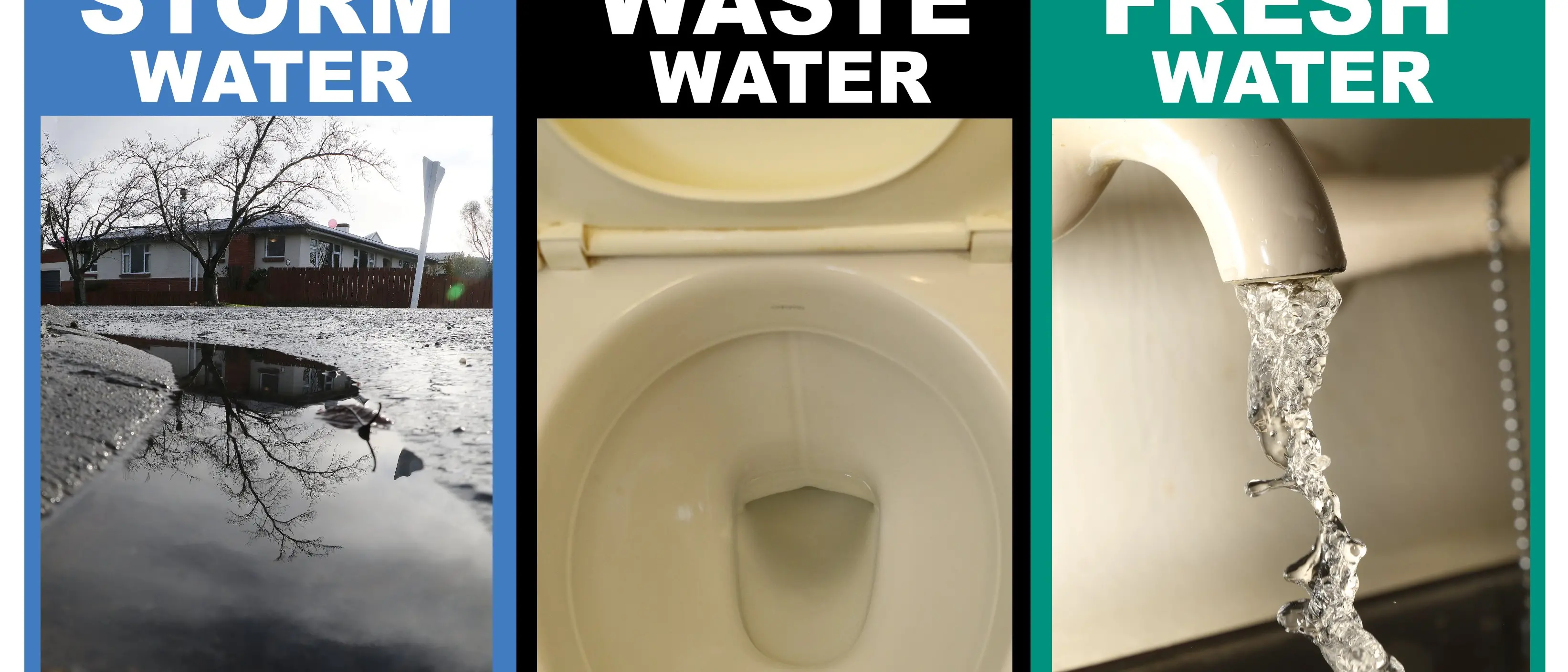
On Three Waters, Hipkins said the “need for reform was unquestionable” and Cabinet had asked the new minister of Local Government to report back on how to refine the reforms.
Hipkins said Auckland’s recent floods had demonstrated why reform was necessary, but more work was needed and this was likely to take a few more weeks.
The Prime Minister said he wanted to refocus those reforms but wouldn’t speculate whether co-governance was the main aspect that needed looking at. Any change to the structure would likely include a change to the governance structure.
“We want to work with local authorities on this.”
He has has previously ruled out completely scrapping the reforms, saying change is needed because of the significant investment needed in infrastructure and the flow-on costs to ratepayers if it is not done. However, he has indicated the co-governance model will be looked at.
Asked if he attempted to slow the Government’s work programme last year, Hipkins said former Prime Minister Jacinda Ardern had accepted late last year that the amount of work needed to be reduced.
Hipkins accepted there would be some things he would like to add to the Government’s programme, but that was not what today’s announcement was about.
Asked how much of today’s reprioritisation comes down to a communications failure, Hipkins said today was an acknowledgement the Government had only so much capacity to take on work, and it could lead to losing focus, which he said indicated why there was a need to refocus.
Biofuels mandate gone
The biofuels mandate would also be scrapped as it would increase fuel prices, Hipkins said.
He added ministers would continue looking at their work programme to see what else might be deemed unnecessary currently.
$5m towards flood recovery
Speaking on the recent weather and aftermath, Hipkins said the floods had been unprecedented.
Cabinet today agreed to give Auckland businesses up to $3 million for discretionary flood recovery payments, up to $1 million to focus on business continuity and resilience, and up to $1 million on mental health for a total of $5 million.
Hipkins acknowledged all the emergency services and organisations involved in the response.
He was aware more bad weather was incoming and the state of emergency was still in place.
Referencing existing support contributed by the Government, Hipkins said 22,000 people had received Civil Defence payments.
Today was the first time that the new Cabinet had met since Hipkins’ reshuffle last week: and a first for new Cabinet ministers Kieran McAnulty, Ginny Andersen and Barbara Edmonds.
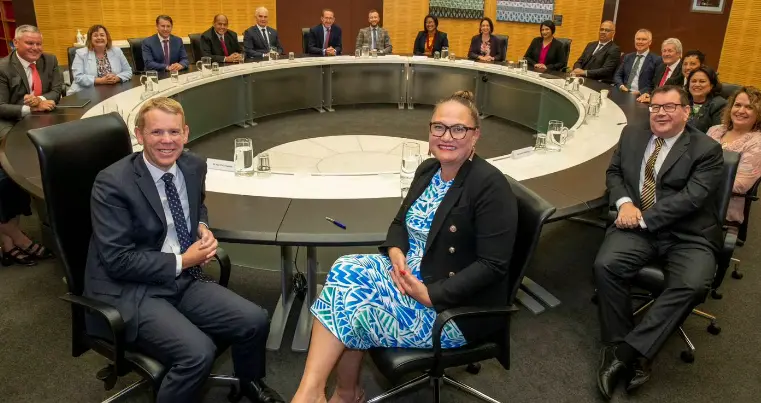
The atmosphere was largely jovial around the circular table – the last to arrive was freshly-minted Minister for Auckland Michael Wood, which prompted a quip from Finance Minister Grant Robertson about how his new portfolio must be keeping him busy.
Foreign Affairs Minister Nanaia Mahuta was the only absentee. Mahuta’s Local Government portfolio was given to McAnulty, which Hipkins said was partly to allow Mahuta to focus on foreign affairs travel. Mahuta is currently in India to meet members of India’s Government.
Labour 'storing pet projects'
The National Party said the new Prime Minister was making up for five years of incompetence and non-delivery by pretending to get rid of Labour’s ideological pet projects.
“Chris Hipkins wants Kiwis to think Labour is listening to voters’ concerns about their priorities, but the reality is the Jobs Tax is just being delayed, hate speech legislation is out for more consultation and Three Waters is still happening," leader Christopher Luxon said this afternoon.
Despite a change in leadership, Labour had not changed, he said.
"They still have no plan to reduce the cost of living, and they are still addicted to wasteful spending. This is deeply cynical politics from a Government that has accomplished little in five years and now wants to pretend they’re listening to the public.
“Labour’s pet projects, which have already wasted tens of millions of dollars of taxpayers’ money, are lurking around the corner after the election. As sure as night follows day they’ll be back on the table if Labour is re-elected in October.
“Kiwis need to know that a vote for Labour is a vote for a Jobs Tax which will be back on the table in 2024, it’s a vote for hate speech legislation being introduced in 2024, and it’s a vote for Three Waters legislation, with co-governance at its heart, stripping local control from communities."
National would repeal Three Waters, stop hate speech legislation and axe Labour’s Jobs Tax once and for all, if elected.