
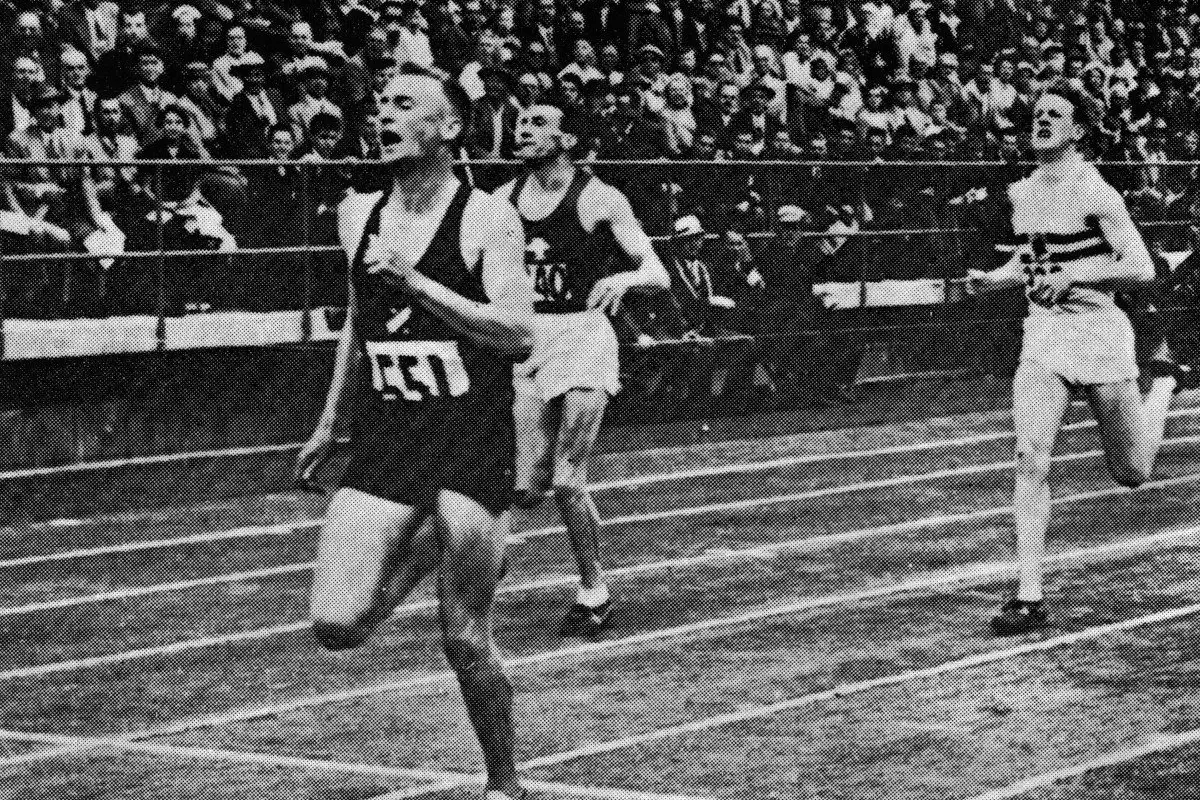
PHOTO
In Joss Miller’s article “Gearing up for Glasgow at the Caledonian Ground’’ (Opinion ODT 25.8.26) he stated that Dunedin could claim some reflected glory in Zoe Hobbs’ gold medal performance at the Glasgow Commonwealth Games.
He wrote that Hobbs had competed in last year’s New Zealand Track and Field Championships held on the Caledonian Ground and this experience would have been good preparation for the cold and wet conditions that she experienced the night that she won in Glasgow.
Joss correctly stated that Zoe joined an exclusive club in New Zealand athletics being only the second Kiwi to win gold in a sprint event at the Commonwealth Games, the other being Don Jowett.
Joss omitted to mention that Don was an Otago athlete when he won his gold medal.
He moved to Dunedin from Invercargill in 1952 having previously represented Southland and before that Wellington. It was while he lived in Wellington that, as an 18-year-old, he won the bronze medal in the 220 years at the Auckland Empire Games in 1950.
His coach in Dunedin was Harold (Jum) Tyrie, himself a former New Zealand representative at the Sydney British Empire Games in 1938, finishing 6th in the 440 yards. He was also a member of the New Zealand 4 x 440 yards relay team which placed third.
1954 began well for Don when he won the New Zealand 220 and 440 yard titles at the national championships in Hamilton. This gained him selection for the Commonwealth Games which were to be held from July 30 to August 7 in Vancouver, Canada.
Preparation for the Games meant that he would have to train through a Dunedin winter. He was already in training, but for rugby — he played for the Zingari Richmond seniors.
However Jum Tyrie convinced Don that it would be a good idea to take a break from rugby and just
concentrate athletics for the winter.
They learnt that the track at Vancouver was cinder. Jum knew that Dunedin had a cinder track — it was at the Tahuna Speedway (now Tahuna Park) and was used for motor bike racing, so a number of times each week this became their training venue.
Jum and Don would meet at the park after work, Don biking from the city where he worked in the National Bank as a teller. Don would run repetition 300 yards in the light of Jum’s car headlights, with a shelter belt of macrocarpa trees to provide shelter from the north east wind. (The shelter belt is still there).
This training regime stood him in good stead. It was not easy and he had to be determined and committed to stick to the demanding regime that Jum set him — as well as few stern words when he fell short of Jum ‘s standards.
On one particular session as the departure date approached, Jum was not happy about Don’s training performances. He said to his charge ‘‘Look Don, just remember that you are competing for your country. Don’t let us down’’.
When training finished they would both head home for a late dinner — Jum to his house on Earls Rd above St Clair and Don to Hall St in South Dunedin where he boarded with Ruby and Jack Keenan.
They were an amateur duo in every sense of the word — part-timers with no financial backing and competing for themselves, Don’s club (Leith), Otago and New Zealand.
They showed that archetypal Otago attitude — you just did what was required and trained in any conditions irrespective of the temperatures and weather.
The result at the Vancouver Games was a gold medal and a silver as well — he was second in the 440 yards final.
Such were the benefits of training in Dunedin and competing at the Caledonian Ground. Even for sprinters.
- Warren Jowett is the late Don Jowett’s brother.