
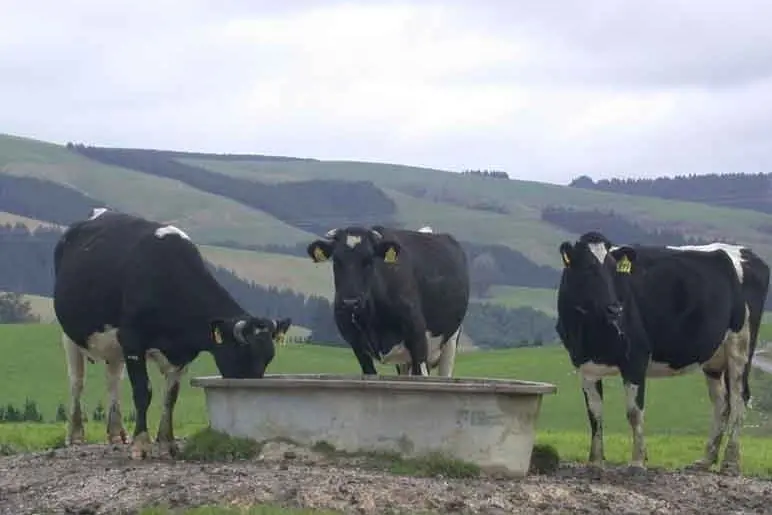
PHOTO
Alan McCulloch (Opinion ODT 9.9.26), Dunedin calls for a tactical war on methane – ruminant methane from our sheep and cattle, in particular.
He uses the horrifying Nepal tragedy as evidence for the need of urgency.
However, a 2024 United Nations University study identified 500 glacial gake outbursts disasters in the Hindu Kush Himalaya over two centuries, beginning well before increases in CO2.
Newsworthy items like the Nepal disaster receive immediate and full coverage which can lead to biased views of how bad natural disasters have become. We are in good shape overall.
Alan should reflect on how inconsequential the gas escaping our ruminants actually is.
New Zealand animals emit 1% of 14% of what is 0.00019% of the atmosphere. The warming is 3 to 4 millionths of a degree per annum – immeasurable and utterly impossible to claim any detrimental impact.
Besides the error that Alan McCulloch had to later correct over exaggerating the amount of outgoing infra-red radiation attributed to methane he made another even more critical and damaging error stating that “30% of methane emissions come from livestock”. His assertion is 100% wrong. It is only 14.5%.
As these two gross exaggerations form the basis of his demand for greater action the rest of his arguments lack credibility.
But it gets more absurd. Ruminants can only emit methane if they are fed grass that is grown by utilising huge amounts of CO2 from the atmosphere.
They are the only so-called “guilty’’ emitter who uses much more of one greenhouse gas (GHG) to produce another.
In fact, studies by AUT show farmers with sheep and cows are close to net users of GHG – 90% - when you account for CO2 used for growing grass, for woodlots, bush remnants, shelter belts, shrub planting for riparian strips, soil sequestration etc.
On-farm trees take 30% of emissions equivalents on their own. Daisy and Dolly stand not guilty.
Alan admits methane is a short-lived gas, unlike CO2, which apparently lasts for hundreds of years. He is right. The IPCC, the international guru on GHGs, also agrees.
Except they then turn around and refuse to let New Zealand use that well-established fact to assess our emissions. A whole bunch of activists who manage to influence IPCC’s decisions blocked the use of what is called “global warming potential”, GWP — the scientifically proven way to calculate methane emissions, so we appear to be worse culprits than we are. By a huge factor of four or five times.
That is why many farmers are deeply suspicious of penalties, government claims and comments like Alan’s.
Alan suggests we do something to encourage others. We have reduced our emissions steadily every year since 2015. We have improved our efficiency significantly. We are the world’s most efficient food/protein producers. We feed over 40 million people.
It means if we were to forcibly cut back to show some puritan example, some other country, with a bigger carbon footprint, would produce that food/protein making the so-called problem even greater.
Farmers have invested over $130 million of their own money into methane mitigation research.
When you realise that just one coalmine in a place like China, which has some 5000 of them, produces more than three times more GHG than our cows and sheep over the same period you see how tough it is to be a shining example. And you can’t eat coal.
So, sorry, Alan, your suggestion of easy fixes or that we “potentially deliver …… quick substantial methane reductions” is just not possible nor is it necessary.
- Owen Jennings is a former president of Federated Farmers and the convener of the Methane Science Accord.