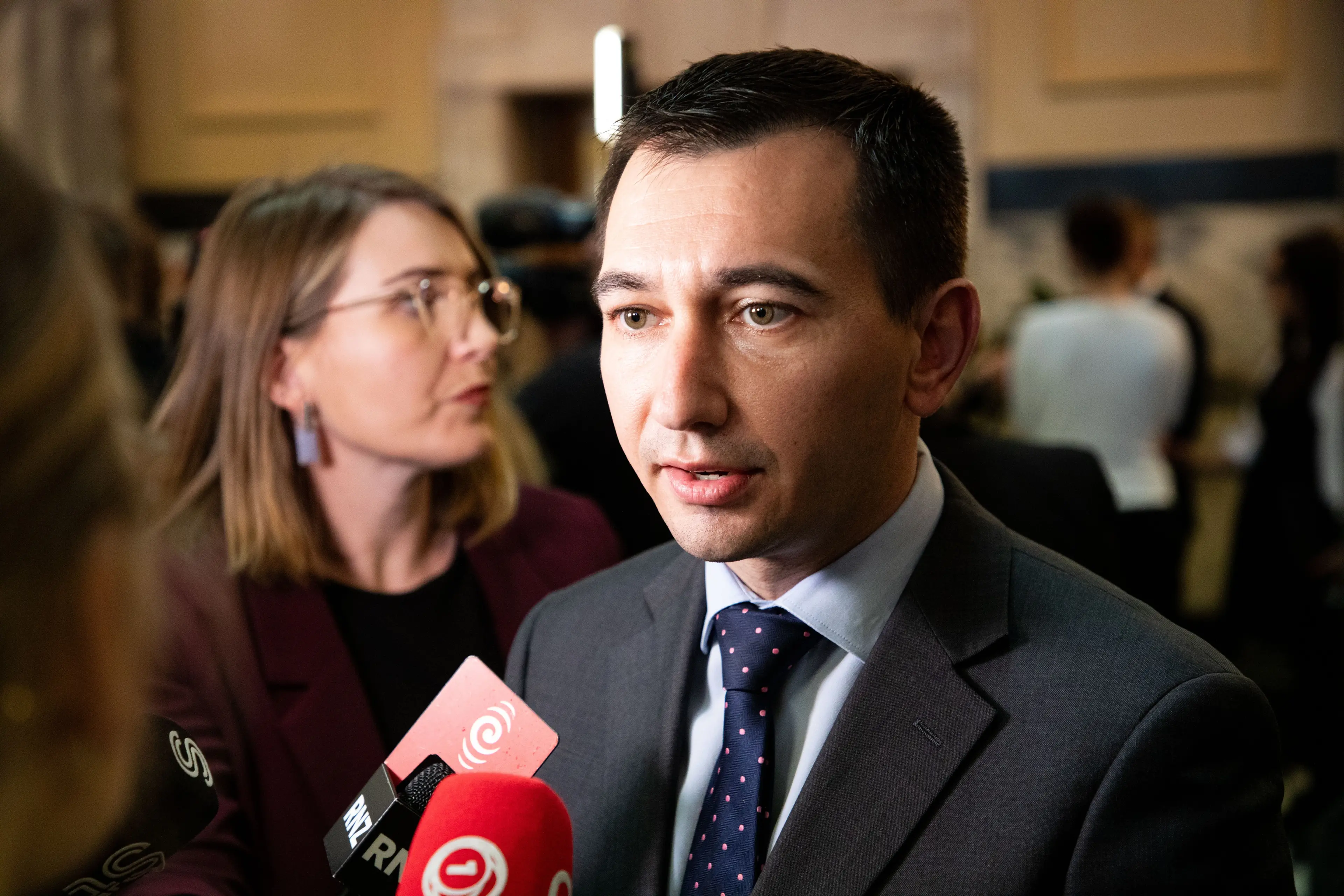
It would have been too much to hope the government’s response to the Royal Commission of Inquiry into the Covid-19 pandemic would be delivered without political posturing. In his press release on it, Health Minister Simeon Brown felt the need to remind everybody about the big spending of the previous government and its impact, the too-long lockdown in Auckland, and to assure us the National-led government was restoring fiscal discipline. The less said the better about New Zealand First leader Winston Peters’ rambling, hyperbolic outburst on this issue in Parliament, playing to the antivaccination part of his voter base. Nuance and adherence to the facts did not feature. He has called the government’s response to the inquiry pathetic, somehow ignoring the fact his party is part of that government. He wants a further inquiry. As University of Canterbury School of Mathematics and Statistics professor Michael Plank said, while some criticisms from the government were valid, it was worth reiterating both phases of the inquiry found the country’s pandemic response saved thousands of lives while limiting social and economic damage. He also pointed out accepting of the recommendations had a hollow ring when earlier this year the government quietly decided to reject the World Health Organisation’s (WHO) International Health Regulations, drawn up after the Covid-19 pandemic. No justification has been given for this. As we said at the time, it was particularly embarrassing given former director-general of health Sir Ashley Bloomfield was the co-chair of the working group on the amendments, and of the drafting group that guided the negotiations of the amendments during the World Health Assembly after the pandemic. The aim of the amendments was to strengthen global preparedness, health surveillance and responses to public health emergencies, including pandemics. The rejection of them seemed to be more about Mr Peters’ Donald Trump-like anti-WHO crusade than anything real. It is hard to understand why his coalition partners went along with it. Prof Plank said effective responses to infectious diseases demanded strong international co-operation. Placing New Zealand outside collective international efforts to prevent and respond to future pandemics was deeply concerning. The government has accepted 21 of the inquiry’s recommendations in full, 36 in principle and partially accepted the other six. Given the controversy around who knew what and when about the risks around two-dose vaccinations for those aged 12-17 years, Cabinet has agreed in a future pandemic, advice behind any major decision affecting people’s individual rights would be published within five working days. Journalists familiar with the difficulty of getting much official information out of the government in a timely fashion might wonder why this is not standard practice in many other circumstances. The government has decided it will not proceed with standalone pandemic legislation, instead proposing a full review of the Health Act. Mr Brown has said this will be a huge piece of work and is expected to take some years. It will be important, therefore, that this receives cross-party support, and does not risk being scuppered by any change of government. Such was the fate of Labour’s comprehensive Public Health Bill in 2007 which languished after the select committee process upon the change of government. It is not clear what consideration was given, if any, to amending the Epidemic Preparedness Act 2006. Mr Brown said the review of the 1956 Act is to ensure any future response balances the protection of public health, the economy and New Zealanders’ rights. Since the completion of any review of the Health Act will be some time away, it is disappointing the government will not be requiring public sector agencies report annually on their pandemic preparedness. University of Otago public health professor Michael Baker regards removing this requirement as reducing accountability across the many sectors that need to maintain pandemic readiness and weakening incentives for sustained preparedness. He sees the next few months as critical in determining whether the inquiry’s recommendations are translated into meaningful action. Mr Brown has said he will be meeting with officials every three months to ensure they were acting on the inquiry’s recommendations. Reporting regularly on the progress of this will be essential for public confidence in the process.