
PHOTO
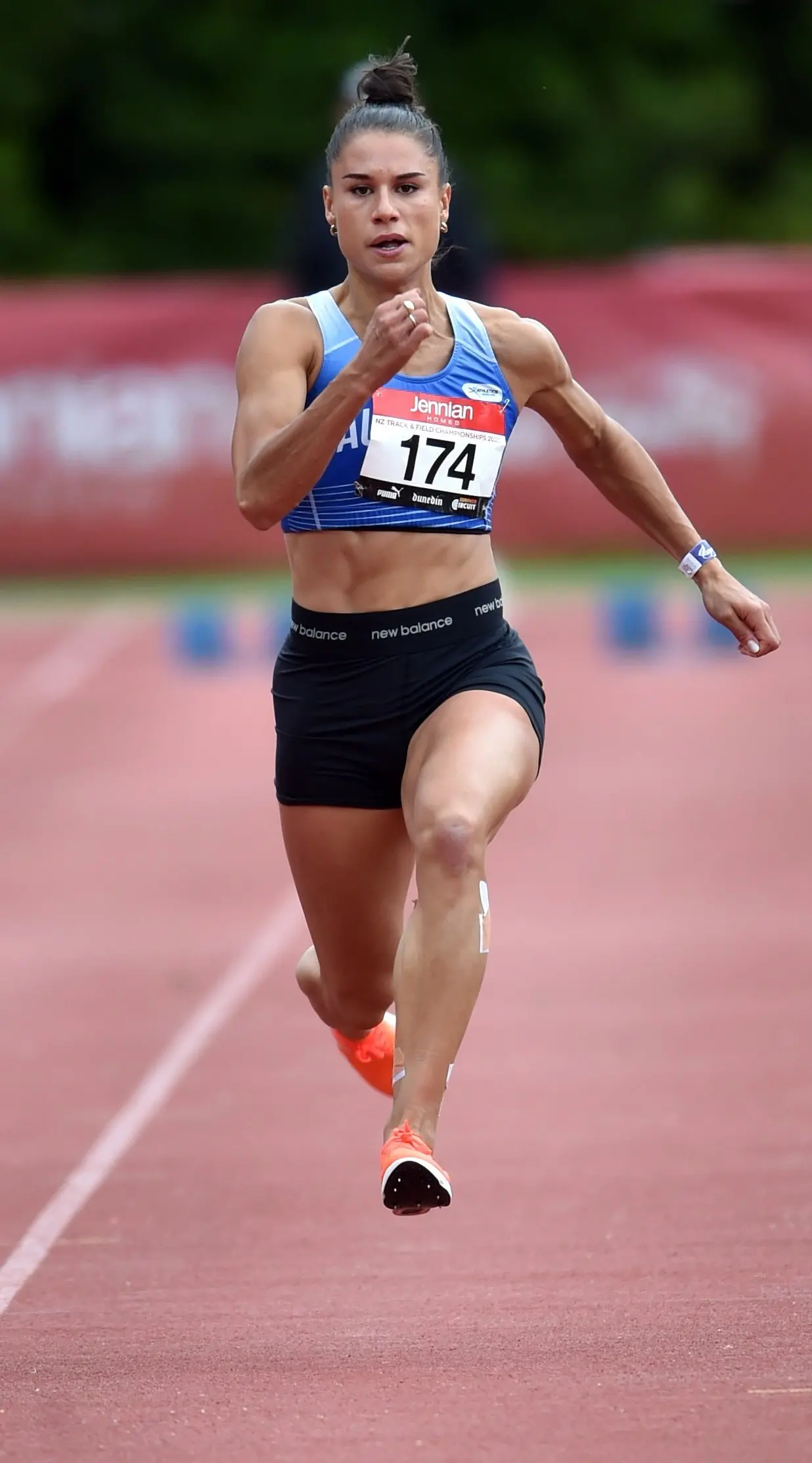
A major high light for New Zealand at the Glasgow Commonwealth Games was undoubtedly Zoe Hobbs’ win in the women’s 100m sprint.
For some years, she has been a well known and accomplished national athlete but found it more challenging to develop an international profile.
This changed dramatically on a cold, wet night at Scotstoun Stadium in Glasgow where water glistened on the running lanes and some thing of a sombre atmosphere prevailed.
As always Hobbs made a powerful start, accelerating rapidly over the first 60m, but importantly was able to maintain the same momentum for the duration of the race for an impressive win.
This was the first time that a New Zealander had won this event, with our only other gold medal sprinting success coming at the 1954 Vancouver Commonwealth Games when Don Jowett was the winner in the 220 yards men’s sprint.
We recall and remember fondly the gold-medal-winning achievements of our middle- and long-distance athletes starting with Jack Lovelock at the 1936 Berlin Olympics and followed in the 1960’s by Peter Snell and Murray Halberg.
Our last Olympic track gold medallist was John Walker who won the 1500m at the 1976 Montreal games. Not to be forgotten, either, is Dick Taylor’s unforgettable win in the 10,000m at the Christchurch Commonwealth Games in 1974.
The dearth of sprinting medals by Kiwis may have something to do with genetics and physiology or is attitude and temperament part of the equation?
Many of the top world sprinters are well endowed physically but their body language is also suggestive of well-developed egos. In contrast, Peter Snell — winner of three Olympic and two Commonwealth Golds during the period 1960-64 — was relatively undemonstrative and some what laconic.
Could Hobbs’ win help spark increased interest in sprint events in New Zealand and inspire a new generation of runners?
From all accounts following her win lots of children around the country were swarming onto parks and sports grounds to test their sprinting prowess. Who knows where this might all lead.
The Dunedin factor in Hobbs’ success should also not be overlooked. She was asked in an interview a day or so prior to the final how she would cope with the inclement conditions.
Interestingly this was not viewed as a problem and in fact might be beneficial. She went on to mention her experience of competing successfully in Dunedin under similar circumstances and adapting to and coping well with this.
No doubt it is part of an ongoing process of developing resilience to be able to adjust and deal with what ever environmental challenges are presented.
All the stars finally aligned in Glasgow for this talented and determined athlete. She scorched to victory in 10.93 seconds and has now been catapulted to genuine international status.
I have fond/mixed memories of running at the old Caledonian Ground in South Dunedin with its location close to the former gas works. Conditions were frequently on the cold side with the added challenge of a stiff afternoon breeze buffeting the runners.
An awareness at times, too, of the occasional smell of gas as it wafted over the ground and which one suspects was unlikely to enhance athletic performance.
Given Dunedin’s location as the Edinburgh of the South and our strong Scottish connections, the Dunedin City Council may want to consider inviting Zoe Hobbs to our fair city to celebrate her incredible achievement and to acknowledge how our much-maligned climate may have contributed to her athletic development and success.
Perhaps a plaque to go with this and maybe an exhibition 100m at the new Caledonian ground as well.
Hobbs’ next major goal will be the Los Angeles Olympic Games in 2028. There will be high expectations for her but it is important that things are kept in perspective.
The Olympics will be much more competitive than the Commonwealth Games. The climate and conditions will differ greatly from Glasgow.
What is certain, however, is that everyone in New Zealand will be wishing Hobbs every future success, whatever that might be.
For now though her gold medal success will be part of New Zealand sporting history for generations to come.
- Joss Miller is a retired Dunedin lawyer and athletics enthusiast.