
PHOTO
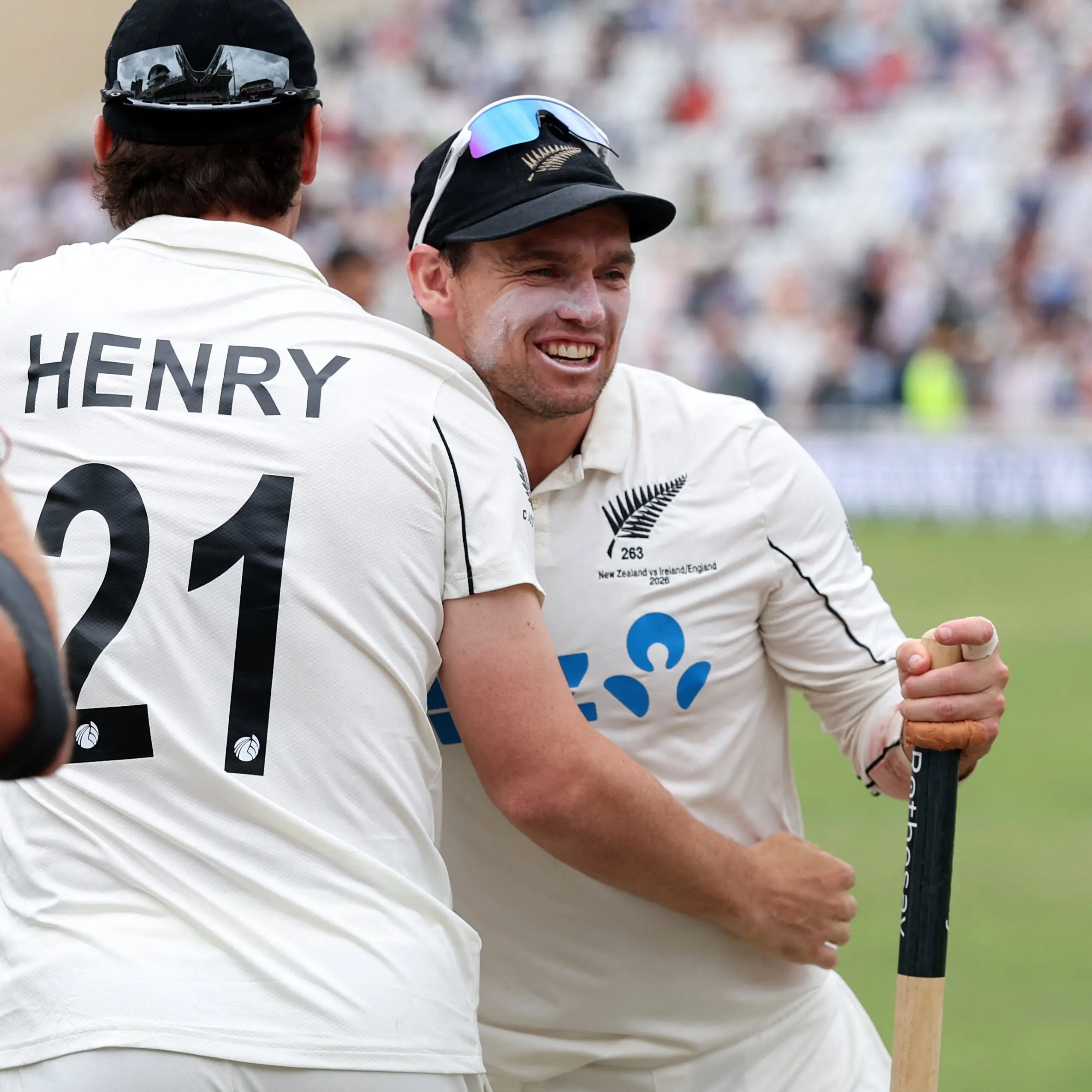
The recent cricket test series in England has thrown up a change of course in the greatest game of all and throws into relief its unique character.
Cricket is a team game but one which also depends more than any other on individual skills and performance.
Test cricket is what it says on the tin: a gruelling test of teams and individuals over up to five days of changing weather, pitch, ground and crowd conditions.
It finds out the real abilities of those players who have excelled at lower levels and uncovers unlikely heroes.
The game is supposed to be played in the ``spirit of cricket’’, the unwritten rules of respect, fairness and integrity.
Test series are usually won by those who follow those rules and who find the right balance between individual endeavours and playing for the team.
In this last series, New Zealand did and England didn’t.
A cricket tragic like me can find answers in the endless stream of statistics.
In that series our players scored five centuries to England’s one.
All of them contributed to our success, but two of them, Glenn Phillips’ in the second test and Daryl Mitchell’s in the third were lynchpins when games could have gone either way.
The critical difference in the two teams’ culture was thrown into sharp relief on the fourth day of the third test.
As Mitchell ground out his century to ensure his team would be in a winning position, England captain Ben Stokes decided this was the time to announce his retirement from international cricket.
As the crowd chanted ``boring’’ to Mitchell’s effort, punctuated by numerous blows to his body, Stokes walked on to the ground to rapturous applause.
No matter his team was going down.
His end will be remembered for throwing the game by trying to hit the ball out of the ground as an opener.
It was all about his own celebrity.
He showed no respect for his team, the opposition or the game.
In the same series, the way our greatest batsman resigned from international cricket offered the greatest possible contrast.
Kane Williamson chose to quietly depart after the first test when he felt he could offer no more and expressed confidence in his team-mates to take New Zealand forward.
As they did.
His media ``interview’’ was a statement to one camera.
The behaviour of our current captain, Tom Latham, was also modesty itself.
Test cricket has been degraded by the T20 fast-food version of cricket with its pursuit of cash and celebrity.
One-day cricket may still offer a good lunch with an occasional beer, but only tests can serve up a three-course meal with the best wine.
The New Zealand team should get a Michelin star for the way it went about working together in taking the test menu seriously.
England seems to have lost its way in pursuing the wrong recipes.
It is tempting to present all this as a metaphor for the state of the two nations.
The sorry state of the England test team seems an accurate representation of that country’s current social and political condition.
Our players’ projection of teamwork clustered around individual brilliance reflects the best of us.
But detracting from this ideal are the endless T20 short-format hit, miss and bash games from Parliament and the Beehive.
Some serious captaincy is needed there.
Our test team can provide some vital coaching tips.
• Philip Temple is a Dunedin author who watched his first test match more than 70 years ago.