
PHOTO
An independent report into the Mauao landslide disaster which identified it was preventable disaster shows the natural consequence of how our society treats risk Simon Connell writes.
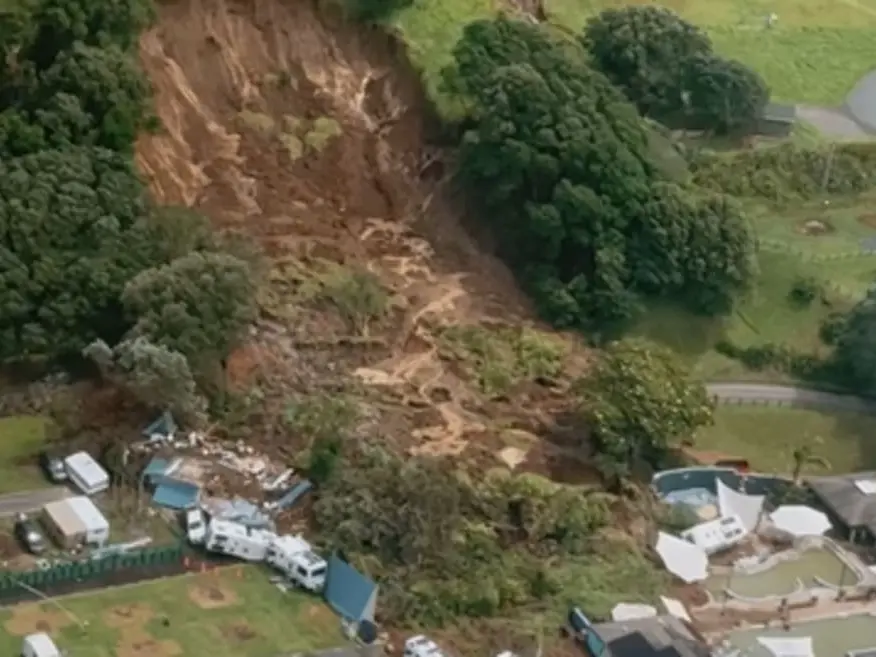
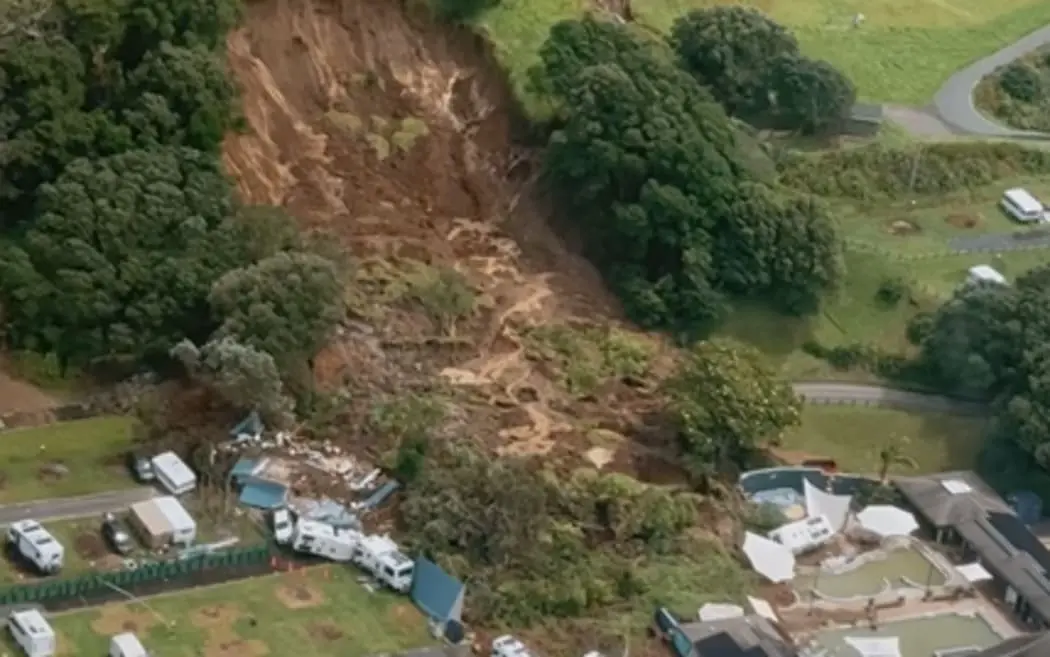
Just before 9.30am on January 22 this year, a huge landslide from the lower slopes of Mauao (Mount Maunganui) engulfed an amenities building at the Mount Maunganui Beachside Holiday Park at the base of the Mount.
Six people were trapped, and all died.
The Tauranga City Council — to its credit — promptly commissioned an external review by former High Court judge Hon Paul Davison KC.
The report was released several days ago. It makes for sobering reading.
The overarching conclusion is that there was a systemic failure to identify and act on the clearly documented risk of a landslide.
A systemic failure is when an awful event occurs because the system allowed risk-taking that should have been unacceptable despite the different pieces of the system collectively having enough information to know better.
That can occur without any one individual person making a deliberate choice with full appreciation of the likelihood of harm.
For me, the worst thing about reading the report was not finding out that the council had been warned about the risk of landslides to the holiday park at least as early as 1999.
Neither was it finding out that the warnings had continued over the years, with multiple expert consultants identifying the risk of a landslide on the very part of the Mount where the landslide happened.
Neither was it the numerous unheeded warning signs immediately preceding the landslide, when there was still time to have evacuated the campsite.
These included: an extended period of heavy rainfall, landslides on other parts of Mauao, smaller slips at the same site as the fatal landslide, and “the obvious presence of a stream of muddy turbid water flowing from the foot of the soon to fail slope”.
Neither was it the clearly correct conclusion that, had a Trigger Action Response Plan been in place, evacuation would have probably occurred well before the landslide, and no one at the campsite would have died.
No, the worst thing about reading the report, as someone who researches and teaches about legal responses to accidents, was the feeling that I’ve read this before.
A systemic failure to properly respond to a known risk. That’s sadly familiar.
Some examples:
The 2009 independent Report to Trustees of the Sir Edmund Hillary Outdoor Pursuit Centre of New Zealand on the Mangatepopo Gorge Incident, where six students and one teacher died while on school camp after a flash flood, identified numerous failures, including inadequate assessment of swimming ability, a “can-do/rain or shine” approach to carrying out activities in adverse weather, and failures to look at the weather map or check for an up-to-date forecast.
The judge who presided over the prosecution of the Outdoor Pursuit Centre said the tragedy should not have happened and could have been avoided.
Here’s the Royal Commission on the Pike River Coal Mine Tragedy from 2012, in a report that led to our current health and safety law: ``This, sadly, is the 12th commission of inquiry into coal mining disasters in New Zealand.’’ This suggests that as a country we fail to learn from the past.
There were numerous warnings of a potential catastrophe at Pike River. One source of these was the reports made by the underground deputies and workers … The reports of excess methane continued up to the very morning of the tragedy. The warnings were not heeded.
In 2019, Whakaari (White Island), an active volcano, erupted. 47 people were on the island at the time, all tourists or tour guides. 22 died and the other 25 were all injured, most seriously.
The Sentencing judgment for the tour operators that pled guilty to health and safety offences records that the tour operators had conducted risk assessments but that they were “fundamentally inadequate” basically because they did not properly take into account the risks associated with bringing tourists to an active volcano.
The Judge said: ``[P]roperly assessing risk to tourists and employees caused by an eruption was blatantly fundamental. This was a unique operation, so there was little in the way of established practice for the defendants to turn to. None of the defendants had any volcanology expertise. They had to get risk assessments done by the appropriately qualified people. If necessary, they needed to get advice on understanding their own obligations in relation to that risk. That failure compromised everything else they did. That failure exposed others to the risk of serious injury and death.’’
The issue of failing to properly take into account the safety issues related to visiting an active volcano was also highlighted by an independent review into WorkSafe’s handling of tourism operations on the island before the eruption.
Basically, WorkSafe had been arranging for health and safety audits of tourism on the island as generic trekking/mountaineering activities.
There are some common themes running through these reports.
A known risk not taken as seriously as it could have been.
Warning signs ignored.
Different people and organisations not communicating or working together as well as they could.
Systemic failures.
We are in the early days yet in terms of accountability in relation to the Mauao landslide.
WorkSafe is investigating. I don’t want to speculate or comment on that here.
What I do want to say is this: this latest disaster is a natural consequence of how our society treats risks. And we should be ashamed of that. Because it keeps happening.
Kiwis have a love/hate relationship with health and safety. When one of these preventable disasters occurs, we tend to want strong health and safety laws and accountability.
But, at the same time, we joke about “health and safety” and get irritated when road cones block our path (or even just get in our field of vision).
This isn’t just a law problem, it’s a culture problem.
I don’t know what the solution is, but I do know that unless we do things differently, I’ll be feeling the same way the next time some independent report spells out all the things that could have been done to prevent deaths in whatever the next awful disaster is. — Newsroom
- Dr Simon Connell is a law lecturer at the University of Otago, specialising in accidents and the law.