
PHOTO
The dust has settled, at least for now, on responses to the Head Start local government amalgamation pathway initiative.
What remains, however, are several critical questions: will the proposals submitted to the government by local government meet the criteria of the pathway?
Will they create large unitary authorities capable of delivering good quality and cost-effective local infrastructure, public services and regulatory functions?
Will they support the new planning system and current regional council functions in the areas of integrated catchment management and transport? How will a balance between urban and rural interests be achieved?
In North Canterbury, political parochialism has inhibited collaboration that would meet the urban/rural balance of interest criterion. The rurally-orientated districts surrounding Christchurch have been unwilling to consider amalgamating with the city – a situation that is also favoured by a majority of Christchurch City councillors.
This denies the reality that the residents of those rural districts are frequent users of Christchurch’s urban services and facilities, and urban residents are very regular users of their neighbouring rural districts.
There are strong links between urban and rural communities. Each depends on the other.
Other proposed amalgamations reported in the media would create unitary authorities that undermine the integrity of regional catchment and other environmental management functions.
This point has been made by a number of commentators. Among them, in his critique of the Planning and Natural Environment Bills, the Parliamentary Commissioner for the Environment observed that if critical functions such as managing water, soil erosion and natural hazards are fragmented, the risks to environmental management would be serious.
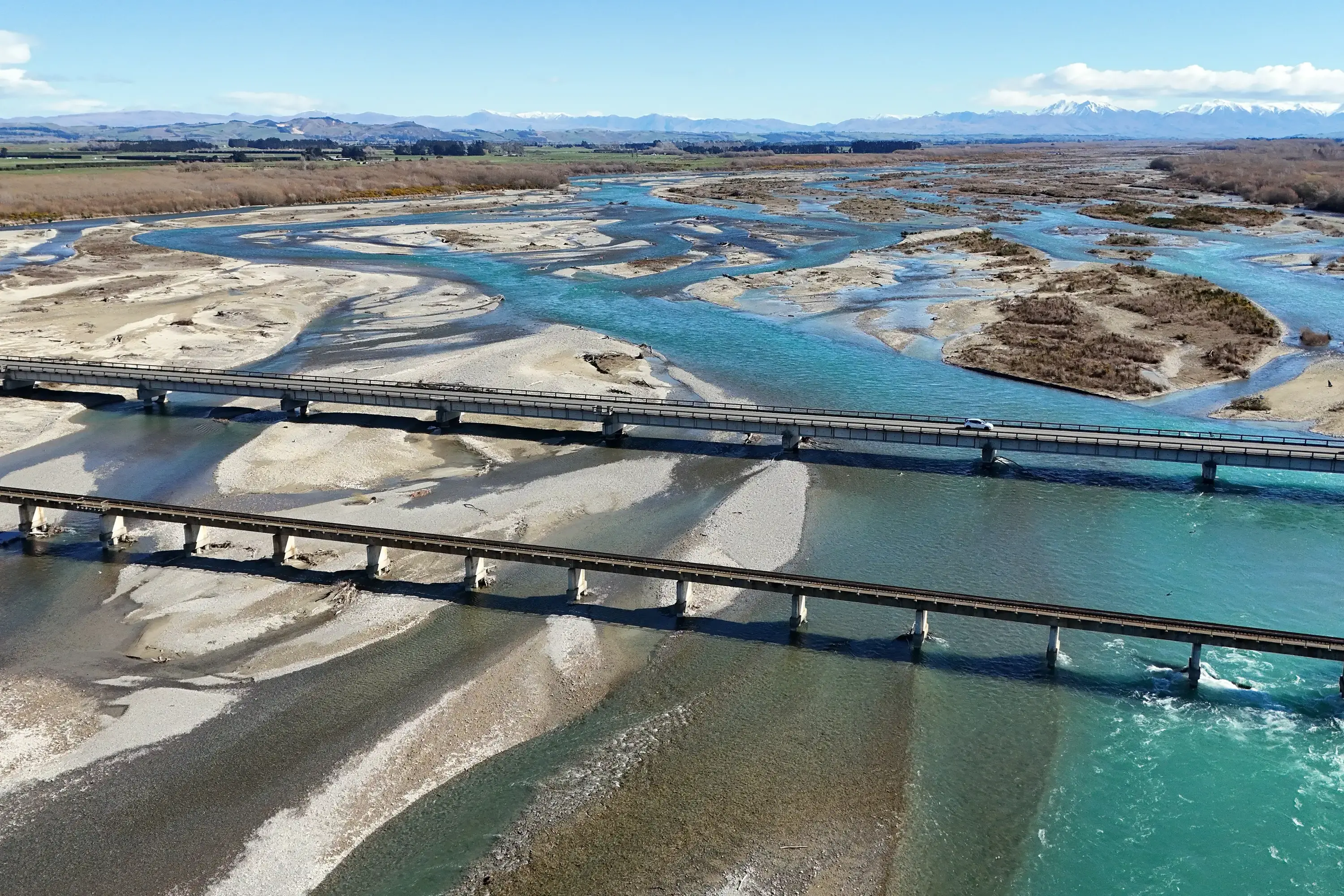
The Canterbury examples above are a case in point. They are unclear about who will be responsible for managing the region’s braided rivers that dissect the plains.
The Otago proposal of an inland and coastal unitary authority, reported in the Otago Daily Times, is another good example of failure to acknowledge the importance of integrated catchment management.
Its proponents would fragment the management of the Clutha/Mata-Au, Taieri/Taiari and Waihemo/Shag catchments, and separate urban Dunedin from its Central Otago rural and small town hinterland.
The North Otago/South Canterbury proposal, joining the northern wards of Waitaki District and Waimate, McKenzie, Timaru and perhaps Ashburton Districts, has much to recommend it.
This would create a unitary authority that centres on the Waitaki, Opihi, Rangitata and perhaps the Rakaia catchments.
The single Southland unitary authority proposal is of a similar ilk. Both proposals have the capacity to meet all the Head Start pathway criteria.
Kāi Tahu has made a very useful contribution to the debate, suggesting that the current 24 councils in its Te Waipounamu ’s takiwā should be reduced to five large unitary authorities bounded by major river catchments supported by locally elected boards and a South Island-wide shared services entity. This approach would most assuredly help overcome the fragmentation problems in the North Canterbury and Otago proposals highlighted above.
But, to date, we have seen very little commentary about regional planning in any of the proposed new regimes. There has been almost no reference to the pressing need for a regional approach to managing the impacts of what can only be characterised as “Think Big Mark Two”.
As an example, the current number of fast track housing developments in Central Otago, prospects of gold mining not only at Bendigo but potentially other sites in Otago, and another international airport in Tarras scream out for a large unitary authority with the capability to address and manage the myriad regional and local impacts which will inevitably ensue.
And what about the complete silence on the fundamental question of funding? Local government is responsible for the implementation of many statutes and the cost of doing so will keep on increasing, whatever the new structure of local government.
The need for revenue sharing between central and local government is an obvious solution but one which has been consistently rejected by governments for well more than 100 years. This has to change.
The current burden on ratepayers is invidious and unsustainable.
If the present government wishes to see larger unitary authorities supporting the delivery of good-quality and cost-effective infrastructure and services, it has to come to the party with a new financial deal. Otherwise, its objectives will not be met.
- Harvey C Perkins and Jennifer Dixon are Professors Emeriti, School of Architecture and Planning, University of Auckland and residents of Christchurch and Cromwell.