
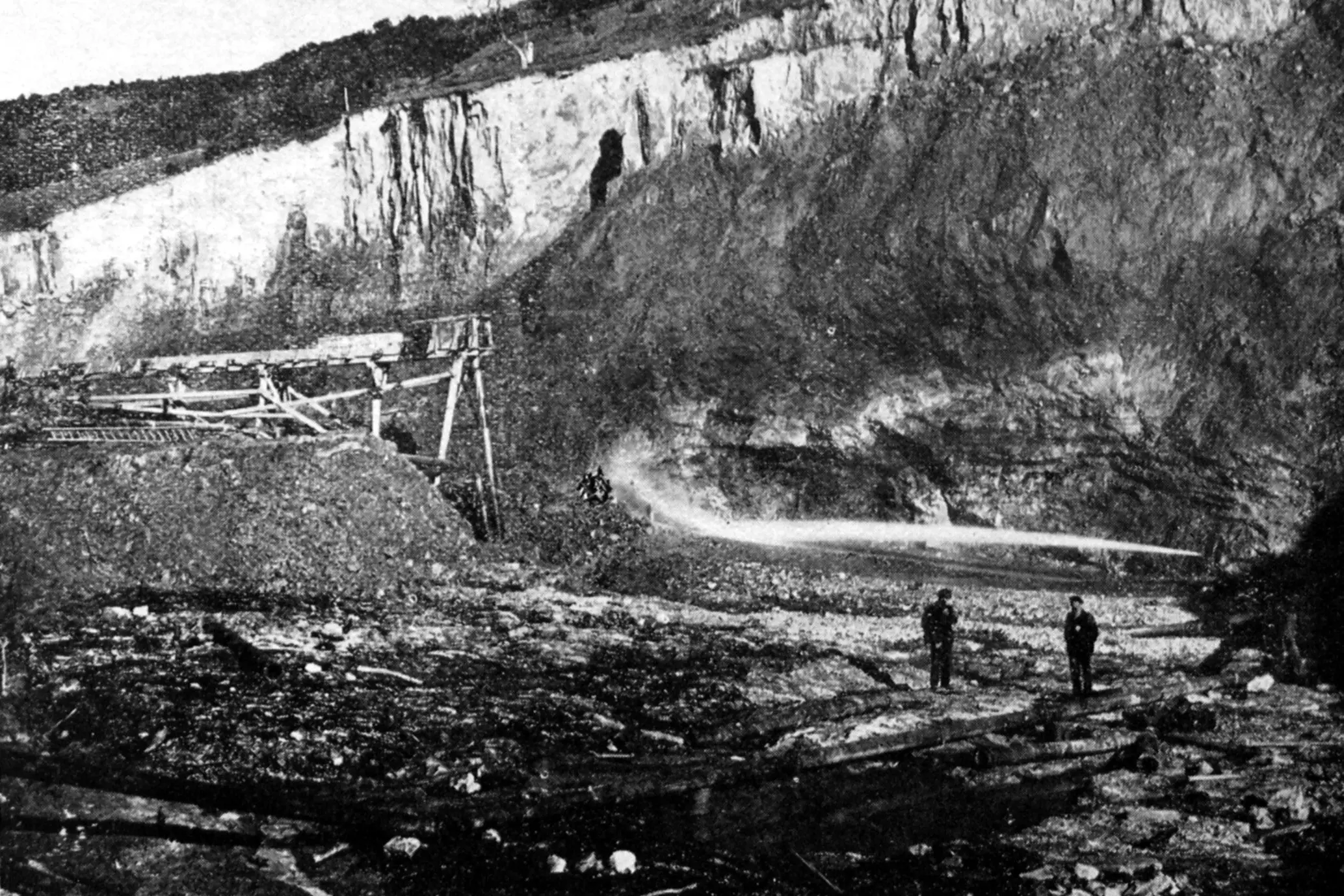
PHOTO
There has been considerable debate about the proposed Santana goldmine at Bendigo Tarras with it extensively covered by the Otago Daily Times.
However, I have found much of the historical context and impact of goldmining in Otago to be lacking from this debate and appears to have been conveniently put to one side.
Any cursory Google or AI search on the topic of gold and its impact on Dunedin and the province of Otago will generally start with words such as ``profound’’ or ``significant’’ and one such online article states ‘The Otago gold rush fundamentally transformed Dunedin from a small Scottish settlement into New Zealand’s largest, wealthiest, and most influential city during the 1860s’.’’
The words profound and life-changing do seem appropriate.
With the advent of gold discoveries in the Otago hinterland, Dunedin was transformed from a rather sleepy, Scottish Presbyterian port town into a bustling, lively and energised New Zealand power base.
Millions of ounces of gold flowed through Dunedin along with the city population mushrooming from 2000 people in 1861 to over 16,000 by 1864. That wealth allowed for the construction of the architectural buildings which are so much of Dunedin’s character, so cherished today and promoted as a significant visitor attraction.
It is fair to say there was massive business and trading boom and that prosperity meant the Dunedin City Council (or Dunedin Town Board as it was known then) was able to invest considerably in roading, infrastructure and civic works.
Dunedin had undoubtedly become the most powerful metropolitan area in New Zealand.
It is interesting to note that even the Otago Daily Times, established in 1861 by Jules Vogel and William Cutten, was born out of the economic growth and population boom derived by Otago’s various gold rushes.
Vogel himself being a goldfields correspondent, had followed various rushes in Australia and ended up in Dunedin with the onset of discoveries here.
The point to all this, is that we cannot deny the profound influence gold had on Dunedin and Otago and the catalytic effect gold had on Otago’s economic development.
There is hardly any town, district or part of the province which was not in some way impacted by gold and what it brought. It would be foolhardy and myopic to not recognise that Dunedin and our great province was ``born of gold’’ and that it has a significant place in our history and more than likely in our future.
The impact of the gold rushes was not however just on economics at a macro level or on Dunedin’s architecture or infrastructure but it had a very meaningful and enduring impact on people and small businesses,
My own family was very much the beneficiary of gold and all it brought with my great grandfather, Thomas Cossens, establishing an engineering and foundry business with Alexander Black in 1874, known as Cossens and Black.
While initially concentrating on agricultural and industrial products , much of their later business came in servicing the mining industry with heavy engineering of gold dredges, mine plants, race piping and various other mining equipment.
At its peak the company employed 100 people and yet it was not operating in isolation as there were many
such Dunedin and Otago businesses providing goods and services to the mining industry.
Back to today and the arguments for and against the Santana Bendigo mine.
With respect, it does appear to me that many of those in opposition to the mine seem to have forgotten what gold actually did for Dunedin and the province and that the very lifestyles they enjoy today came from the hard graft and toil of past miners.
It is worth asking the question, what would Dunedin look like today if it were not for the gold mining industry of Otago? I imagine it would have maintained the trajectory of a sleepy port town it had before the gold rushes and almost certainly there would not have been the money and economy to build such lavish architectural buildings.
Equally would the University of Otago have prospered without a mining economy to support it?
To me, the matter of the Santana mine is about risk and whether it can be mitigated. The decision cannot be foundered on the very, very remote possibility of a tailings dam breach, for if we took that argument then not even the Clyde dam would have been built nor would the very successful 30 years of the Macrae’s mine have been possible.
What we must do is balance the risk against the return to the people of Otago and in my view, if we consider the substantial and unique benefits that gold provided Dunedin, in fact many towns within Otago.
Then if the risks can be appropriately mitigated, and I believe they can, then the benefits far outweigh the risks.
But more than that, the Santana mine is about the many thousands of people who will be positively affected by the mine in the many downstream industries and services which spring up to support a gold mine of this size.
There is no question the Central Otago and Queenstown Lakes regions must diversify. We simply cannot rely on tourism, agriculture and horticulture which all face their own ups and downs at various times as does mining of course.
Take viticulture for example, it is facing tough times with up to 50% of vines having been pulled out around Gisborne and grapes being left on the vine in Marlborough.
If we are to improve standards of living and incomes for our children, then surely it is imperative we do not rely on a small number of revenue streams and industries?
So as the fast track panel weighs up their decision on the Santana Bendigo gold mine, I hope they are very cognisant of the ``profound’’ and ``transformative’’ impact the early gold rushes had on Dunedin and the wider Otago region and the potential for the Santana gold mine to do the same.
We must never forget the very privileged life we lead in Otago came from our original goldminers who took great risks, endured gruelling, unimaginable conditions and on whose strong backs our proud province was founded.
- Dr John Cossens is a Wānaka businessman.