
PHOTO
When heavy rain began lashing Dunedin on July 5, a team of council staff, contractors, volunteers and emergency services were already busy.
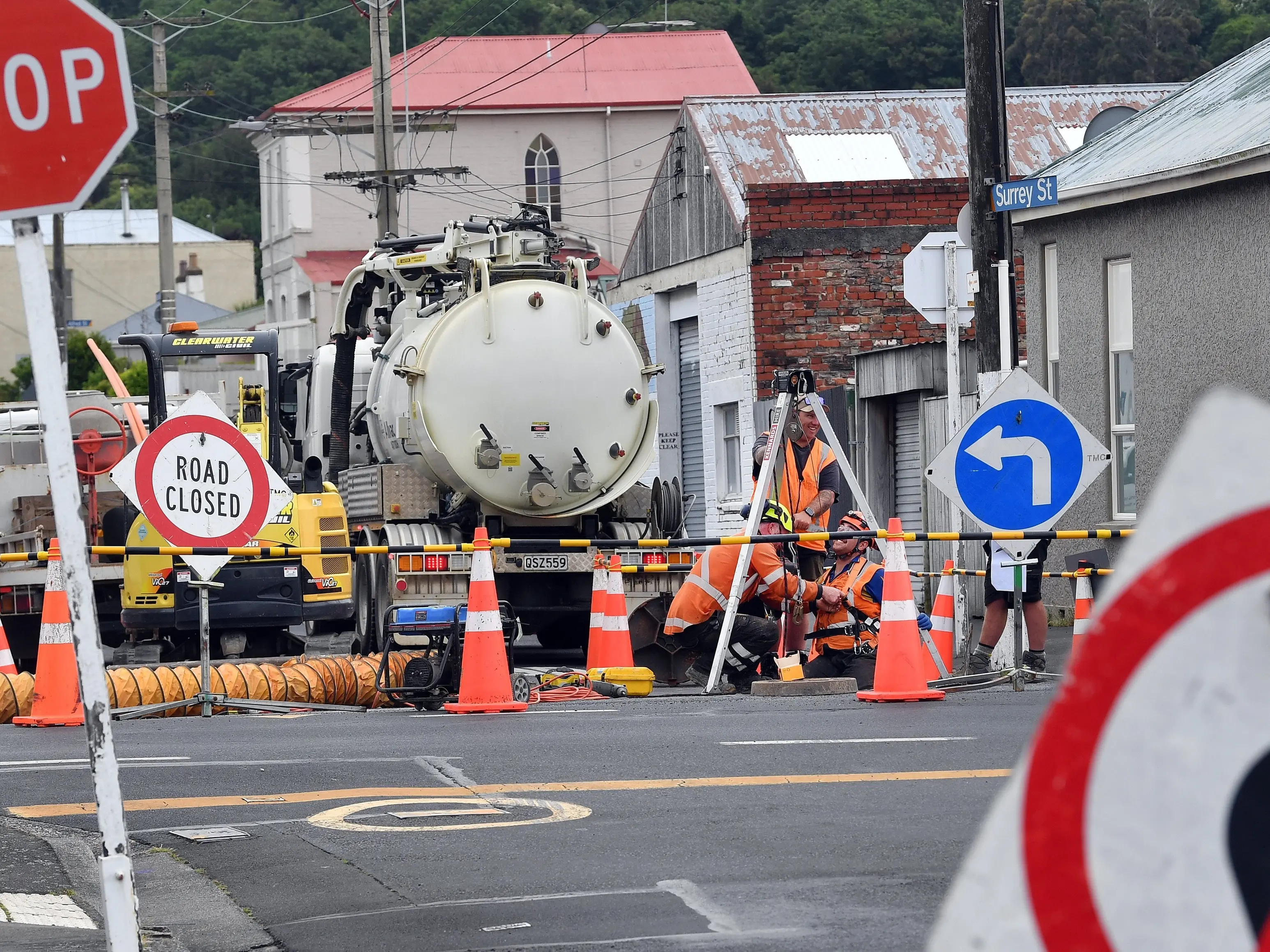
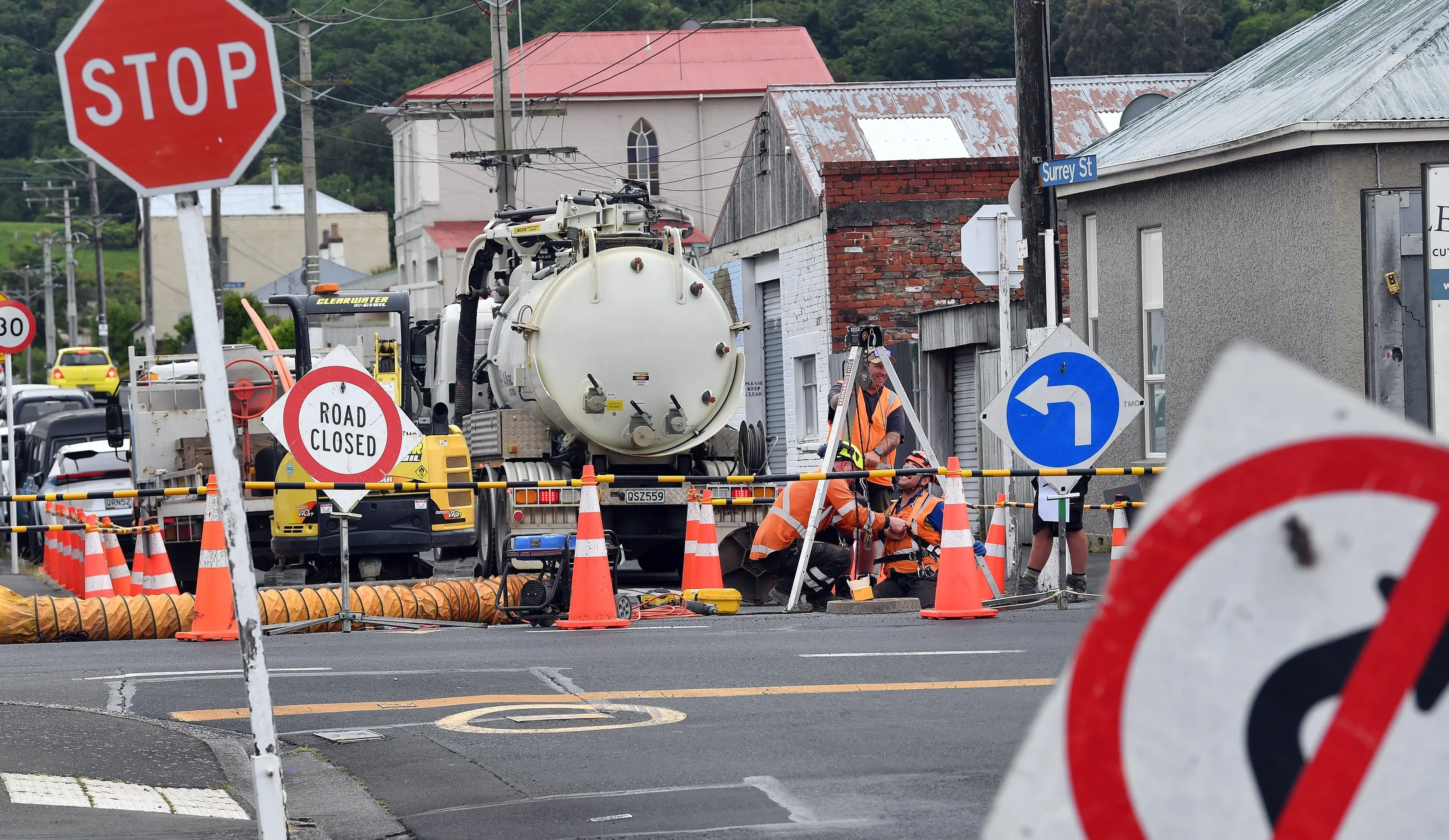
In the hours before the storm, Dunedin’s gutters and mud tanks were checked and cleared, the city’s wastewater pipes pumped to reduce volumes in the network, sandbag stations were open, flood barriers were up in Surrey St, and the Civil Defence bunker was a hive of activity.
The aim was to ensure the city was ready for the coming deluge – with indications of up to 120mm (the equivalent of nearly two months’ rain) expected over the next 24 hours.
Naturally, nervous eyes were once again on South Dunedin – the scene of significant flooding in 2015 and again in 2024, when heavy rain overwhelmed the existing infrastructure’s capacity to cope.
Nobody wants to see flooding – least of all homeowners and tenants, but also the DCC staff, contractors and volunteers who swing into action whenever weather events loom.
But something different happened in South Dunedin this time. The stormwater and wastewater systems coped, Surrey St did not flood, and the suburb came through the event largely unscathed, despite another round of worry and uncertainty for residents.
Why? Put simply, because the DCC has not been sitting on its hands.
While much of the public’s attention has centred on the South Dunedin Future programme and its long-term options for South Dunedin, the DCC has also been continuing to roll out a range of ``pipes and pumps’’ improvements across our network.
We’ve spent millions in recent years on 3 Waters capital and renewals projects in places like Kaikorai Valley – work which has a direct benefit in easing pressure on South Dunedin’s pipes because of the interconnected nature of the network.
We have also upgraded the Portobello Rd pump station, improving the city’s ability to quickly clear water from our network and increasing the capacity to cope with deluges like last month’s.
Our current 9 year plan also includes $15 million for flood alleviation work in South Dunedin, and a further $29.2m for other short term improvements in South Dunedin which are already being rolled out.
This includes:
* Diverting the Bay View Rd and New Street stormwater systems to a new stormwater pipe, carrying it to the Portobello Rd pumping station (estimated cost $1.9m);
* Upgrading the size of the Forbury Rd stormwater pipe (estimated cost $12m);
* Disconnecting the Hillside Rd stormwater mains and pumping it to Orari St stormwater outfall instead (estimated cost $15.2m).
Work on all three of these projects is underway, as each moves through the feasibility study phase and then on to design, and at this stage – subject to further council decisions – construction of each is expected to begin in 2026, 2027 or 2028 with the Bay View Rd and New St work scheduled to start construction first.
This is in addition to the short-term wastewater network improvements we have completed in the vicinity of Surrey St, including new cross-connections at the Macandrew Rd/Surrey St intersection and modifications to existing overflows at the Surrey St/Hillside Rd intersection.
Taken together, the work we’ve already done is already making a material difference to the performance of our network, including in South Dunedin, and there’s more to come.
Hydraulic modelling confirms this and now estimates wet weather flooding from the wastewater network in Surrey St, which was previously expected to occur in a 1-in-2-year rainfall event, is now predicted to occur in close to a 1‑in‑20-year event.
This equates to reducing the annual likelihood of an overflow in Surrey St from around 50% to closer to 5%.
We’ve also made other improvements too, including overhauling mudtank maintenance and improving the way we respond in a Civil Defence emergency.
We also use SCADA, the operational management tool, to monitor volumes inside our 3 Waters network, live and in real time, from the Civil Defence bunker. This helps inform our understanding of the wider picture unfolding across the city.
The broader challenge for our network has always been – and remains – analogous to even the smallest pipe trying to accommodate a larger volume of water – no matter how good the pipe is, if it’s not big enough it will eventually fill with water and cause flooding.
The same is true of even our biggest 3 Waters infrastructure – our pumping stations and treatment plants – and our network as a whole. Put simply, the network has limited capacity, and rainfall that exceeds that will lead to flooding.
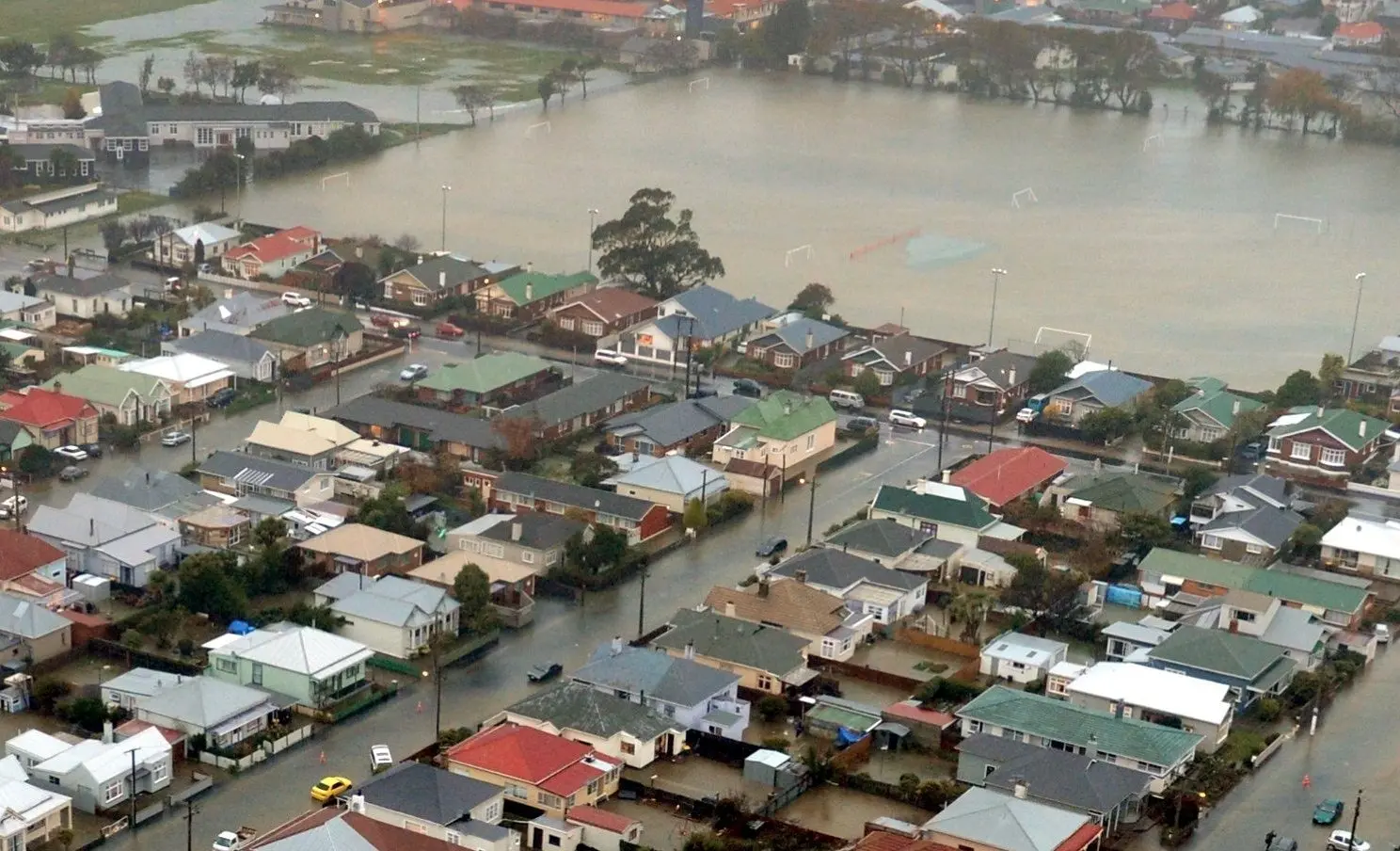
That’s ultimately what happened in 2015 and again in 2024, and we saw it again in 2026 – this time in Mosgiel, where the most intense rainfall fell during the July downpour, overwhelming our wastewater and stormwater systems for a time.
We are now working through this and in contact with various members of the community as we consider a way forward.
One way to address this challenge is to rely on new pipes designed for a 1-in-10-year rainfall event to accommodate flows, while using our road carriageways (between the footpaths on either side of a street) as ``overland flow paths’’ that contain flows that exceed pipes’ capacities, up to a 1-in-100-year event.
This is a pragmatic and affordable approach in some parts of our city, but less so in older, flatter suburbs like South Dunedin and Mosgiel. On the flat, the engineering options quickly boil down to larger and more expensive pipes and a broader reconfiguration of the overland network, which means moving houses.
The fact that parts of the South Dunedin network are now between 50 and 100 years old, and are part of a network designed in a way that reflects the era in which it was built, only complicates matters further.
In July this year, before the first drops of rain fell, our pump stations were running hard to drain as much flow from the network as possible and maximise the storage capacity inside the system.
Once the rain set in, staff inside the Civil Defence bunker kept a close eye on flow rates and levels inside the network – looking for signs of trouble.
At the height of the downpour, in the early hours of Monday morning, the network was approaching capacity and more rain than the system could cope with was still coming in.
The Civil Defence Controller was considering whether to declare a local State of Emergency and begin evacuations, and the decision was on a knife-edge.
Ultimately, the real-time SCADA data coming through to the bunker showed the system would cope – just – and soon after the rain began to ease.
Overall, our city came through the weather event well despite another significant deluge. Some issues were identified, particularly in Mosgiel, and the network was stretched – but problems were fixed, issues managed, and South Dunedin did not flood.
That’s progress, and I believe this improved performance can be directly attributed to the work we’ve carried out across our network in recent years.
Of course, weather is inherently unpredictable, and no two events are the same, so what works one day might not be enough the next time. That’s why we need to keep learning and investing, striving to be better.
Added to that challenge is the looming threat of climate change and its impact on sea and groundwater levels, as well as the likelihood of more frequent and intense weather events in the future.
We need to be ready for those challenges too, which is where the South Dunedin Future programme comes in.
The SDF’s shortlisted ``futures’’ (or options) all include investment in ‘pipes and pumps’ in the short-term, over 25 years, followed by other options to accommodate the increasingly severe impacts of climate change and sea level rise expected over the decades to follow.
We’re now also considering the composition and characteristics of long-term futures for South Dunedin based on infrastructure investment, nature-based solutions, and land-use change, following decisions by city and regional councillors. We’ll be reporting back on this in September.
Any solution – or a combination of them – will involve spending significant sums of money, so the decisions we make need to be based on a comprehensive understanding of all the issues.
The DCC has been working hard to deliver improvements in the short-term, including in South Dunedin, and we’re committed to continuing that mahi.
But we also need to make sure that what we do next delivers the best possible outcomes, now and for generations to come, and we’re working hard to do that too.