
PHOTO
Should the Climate Change Commission be disestablished because it is barking mad and a waste of taxpayer money, as a recent election policy announcement proposes (ODT 27.8.26)?
Anybody viewing the recent apocalyptic footage from Nepal﹘thousands of lives
lost, long term devastation of an entire country’s infrastructure and economy as glacial melt accelerates﹘is likely to be left looking for a little more nuance and reassurance.
This disaster confirms what the science has been saying for decades﹘we need to put the
brakes on accelerating warming.
Yet mere possession of a flagship like the Commission is no guarantee of action, indeed New Zealand has substantially rolled back its climate commitments over the last few years. The only relevant policy question is simply: how can we do better?
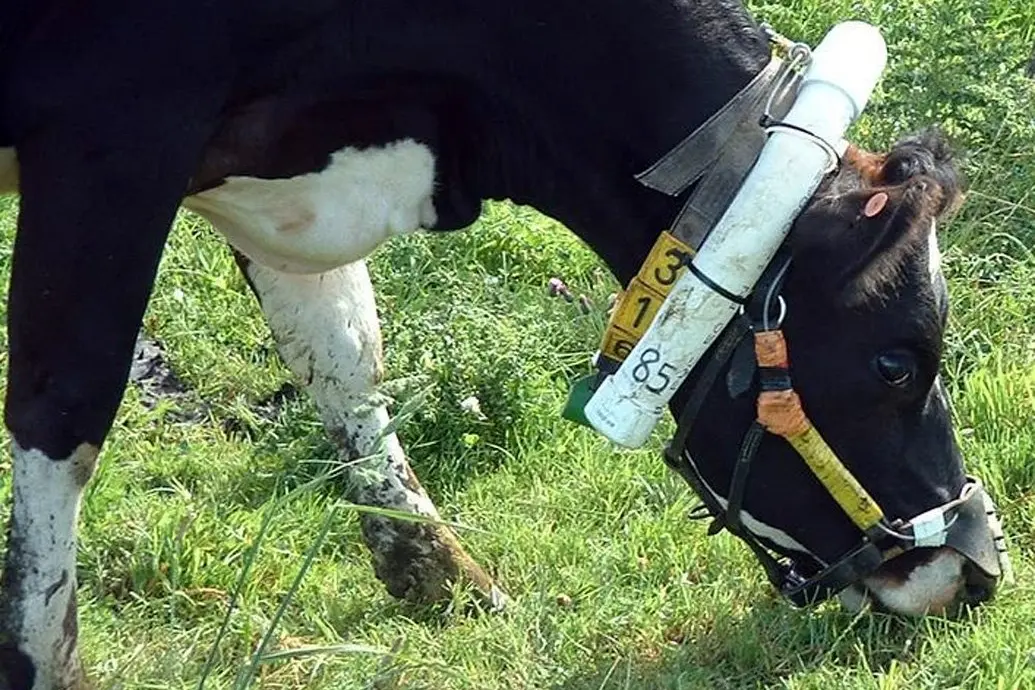
One critical lever New Zealand could pull to help slow warming, and save lives and economies, is to reduce agricultural methane emissions.
Atmospheric methane blocks 19% of outgoing infra-red radiation, and 30% of methane emissions come from livestock.
Unlike CO2, methane degrades quickly, so if the global community could plug all methane emissions, within 10 years it would all be gone. A theoretical 19% reduction in heating within 10 years to aim for, which New Zealand could and should contribute to.
All this is common knowledge. What is less well appreciated is why it is critical to pull the methane-reduction lever as hard as we possibly can now rather than later.
It is particularly here, in its failure to join the science dots and explain and advocate for why it is critical to pull that lever now, that the Climate Change Commission has fallen short.
Arguably partly as a consequence of this failure, in 2025 the government amended New Zealand’s Climate Change Response Act to allow us to emit more methane than was initially budgeted for by the Act. This will prove to be a fundamental mistake.
A key 2014 climate paper from MIT reveals why delaying action on methane could be so damaging. As glaciers, sea ice and snow cover melt in the next few decades, brilliant white reflectors of sunlight become darker absorbers of it, as do increased levels of water vapour.
Both of these feedbacks lessen the amount of sunlight that bounce back into space, and the planet warms rapidly at the surface. In other words, in a few decades we will not only be trapping longwave radiation in the atmosphere with CO2 and methane as currently, but trapping in addition considerably more shortwave radiation at the surface.
Hence the urgency: reducing methane emissions can only help mitigate the melting feedback, if it is undertaken before the melting has run its course.
After that, reducing atmospheric methane will be much less effective. Yet even the word “melting” appears nowhere in the Climate Change Commission’s (very lengthy) advice to the government on the fourth emissions budget for the period 2036-2040.
Indeed, oddly, Commission publications have rarely if ever cited any climate science publications at all. The Climate Change Commission tends to have an economics focus, which is why it may be more effective if given a prominent office within Treasury, rather than relegated to an obscure back-office in the Ministry for Cities, Environment, Regions and Transport as some have suggested.
New Zealand’s Climate Change Response Act and the Climate Change Commission are “top down” approaches to reducing emissions arguably better suited to orchestrating the long hard strategic slog against CO2, than igniting an all-out tactical war on methane.
We need to complement the top-down focus of the Act and Commission, with bottom-up incentives-based approaches.
As economics-Nobel winner Elinor Ostrom warned decades ago, complex combined social and ecological problems tend to defy simple institutional solutions.
And while those cynics who say New Zealand is too small to make a difference have a point, the defeatist inference they draw is incorrect. The correct inference is that we should recruit allies.
What might an all-hands-to-the-pumps “bottom-up” tactical assault on methane look like?
Cheap efficient measurement technology for on-farm methane emissions certification fosters a competitive and innovative culture, in which producers enjoy price-premiums for certified low-methane production.
Banks offer “methane-indexed” mortgage interest rates, with lower emitters enjoying lower rates, and interest free capital loans. The government grants methane-indexed tax-breaks and rebates.
Agricultural equipment suppliers offer methane-indexed discounts and interest-free loans. Mayors grant methane heroes the keys to their cities. And so on.
But we also need allies. The recently signed India free trade agreement represents an opportunity for New Zealand to invest in and recruit the intellectual and technical vigour of almost one fifth of the planet’s population.
If New Zealand and a country like India could convene a coalition of the willing for a tactical war on methane, it could potentially deliver the quick substantial methane reductions we now so desperately need.
- Alan McCulloch is a former bioinformatics software engineer who has contributed to methane-related research projects.