
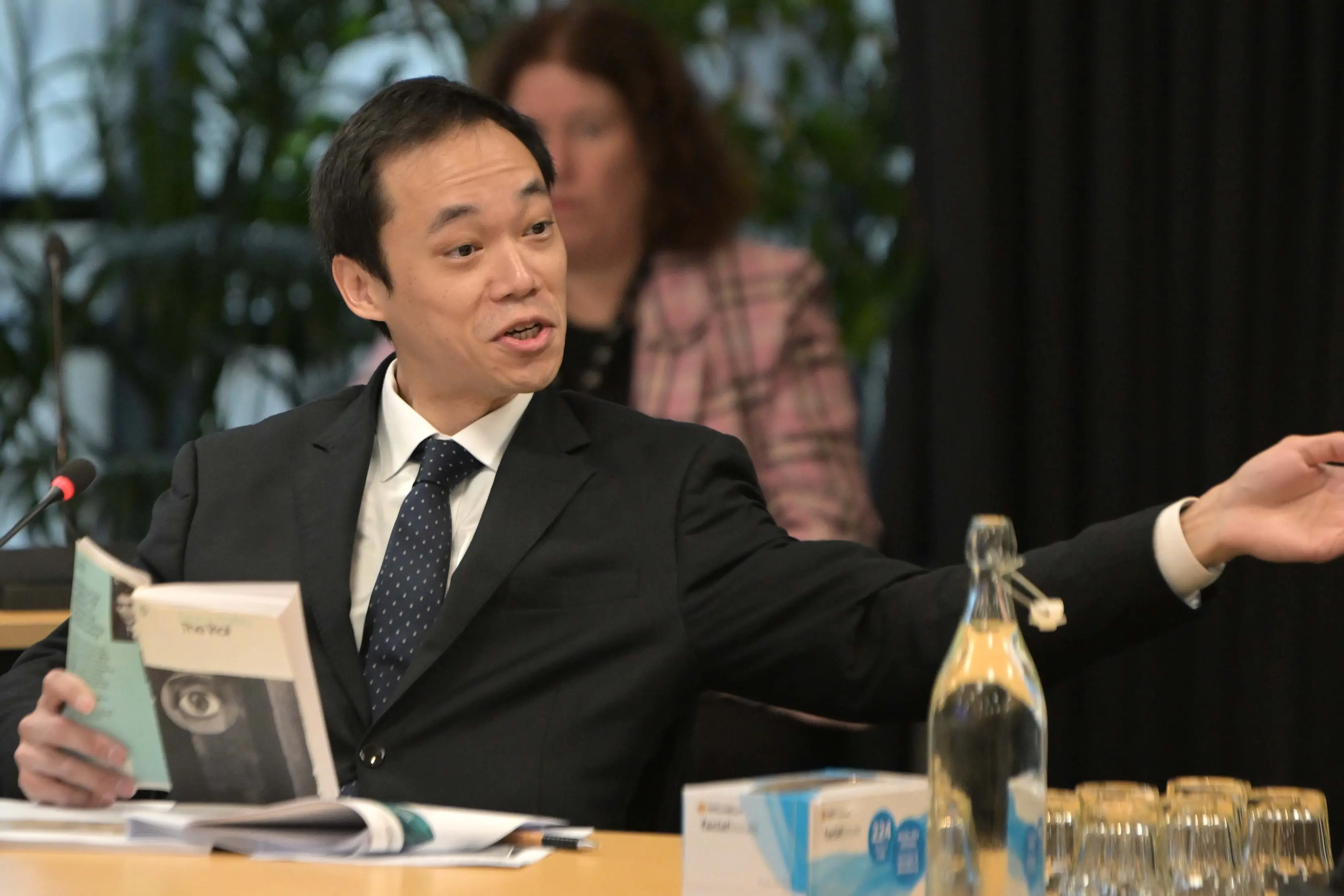
PHOTO
Political representation is a privilege that should be cherished in any democracy. We expect our elected representatives to engage in robust debate, challenge ideas and assumptions, and make good decisions for the communities they serve.
However, there are few things more distracting for a council than an elected member whose behaviour has gone seriously off the rails.
The problem is that our local government system gives councils remarkably little ability to do anything meaningful about it.
There is a balance to strike here.
Councillors are elected, not employed, and their democratic mandate needs considerable protection.
Local government is political, and our elected representatives must be able to challenge officials, express a dissenting view and criticise decisions.
A democratic mandate should create a high threshold for serious sanctions, not immunity from them.
Councils can censure an elected member, remove committee positions and impose some other restrictions.
But sometimes, a censured individual wears the punishment as a badge of honour, reinforcing the idea that they are simply taking on the establishment.
In most organisations, misconduct such as bullying, intimidation, repeated targeting of staff or breaches of confidentiality would prompt formal disciplinary action.
Even Parliament has more meaningful consequences for bad behaviour. An MP can be named and suspended from the House for 24 hours, then seven days and eventually 28 days for repeat offences within the same Parliament.
During suspension they cannot vote or serve on select committees, and their salary is docked for each day they are suspended.
The problem comes when behaviour crosses into serious or repeated misconduct and starts affecting the wider council. At that point, it can quickly begin consuming the organisation.
There are the direct costs, but there is also the time spent managing complaints, the pressure on those targeted, and the attention drawn away from other work.
The mayor, chief executive and fellow councillors can find themselves repeatedly dealing with the fallout while the business of the council waits.
Public confidence can suffer across the whole council, including those doing their jobs well.
The current situation in Dunedin is a case in point.
In May, Dunedin City Council suspended Councillor Benedict Ong from all committees and subcommittees for nine months after accepting the findings of an independent Code of Conduct investigation.
The council had already reached for one of the more optimistic sanctions in March, “inviting” him to resign, which he declined.
He remains entitled to attend and participate in full council meetings and continues to be paid as a councillor.
Dunedin’s mayor has publicly described Cr Ong’s behaviour as distracting from the work underway in the city.
The government has already accepted that the current system needs to change. Its Local Government (System Improvements) Amendment Bill would introduce a standard code of conduct for elected representatives, but stops short of providing for a councillor’s removal for serious breaches of the code.
In 2025, Local Government New Zealand’s electoral reform working group, recommended that significant code of conduct breaches should be independently investigated by the Local Government Commission, with stronger sanctions available, including suspension and fines.
For the most serious breaches, it recommended a tightly controlled power of removal, requiring the unanimous support of the commission and endorsement of the Minister of Local Government.
Parliament should adopt those recommendations. An independent process and a high threshold for removal would help protect elected members from politically motivated complaints while providing meaningful consequences for serious misconduct.
This is hardly uncharted territory. South Australia already has an independent statutory Behavioural Standards Panel specifically for serious or repeated councillor misconduct that cannot be resolved at council level. It can suspend a councillor for up to three months, with or without their allowance, and require them to reimburse council costs associated with an investigation.
New Zealand has been talking about this problem for at least 20 years without an adequate solution.
Parliament still has a chance to fix it when the Amendment Bill is considered by the committee of the whole House.
If there is one silver lining to what is happening in Dunedin, it is that Cr Ong has provided Parliament with a compelling case for change, and a reminder that when misconduct becomes serious, an “invitation” to resign simply doesn’t cut the mustard.
- Campbell Barry is the former mayor of Lower Hutt.