
PHOTO
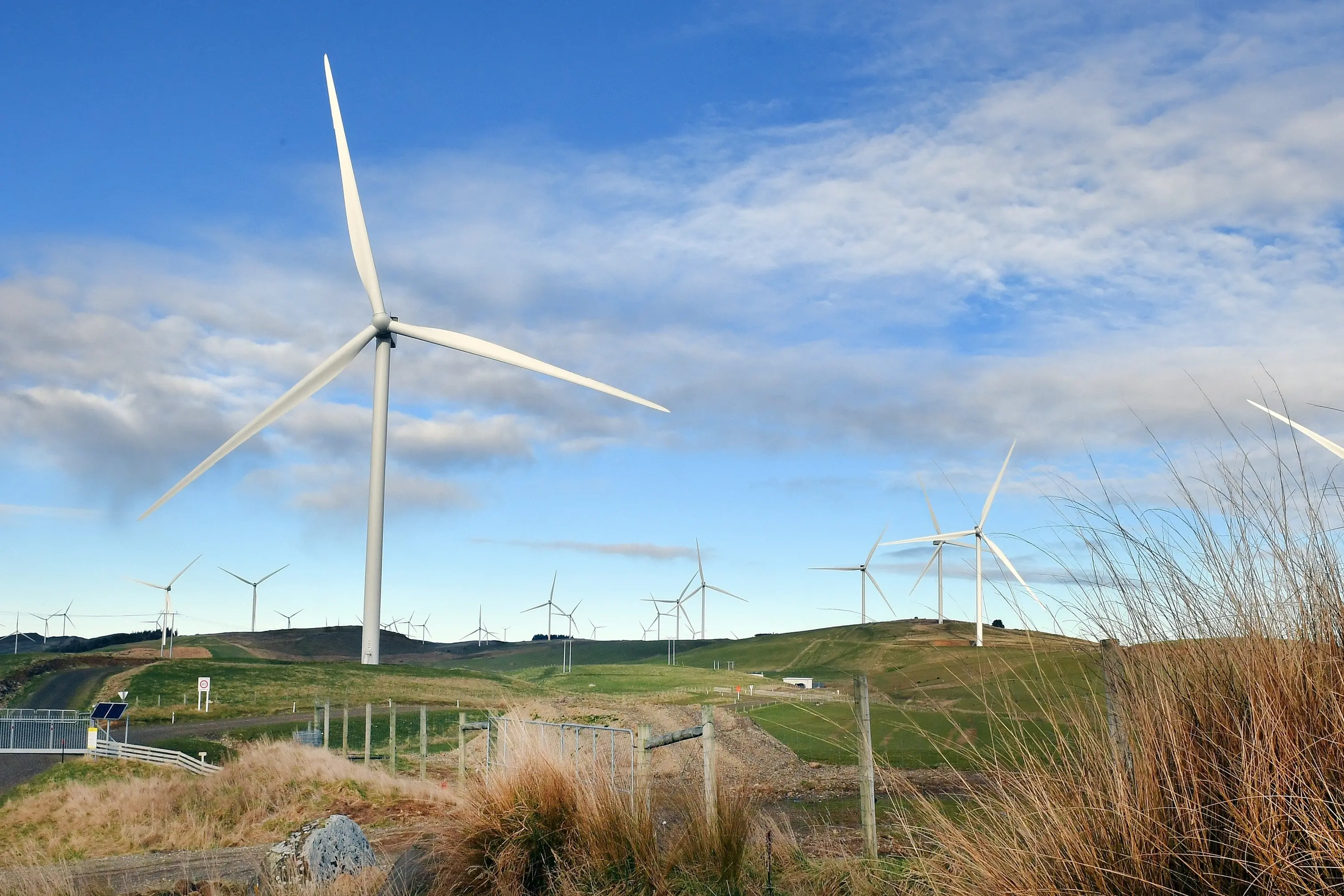
The South Island's largest wind farm has officially opened with the ability to generate enough electricity to power 96,000 homes.
The Kaiwera Downs Wind Farm near Gore cost just over $600 million in total and was completed over two stages.
The $486m second stage was given a green light in 2024 after Mercury signed an agreement to support the Tiwai smelter.
It added 36 additional turbines, bringing the total number to 46.
The second stage increased its annual generation from 146GWh to 675GWh - the equivalent of powering 21,000 homes to 96,000 homes based on an average home using 7000kWh a year.
Mercury chief executive Stew Hamilton said it was an important renewable energy project for the country.
"New Zealand needs an energy system that is affordable, reliable and resilient. The best way to achieve that is to keep building renewable generation at scale," he said.
Mercury estimated work on stage two added $100m to the local and regional economy, saying stage two was built on time and on budget.
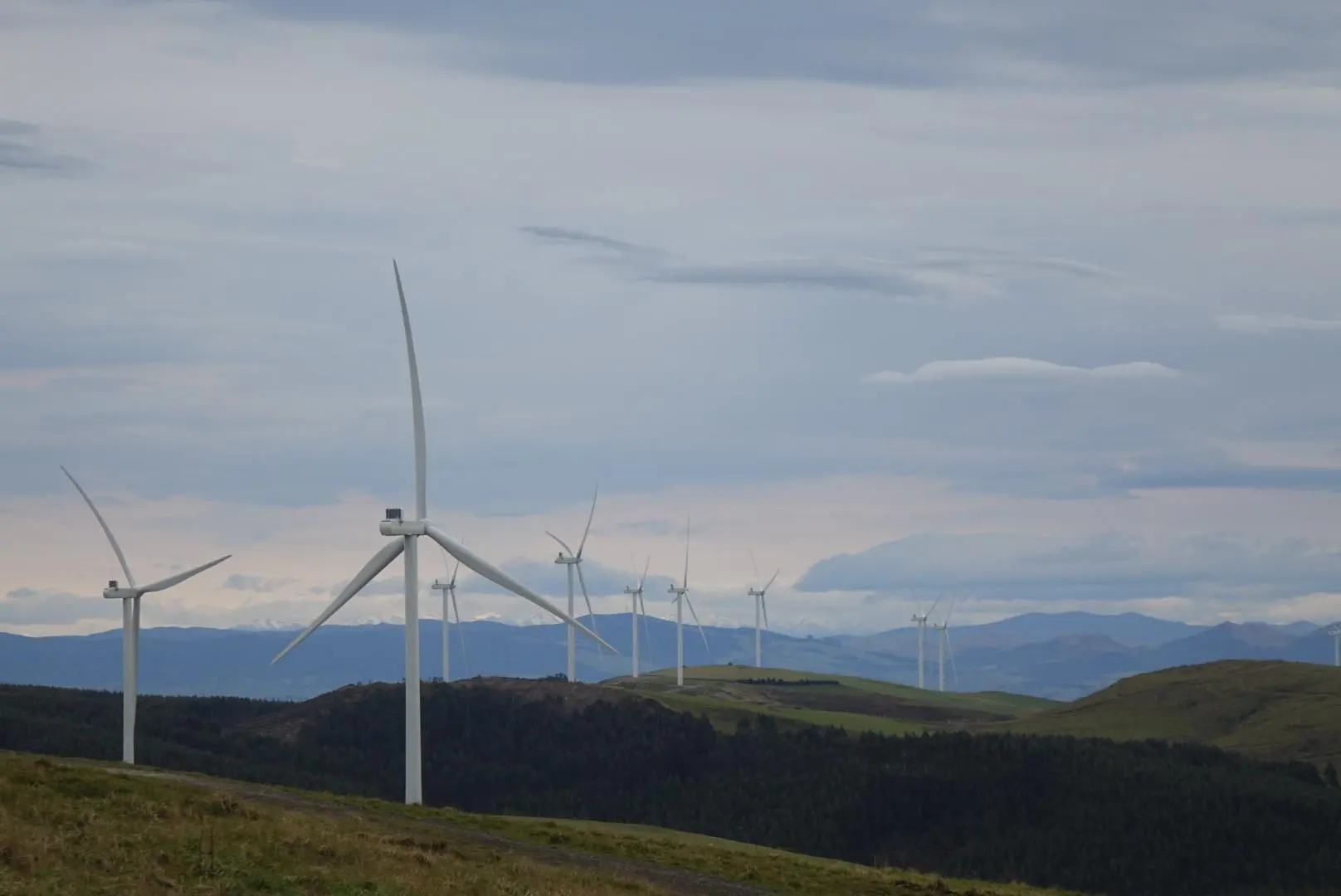
The Kaiwera Downs Wind Farm was not expected to hold onto the title as the South Island's largest wind farm with Contact Energy gaining approval for its 55-turbine Slopedown wind farm in eastern Southland.
Mercury was also preparing to expand its Mahinerangi Wind Farm in Otago with a $506m investment into stage two, known as Puke Kapo Hau, after it received fast track approval this year.
That would include 40 new turbines, which would generate enough energy to power the equivalent of 76,000 homes.
Mercury said the decision to approve the expansion was supported by a power purchase option agreement with the developer of a large-scale data centre in Southland, Datagrid.
Over the past 12 months, Hamilton said Mercury had also started generating electricity from its Kaiwaikawe Wind Farm in Northland and Ngā Tamariki Geothermal Station expansion project near Taupō.
"All three are expected to be fully operational by the end of 2026. Together, these three projects represent around $1 billion of investment and 1.1TWh of additional annual renewable generation - enough to power around 160,000 homes.
