
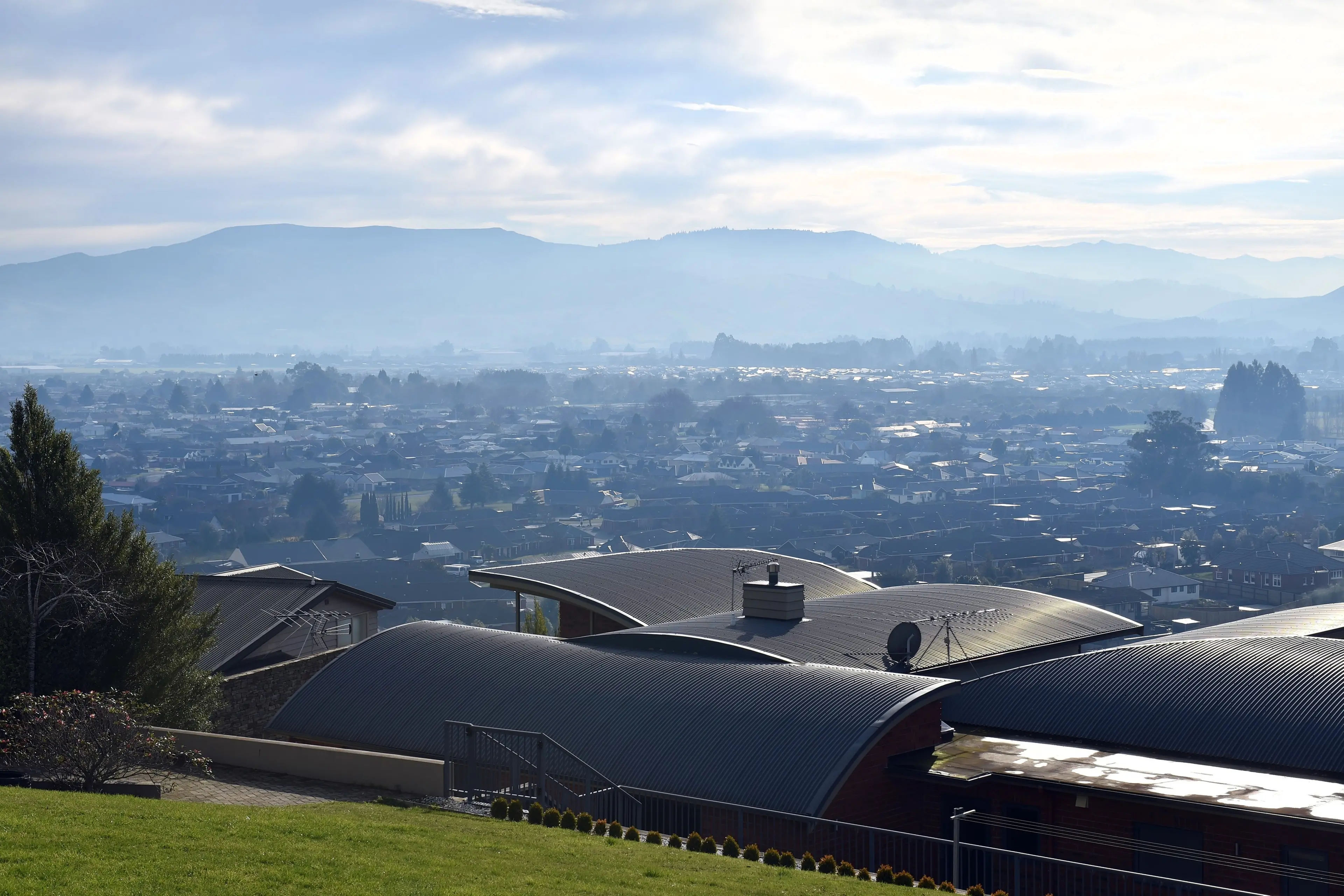

PHOTO
Southland’s air quality is showing signs of improvement, with only one PM10 pollution exceedance recorded across the province this winter.
Environment Southland science investigations and operations manager Ash Rabel said Invercargill city’s PM10 exceedance record for 2026 remained clean.
“It’s been one of the best winter air quality outcomes.”
The singular breach happened in Gore on July 9 when it reached 55µg/cu m, above the national limit of 50µg/cu m.
Particulate matter (PM10), about one-seventh the width of a human hair, measures tiny particles suspended in the air including smoke from wood burners and fires, dust, vehicle and industrial emissions as well as natural particles like pollen.
The highest risk period for breaches usually happens during the winter months between May and August.
“Exceedances are most likely during cold, calm evenings and overnight periods when people are using home burners.”
Home burners had consistently been identified as the largest contributor to concentrated PM10 levels in both Invercargill and Gore airsheds, he said.
Invercargill’s air quality monitoring began in 2003 and later in Gore in 2006.
The stations provide official measurements used to assess national air quality standard compliance.
Mr Rabel said a pattern of improvement had been developing over the past 10 years and looked set to continue.
“Both Invercargill and Gore have recorded some of their best air quality outcomes in recent years.
“Gore has achieved multiple years with no exceedances, while Invercargill’s exceedance numbers have declined substantially compared with historical levels.
“Air quality is influenced by both emissions and weather.”
He believed steady replacement of older, higher-emitting home heating appliances, banning of open fires, increased use of heat pumps and compliant burners along with drier firewood, reduced overnight banking and changing wind patterns had all contributed to the better results.
The improvement in winter air quality follows a decade-long effort under Environment Southland’s Regional Air Plan, adopted in 2016, which progressively phased out older non-compliant burners and banned open fires in the two airsheds.
Non-compliant burners installed between 2010 and 2014 would be banned by January 1, 2034.