
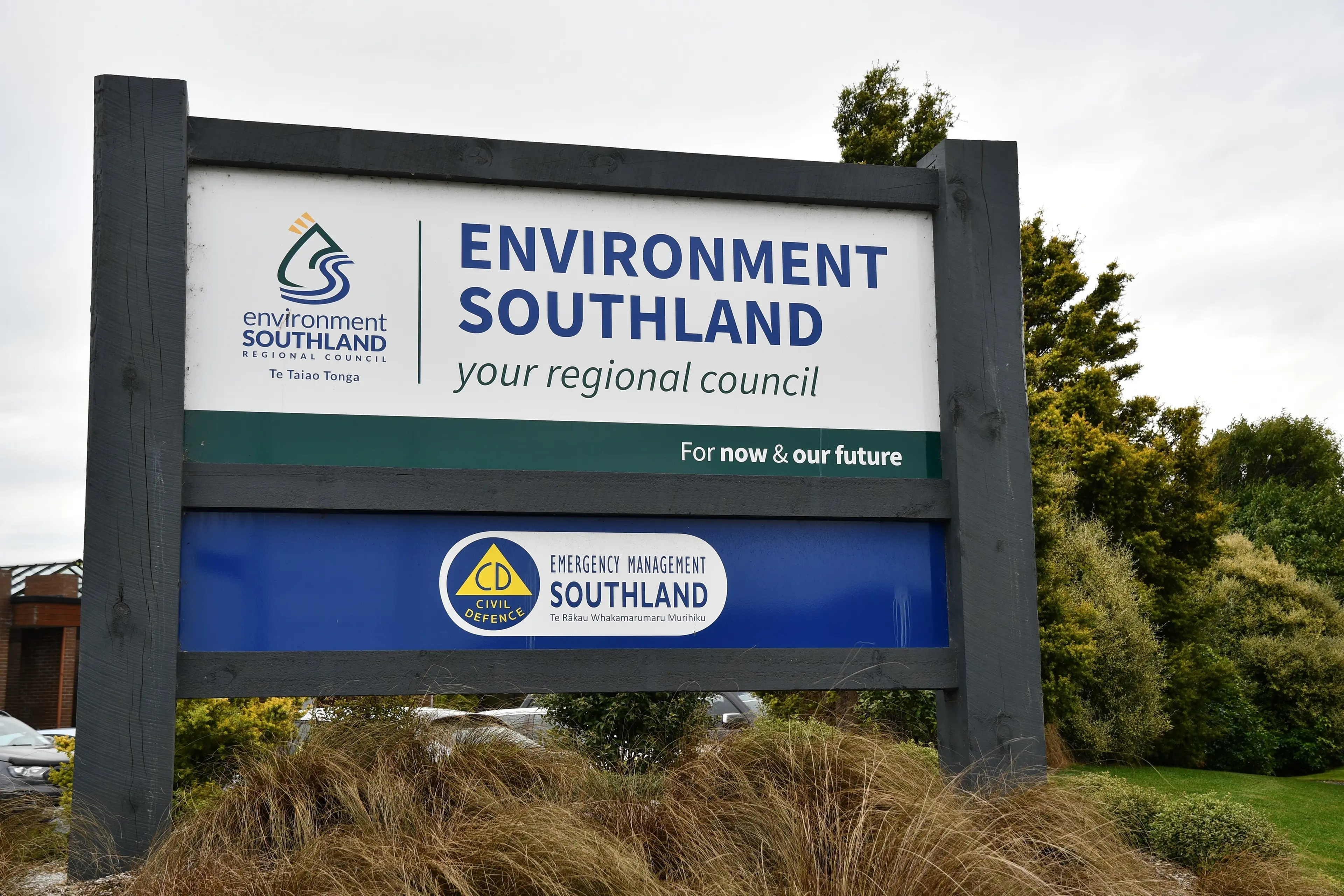

PHOTO
A Southland council has decided on a voting system for an election it may not be part of.
And the irony was not lost on the decision-makers.
Under the government's proposed Head Start reform, Environment Southland would join 10 other regional councils in ceasing to exist sometime before the 2028 local elections.
But on Wednesday, the council still had a job to do in deciding which voting system it wanted to use for those same elections.
Deputy chairman Phil Morrison acknowledged the irony of the situation when he pointed out the system “may not see the light of day”.
Cr Morrison said a decision was being made on the assumption that an election would be required for a regional council, but amalgamation would require revisiting voting systems.
“And you might argue there is enough change going on in the world around local government that maybe it’s best to stick with what the recent practice has been at least, to avoid further confusing people,” he said.
A report prepared for the meeting explained the council currently used First Past the Post (FPP) for its voting, which required electors to tick as many candidates as vacancies.
Those with the most votes won.
However, an option was also available to switch to Single Transferable Vote (STV) which required ranking candidates based on preference.
Special software then calculated the STV result, determining who had successfully hit the “quota” before distributing votes to other candidates.
Councillor Eric Roy supported sticking with the status quo of FPP until the future became clearer.
“It’s almost an irrelevant exercise we’re engaged in,” Cr Roy said.
The council report noted all councils were required by legislation to publicly notify the electoral system they planned to use by September 19.
A draft public notice included in the report said it was “unlikely” Environment Southland would be required to participate in the 2028 electoral process.
Ultimately, a quick decision was made at Wednesday's meeting to stick with FPP.
Invercargill City Council also voted to retain FPP as its voting system of choice during a meeting last week.
There are a total of 78 councils across the country, of which 11 are regional councils and six are unitary, meaning they include regional functions.
LDR is local body journalism funded by RNZ and NZ on Air.