
PHOTO
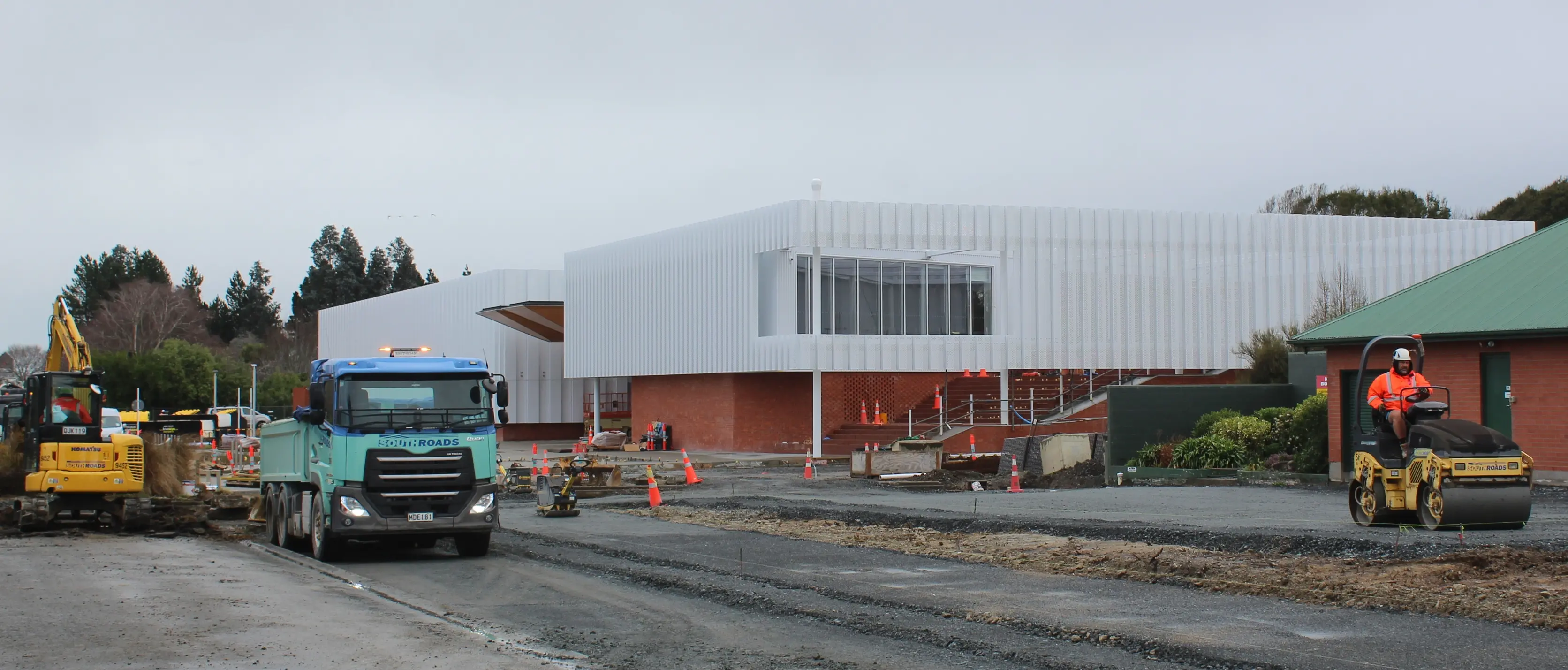
Admission to Te Unua Museum of Southland will be free for all, but the Invercargill City Council has kept the door open to visitor charges in the future.
Councillors discussed on Tuesday what to charge for entry to the long-awaited, $76 million museum, expected to open in October next year.
Physical construction is set to be complete in a few weeks, by the end of September.
The option councillors voted for included free general admission, supported by voluntary visitor donations, while still leaving the opportunity open to develop new revenue streams.
Museum director Eloise Wallace said this approach most aligned with the goals of Te Unua and matched the strategies of other regional museums.
“It maximises council strategic priorities and community outcomes, while creating that platform to develop diverse revenue streams,” she said.
Those diverse revenue streams included special exhibits, tours, programmes, and events, which would all include a price for admission.
Cr Ian Pottinger argued a system asking international visitors specifically to pay would be redundant, comparing it to other major attractions.
“When you go to the Colosseum, everybody paid — they didn’t ask if you were Italian or from Rome,” he said.
He also added that profit made from international guests could be made up in gift shop sales.
Invercargill Mayor Tom Campbell was also in favour of no charge, saying he was swayed after a recent workshop.
“Looking at all the data from the previous museum that was closed which had no charge for anyone, we should just carry on that tradition.”
Cr Angela de Vries said those from outside New Zealand should have to pay since there was an expectation when visiting a foreign country that one spent money.
She was the only councillor to vote against the council’s free entry admission strategy.
“If you’re going to a museum, you pay to go there; how will we measure the possible revenue that we’ll miss out on?” she asked.
Community spaces and places group manager Rex Capil said sector benchmarking, case studies and professional expertise showed that charging admissions reduced visitation and participation.
He said an official opening date would be confirmed closer to completion, adding that much of the project relied on other pieces of work being completed, including exhibits.
“The final installation of the exhibitions has to be staggered, because of each of the galleries they’ll go into are interconnected and rely on shared access routes, loading areas and staging spaces.
“Our staff also have to carefully sequence their work to make sure exhibitions, and the objects and taoka within them, are delivered safely and effectively.”