
PHOTO
The head of Mercury believes power bills will eventually benefit from more projects like the Kaiwera Downs Wind Farm.
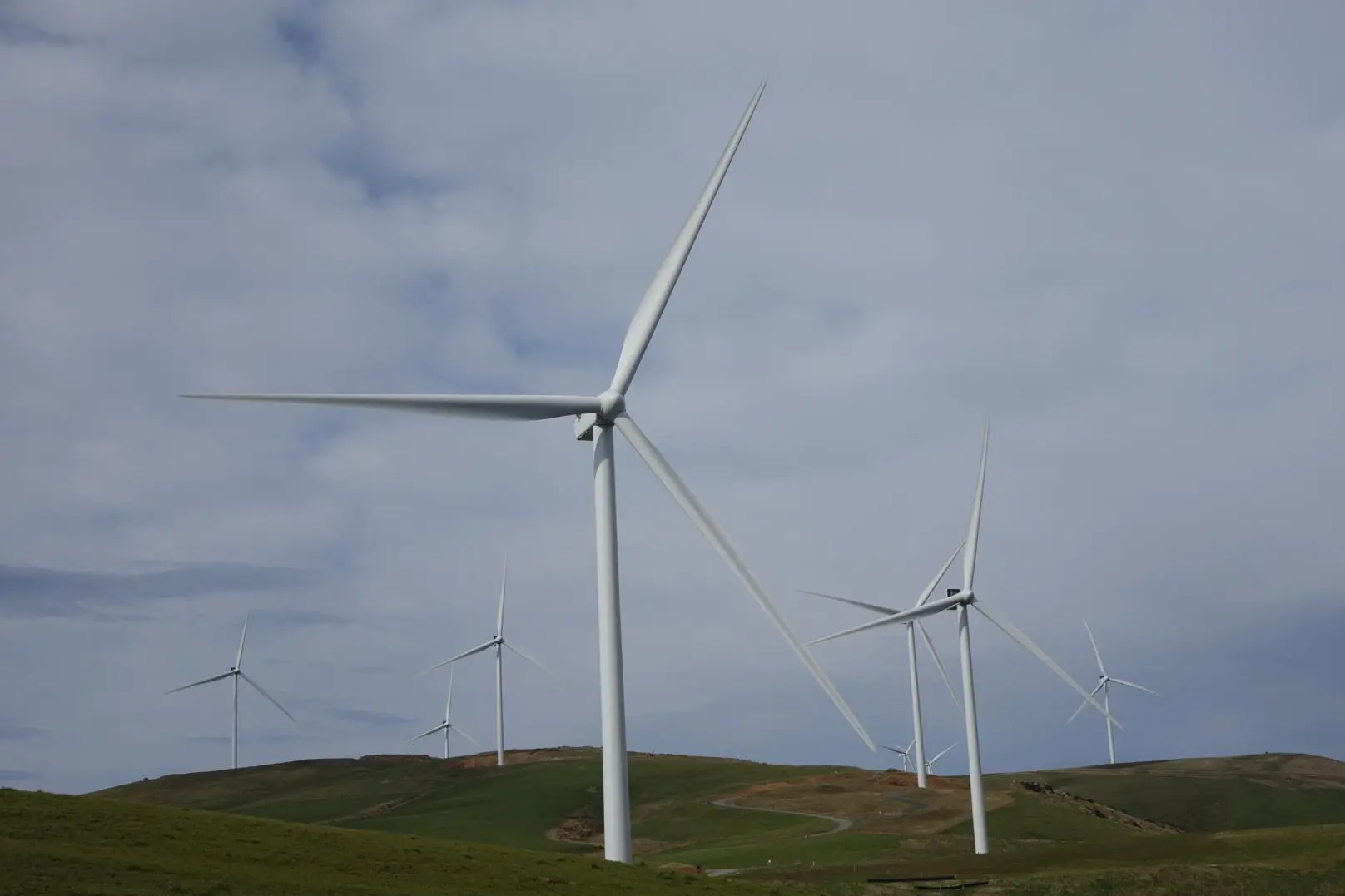
On Wednesday, the company marked the official opening of the $600 million wind farm near Gore.
It was completed over two stages, bringing the total number of turbines to 46 and the ability to generate enough to power close to 100,000 homes.
Mercury chief executive Stew Hamilton said the turbines were already adding power to the grid.
The $486m second stage was given a green light in 2024 after Mercury signed an agreement to support Tiwai smelter - where he used to be in charge.
"I was very early, so most of that was actually being done before I moved into the chief executive role," Hamilton said.
"Obviously, I really want Tiwai to be successful, having been there previously, so super supportive of it, but largely a lot of it's handled from a commercial perspective with hands length from me."
Wind was cost effective and technology kept improving, and this farm was expected to last at least 30 years, he said.
"The very first wind farm that Mercury built about 30 years ago, those turbines were putting out about 600 kilowatts," he said.
"These ones are putting out nearly 4000 kilowatts. Those first turbines were about 40 metres high. These are now 156 metres high."
He believed power bills would eventually benefit from more projects like Kaiwera Downs coming online.
"The electricity component is only about 30 percent of the actual bill," Hamilton said.
"So there are other components like distribution and transmission costs. That's necessary to invest in that so New Zealand can be resilient in the long term.
"But I think as that investment comes through, we'll definitely see power prices stabilise."
While wholesale prices had come down significantly in the last six months as a result of lots of builds happening in the sector, Hamilton said that would start to flow through to residential proces over time.
Kaiwera Downs was currently the South Island's largest wind farm, although it was not expected to hold onto that title for many years.
Contact Energy has got approval for a 55-turbine wind farm on Slopedown Hill just down the road, and Mercury would soon boost turbines at Mahinerangi Wind Farm in Otago from 12 to 52.
Mercury's expansion was off the back of a power purchase option agreement with the developer of a large-scale data centre in Southland, Datagrid.
The data centre project has faced flak from some locals who were concerned about the impact on water use, electricity prices, property values, and public health.
Hamilton acknowledged there were legitimate concerns and said he wanted to make sure those issued were covered very well.
"Really that fundamental first question that people have, where's the power going to come from? That's what we do," he said.
"We build power stations for the likes of Datagrid ... The other issues around water we've looked at very closely as well. And one of the reasons we're in the Southland is because the average temperature is less than about 10 degrees, which means that the use of water is very low."
Driving down State Highway 93, there were glimpses of turbines peeking over the hills.
But their size was not as apparent until you were next to one as it loomed 150 metres into the air.
Site manager Stuart Davie said there was a hidden network of about 90 kilometres of cables.
The turbines sat in the middle of two operating farms - one with sheep and the other with cattle.
But he said the turbines did not make much noise and the stock got used to them.
"You see the cattle lying all over the pads and rubbing their backsides on the turbines and they just become part of the landscape after a while."
It was rocky terrain and he said they were blasting rock a couple of times a week for about eight months.
But the remains had been great for creating new roads - more than 30 kilometres of them - that snake through the hills.
The turbines chased the wind, often capturing the sou'wester that brought an Antarctic bite to the air, he said.
Sam Woodford managed the cattle farm that was owned by the New Zealand Super Fund.
"It was a bit of an eye-opener with the amount of machinery that come in at the start. But we work pretty well together and you look the place now, it's certainly added a lot of value," he said.
There were benefits to adding turbines to the farm.
"Going forward, it's some good income and roading maintained for the whole time as well."
The wind farm's sod-turning was Gore District Mayor Ben Bell's first official ceremony back in 2022.
"It's pretty surreal that only four years ago this was just a whole bunch of empty paddocks at the top of a hill and now there's 46 massive turbines here," he said.
It was a huge opportunity for the district, Bell said.
"Having all these projects means we can attract all sorts of different businesses from data centres to large manufacturers, really anything will need power at some stage," he said.
"If we can produce it here in large quantities, then we can attract that business here.