
PHOTO
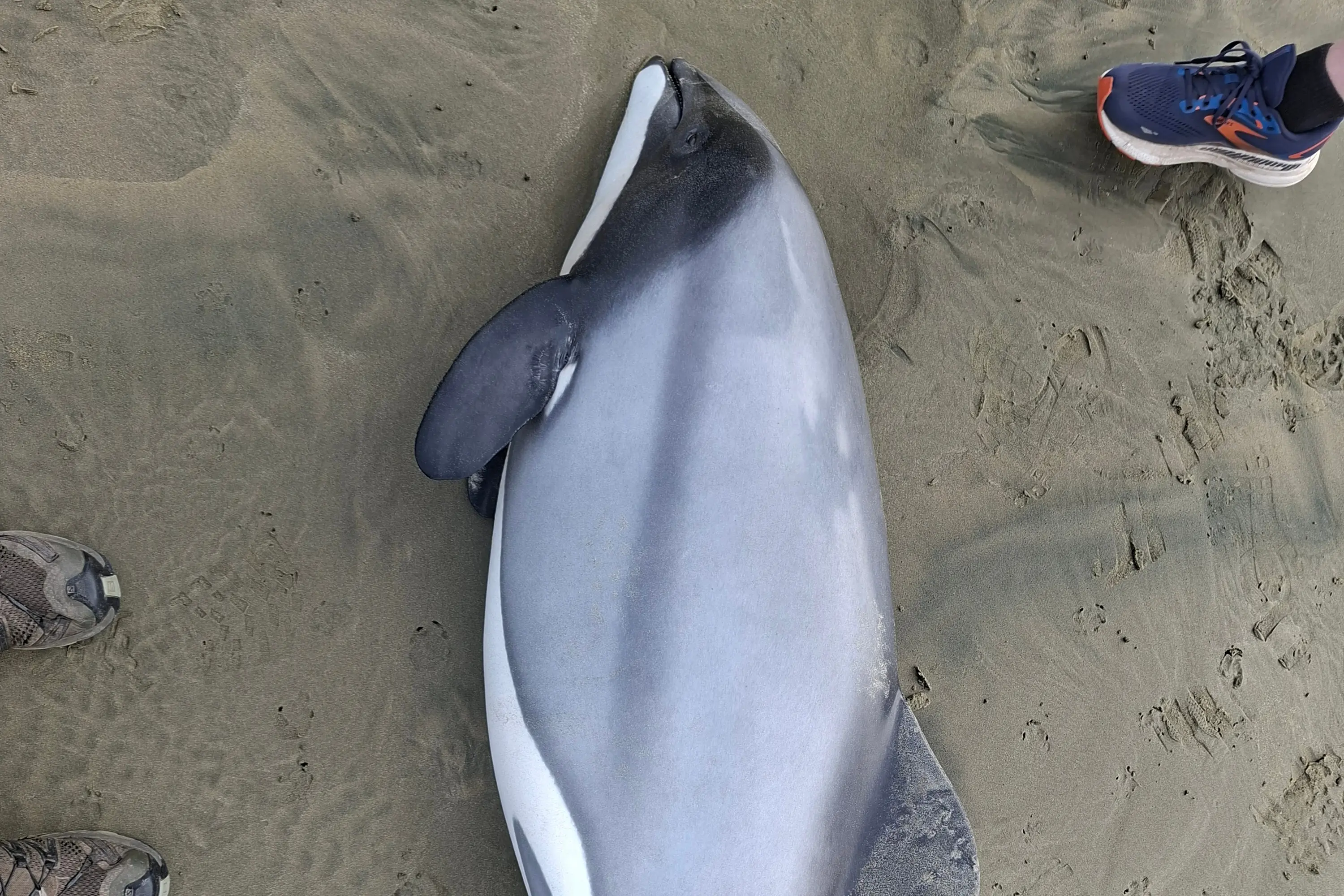
Toxoplasmosis was the cause of death of a pregnant Hector’s dolphin found at Invercargill’s Oreti Beach last month.
The female Hector’s dolphin (Cephalorhynchus hectori hectori) was found dead on August 20 2026. Necropsy has now confirmed she died from toxoplasmosis, a disease caused by the parasite Toxoplasma gondii, the Department of Conservation (Doc) has confirmed.
The necropsy also found the dolphin was carrying a small male calf.
Doc marine species manager Michelle Boyle said in a statement the loss of a pregnant female and her calf was significant for the threatened species.
“Hector’s dolphins are found only in New Zealand waters, and every individual is important to the population and its recovery.
“The necropsy provides valuable information about what caused this animal’s death, and helps us better understand the impact disease can have on Hector’s and Māui dolphins.”
Toxoplasmosis is caused by a microscopic parasite which can infect a wide range of warm-blooded animals. Cats are the only host in which the parasite can reproduce sexually and produce eggs (called oocysts).
These microscopic eggs are highly resilient and can survive for months, or even years, depending on environmental conditions. This gives them time to enter waterways and marine environments through contaminated soil and freshwater runoff, where they can be ingested by and infect marine mammals.
Research through DOC’s toxoplasmosis programme — in partnership with Massey University, Earth Science New Zealand, Bioeconomy Institute, Ngaati Te Ata Waiohua, and others — is helping scientists better understand the risk toxoplasmosis poses to Hector’s and Māui dolphins.
“Hector’s and Māui dolphins spend much of their time in nearshore waters, which can bring them into contact with contaminants entering the marine environment from the land,” Ms Boyle said.
“This case is a reminder that threats to our native marine species don’t only come from activities happening at sea. What happens on land can also affect the health of our marine environment.” — Allied Media