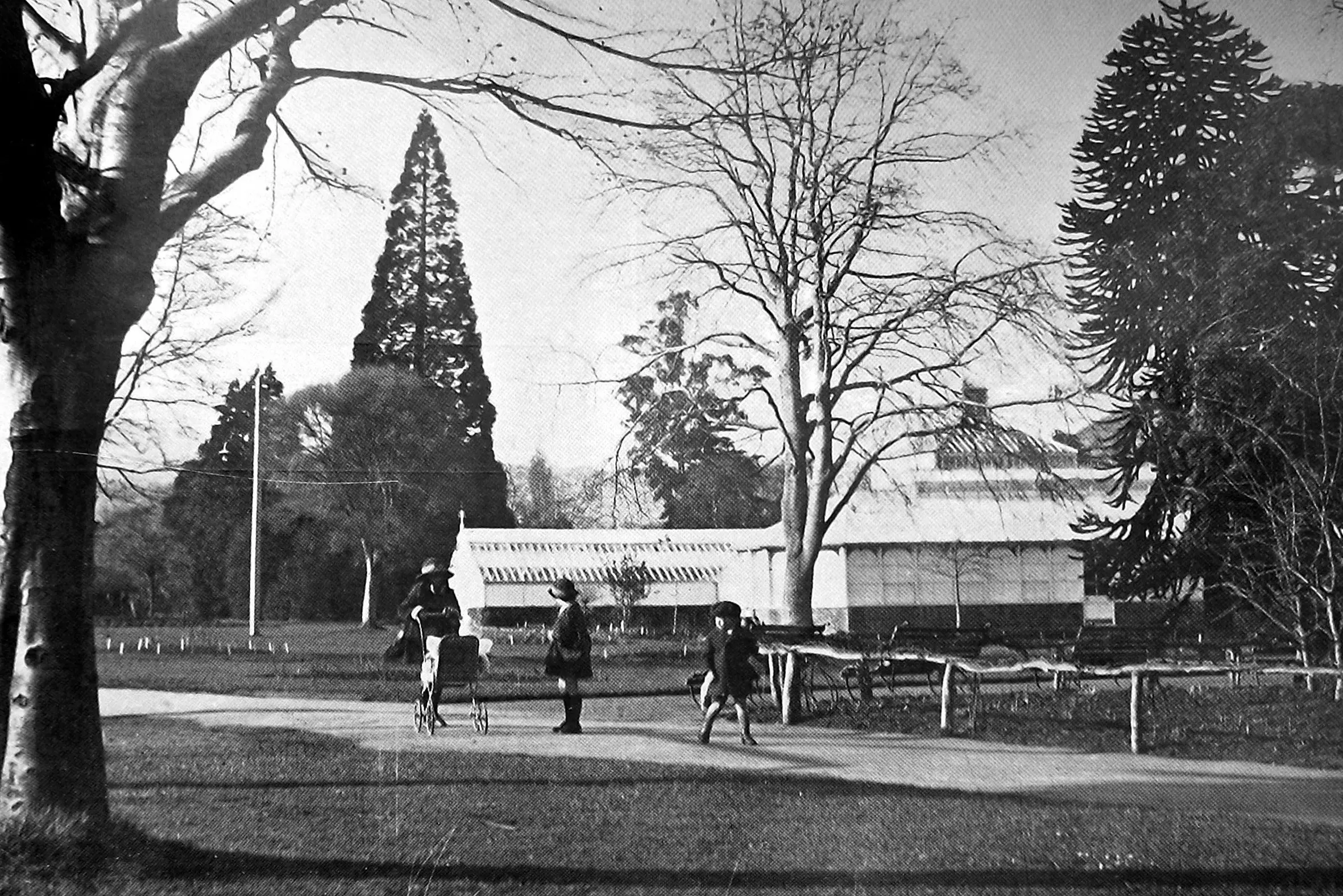
This is a busy time in the greenhouse. Space has to be found for the various pots and boxes of seedlings, as well as for the ordinary occupants, and it is very difficult to keep it neat and tidy. Shelves are very useful for putting boxes up on. They should be fixed up near the glass, and can be made so that they may be taken down when the spring rush is over. Continue to sow seeds of half-hardy annuals, to put in cuttings, to pot up gloxinias and gesnerias, and to pot or box up bedding geraniums. Geraniums which were potted or boxed up some time ago can now be shifted out into the frames, and some of the hardier plants, such as calceolarias, penstemons, violas and pansies, which were rooted in boxes, can be put outside altogether. Complete the planting of roses and commence the pruning. Fork over the bulb beds, dig the herbaceous borders, top-dress and mow the lawns, and get the garden in order for the spring display. I consider that the flower garden is never tidy until the roses are pruned and the beds and borders dug. Though there are signs of growth, it is not too late to plant and transplant trees and shrubs, alpines, and herbaceous plants. — by D. Tannock FRHS Something in the water? From Oamaru to “Dear Civis”, a letter with a clipping from the local paper: “A little girl, aged 78, was missing from her home in Hull street yesterday, and caused her parents considerable anxiety until she was located at the residence of friends in Avon street.” Supplemented by this comment: “Please note the age of this little girl, which is a testimony to the wonders of the Oamaru climate, where they are still little girls at the age of 78. Marvellous Oamaru!’’ A lot of money in those days “To do this it would be necessary to strip a building of everything that makes a house a home,” said a local builder to a Daily Times reporter yesterday in reference to the claim made by the Canterbury Builders’ Association that its members were prepared to undertake the erection of four-roomed dwellings at a cost of £300. The builder in question said it was all very well to say houses could be built at such a price. Of course, it could be done. He could do it; in fact, anyone could do it, but finding people ready to occupy such houses would be a much more difficult proposition. In Dunedin at present people were demanding a style of house which could not possibly be built for less than £600 or £700. The public was the best judge of what it wanted, and it had created the demand which at present existed — a demand for a house with few extras, but replete with all the ordinary amenities of life. The nearest approach to the Christchurch claim of which the speaker knew was Oamaru, where the cheapest houses of the size in question were being built. He said he was sure no place in New Zealand had so far reached a lower level. The price of a four-roomed house in Oamaru was about £500, and a five-roomed dwelling of similar specifications would run to about £600. No cruising on the Interislander The hopes fondly entertained by some enthusiasts respecting a train-ferry service which should link up the North and South Islands, superseding the ferry service between Lyttelton and Wellington, have been rudely dashed to the ground by the Railways Department. The suggested train-ferry service would not, and could not, be made profitable, and that, as compared with the existing service, it would expose those who used it to an appreciable loss of time. To carry freight by rail and ferry over the suggested route, crossing Cook Strait at the narrowest point, and compete with the Wellington-Christchurch service’s existing rate for goods £2 2 shillings 6 pence per ton, by the new route would be £5 16s 11d. The time would be much longer than at present, and the passenger fares would be much greater. — ODT, 7.8.1926