
PHOTO
The small West Coast township of Haast would usually be steadily humming with whitebaiters ahead of a busy summer.
Instead, Hard Antler Bar and Restaurant owner Nick Kummer estimated he had lost about $30,000 since State Highway 6 was closed on August 28 during a significant winter storm.
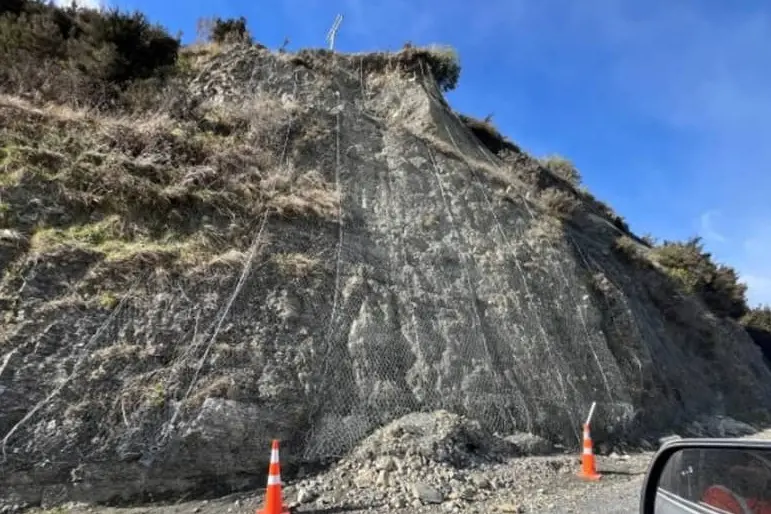
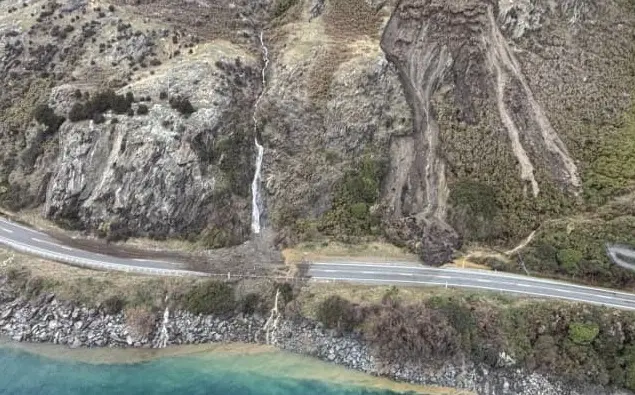
A few days later it partially opened for three daily escorted convoys as work continued to repair the damage from slips, rockfalls and inundation.
Haast locals have been questioning why it was taking so long to restore the route, while NZ Transport Agency Waka Kotahi (NZTA) said the scale of the clean-up was unprecedented and there was no quick fix.
The agency hoped to restore full road access in six to eight weeks, but it did not rule out boosting convoy numbers or gradually increasing access before then.
Kummer said busloads of tourists have cancelled and drivers have been steering clear.
"Tourists think we're cut off and businesses are bleeding money," he said.
He was frustrated by the lack of communication from NZTA, saying he was often getting information that was three to four days old.
The convoys run through on week days, and the road opened to traffic over the weekend during the day.
"Fulton Hogan is saying that the road's dangerous and this and that. Well, they're leaving it open on a Saturday and Sunday. It's a joke," he said.
"They're milking the system ... it's taxpayers' money."
The West Coast was no stranger to slips and Kummer did not understand why the latest disruption was dragging on.
"I want to see some urgency. This is a state highway. It affects people's lives. The only one that's making money is Fulton Hogan," Kummer said.
Aspiring Court Motel and Haast Lodge owner Vivienne Beagle said business would usually be steady at this time of the year.
Instead, she was dealing with plenty of cancellations.
"I've had guests contact me and say, 'we're booked for three days’ time and we've heard the road’s closed, so we're not coming'. And I'll say to them, 'do you realise that there are convoys?' And they say, 'no, we didn't'."
She was not happy with the signage.
"So if you're leaving Haast, there's an electronic sign that says 'slips road closed', and that's all it says. And then you have to get three quarters of an hour down the road to find out that there actually are convoys going through three times a day and the same at Hāwea," she said.
Beagle has been relying on the NZTA website for updates.
Road closures were a fact of living on the Coast, she said.
"Every time, they talk about, yes, there needs to be closer communication with the businesses, and every time, nothing happens. It just stays the same.
"You don't hear from anybody. So it's frustrating."
Fulton Hogan declined an interview request and deferred to NZTA for comment.
Its lower South Island area manager Chris Harris defended the crews on fix-up duty.
"I'll just start by absolutely rejecting the idea that the roading crews are dragging out this recovery," he said.
"The crews on site are working extremely long hours since the 28th of August to clear the road and inspect any damage left behind, relocate material.
"There's significant damage there. This is not a small event."
The storm and heavy rain had caused multiple slips, bridge inundations and drains compromised, causing damage that made the inundation of Muddy Creek a few years ago seem very easy in comparison, he said.
"This is on a scale unprecedented in recent history."
It had left them with a mammoth clean up.
"There's 80,000 cubic metres of material there or thereabouts which has come down on to the highway and needs to be shifted to permanent disposal sites," Harris said.
"So the average truck and trailer may carry about 15 cubic metres. So there is a huge amount of traffic movements that need to occur to safely get that material from its initial holding site or stockpiling site to a permanent disposal site."
That debris was spread over 105 separate locations, and there were also abseilers clearing the rock fall risks.
It was safer and more productive for crews to close the road while that happened, he said.
The decision to open over the weekend was made at 1:30pm on Friday, September 11, so they could check all the risks and give crews a break, he said.
The agency needed to reconsider how it used signage, so it was clear there were convoys going through, Harris said.
The agency had used all its usual ways of communicating, including website updates, social media and emailed updates to businesses.
"But it would appear in this case we're not quite hitting our target audience. So we need to double down on those efforts. It may be that we need to use more of the news agencies to try and get the information out to those local communities," he said.
"The decisions are being made at short notice around the openings and closures. However, we should be able to equally communicate that information out at short notice and it might be that we need to establish a regular cadence of updates with the local community."
Up to $40 million was earmarked in the last budget to make the highway more resilient, and he said design work was under way.
