
PHOTO
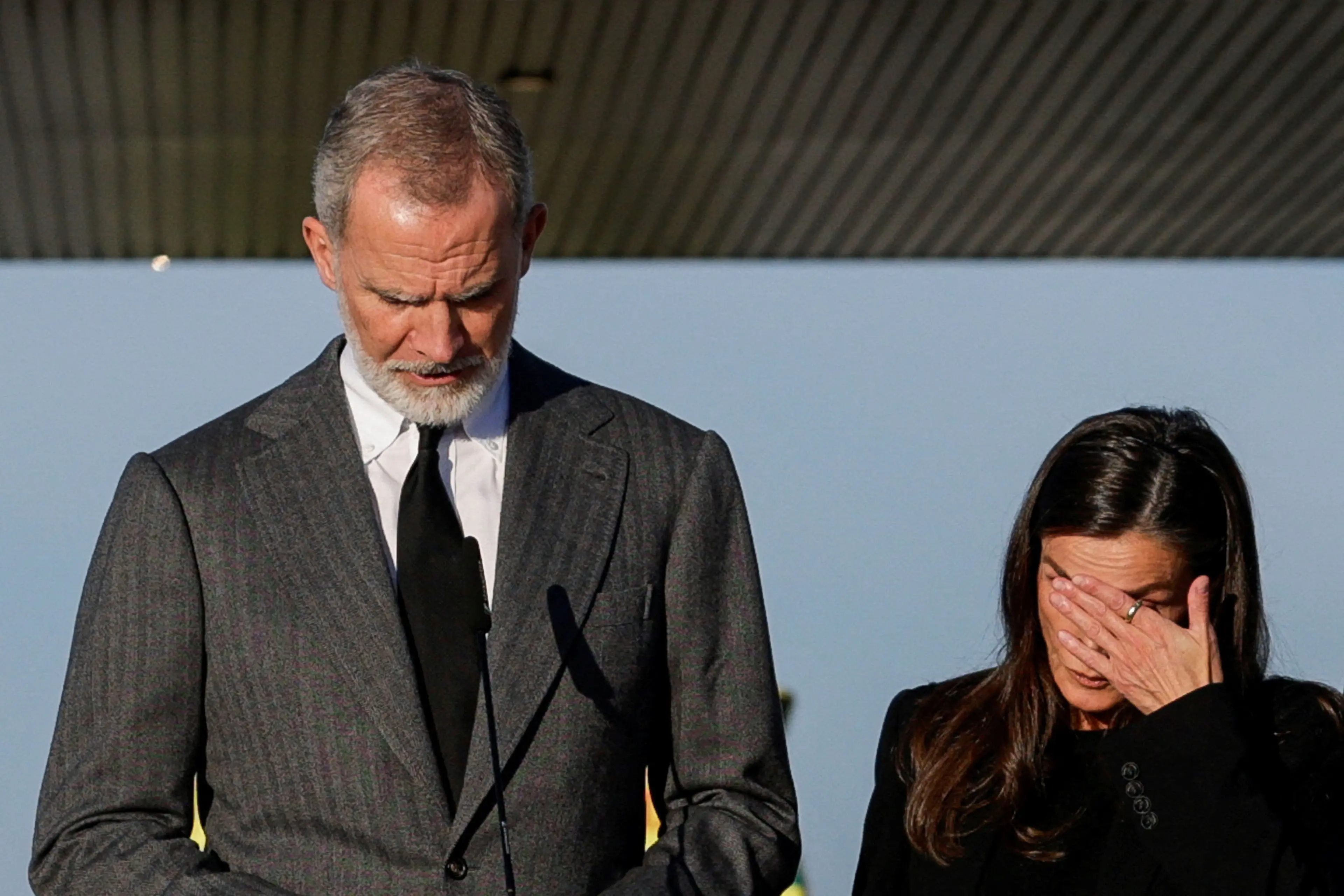
Spain has declared three days of national mourning, as the death toll climbed after the second major collision involving a high-speed train this year.
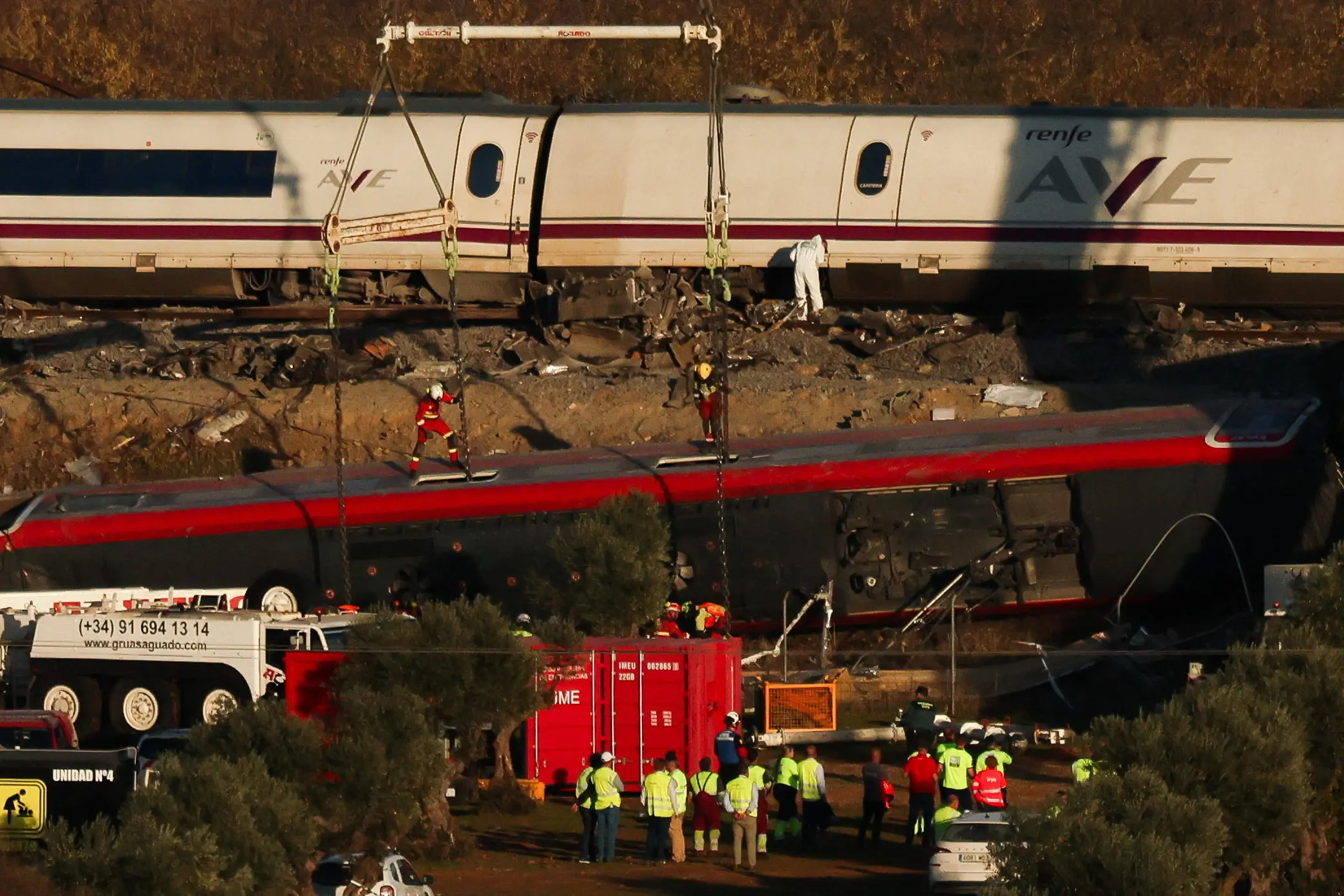
Rescuers picked through mangled carriages on Thursday in a search for victims, with the death toll now at 69 and the public demanding explanations for the latest accident.
Cranes had worked through the night to lift parts of the wreckage of Wednesday's crash, while emergency workers removed what appeared to be a body wrapped in a blanket from one of the trains in the central Spanish province of Toledo.
Regional leader Emiliano Garcia-Page said the number of deaths had risen to 69 and that human remains had been found during rescue efforts, which now involved crane operations, particularly on a carriage that remained overturned.
Among those killed in Europe's deadliest train accident since a derailment in Santiago de Compostela in 2013 was Fatima Banez, a former labour minister who chaired the social and corporate responsibility arm of Spain's employers' association.
Spain's Foreign Ministry said 42 foreign citizens from seven countries were involved in the crash, information available so far showed, of whom one was killed and at least seven injured.
Authorities said 57 of those injured remained in hospital.
UNIONS BLAME LACK OF FUNDING
The accident has added urgency to a debate about safety on Spain's railways, Europe's longest high-speed network and until recently a source of national pride.
As shocked Spaniards searched for answers on why another crash had occurred, train drivers went ahead with a previously planned strike to press for more investment in railway safety.
"We will continue demanding the necessary measures to make this sector safe again ... It must have all the safety systems required to maintain the quality standards we have always had," said Diego Martín of the train drivers' union SEMAF.
"We cannot tolerate, under any circumstances, this type of incident happening again," he said at Madrid's Atocha railway station.
Renfe, the state-run rail operator, said the strike caused significant disruption to rail services and passengers could change or cancel tickets free of charge and would be notified of affected services.
The crash, which followed another fatal accident in January involving the same rail companies on the same line, has also upended campaigning for a November 29 snap election, with the leaders of Spain's two main parties suspending campaign events.
The Spanish government has declared three days of national mourning for those killed in the crash, which Transport Minister Oscar Puente said on Wednesday happened after several trains stopped due to a signal failure.
A Renfe train was then authorised to proceed at normal speed, even though there was a stationary Iryo-operated train ahead, he said.
Unions blamed a lack of funding and will to improve safety, saying talks after January's crash were abandoned by the government in April.
Speaking on Wednesday, Puente rejected criticism that the Spanish railway system was unsafe, saying it was "reliable and safe… with the limits of the material itself and of human action, as is the case with any form of transport."
The government, meanwhile, has said that the decision to authorise the Renfe train to continue its journey was "inexplicable".
POPE SENDS CONDOLENCES
Pope Leo sent his condolences to the families of those killed, wished a speedy recovery to the injured and conveyed his support and comfort to all affected, the Vatican said, adding he had also encouraged rescue workers to continue their efforts.
The crash prompted a major operation, which Spain's Interior Ministry said involved the deployment of more than 800 military and police personnel, over 200 vehicles, three helicopters, a mobile command post, drones, mounted units and search dogs.
As investigations began, a judge in Toledo barred anyone not involved in emergency, security, healthcare or judicial work from the crash site with a 2km exclusion zone in both directions along the Madrid-Seville high-speed rail line.
NEW COMPLICATION FOR PM
Socialist Prime Minister Pedro Sanchez, who travelled to Toledo, said authorities were working "day and night" to support the victims and their families and to "get to the bottom of every last detail of this tragedy".
Sanchez had hoped to ride a wave of public anger over the eviction of an octogenarian, who later died, to win re-election in a snap election, but Wednesday's deadly train crash has dealt a serious blow to his campaign.
Hundreds of mostly far-right demonstrators gathered in front of the Transport Ministry in Madrid on Wednesday to call for his resignation, with one carrying a banner emblazoned with the words, "Spain can't take it anymore."
"This government has destroyed absolutely everything, including infrastructure," said Santiago Abascal, the leader of far-right Vox at a rally.
"We will not let them use the mourning we share, the anger, pain and indignation, to silence even for a second the condemnation of what is happening in Spain."
Meanwhile, Alberto Nuñez Feijoo, leader of the centre-right People's Party, which is currently leading in opinion polls, visited the town of Urda, where local people rushed to help with rescue efforts in the aftermath of the crash.