
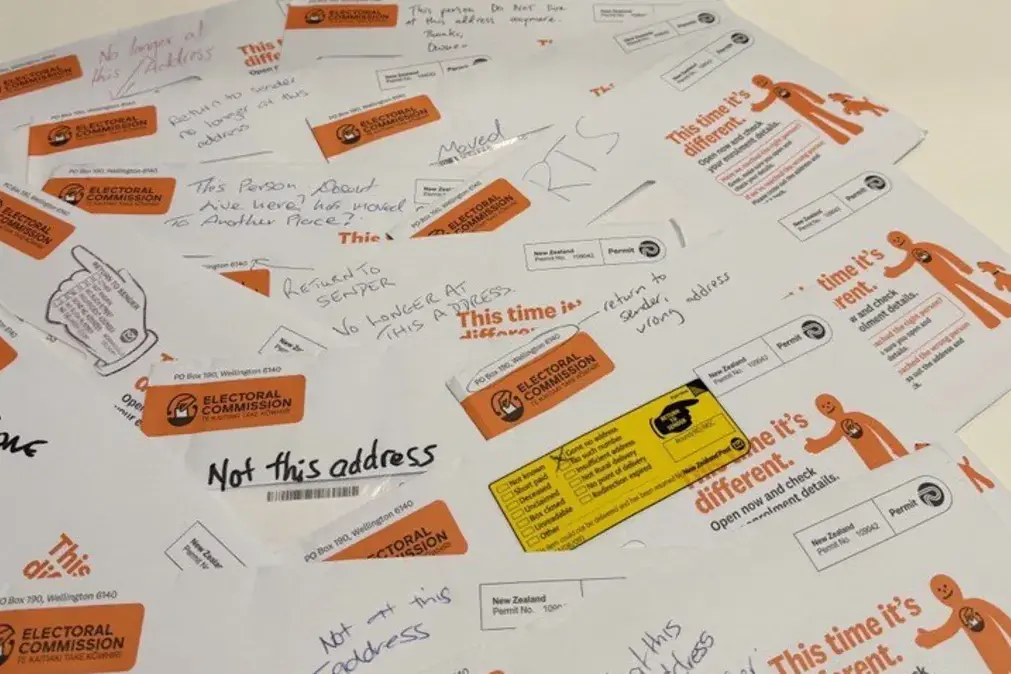
PHOTO
The Electoral Commission says the provisional enrolment rate for this year’s general election is 93.6%, compared to 94.7% at the 2023 election.
Chief Electoral Officer Karl Le Quesne said it showed a good level of awareness of a change in the rules and new deadline to enrol before voting started this week.
This year, people had to enrol by no later than October 25 to vote in the election on November 7.
The decision was promoted by the coalition government of National, NZ First and ACT as boosting efficiency and quicker results, but the opposition parties and some other groups criticised it as making it harder to vote.
"When you look at recent elections, it's higher than 2014 and 2017, and a bit lower than 2020 and 2023," Le Quesne told RNZ’s Morning Report programme on Friday, eight days ahead of the final day for voting.
The provisional rate for 18- to 24-year-olds is 74.2%, short of the 77 percent in 2023. A big push to get them enrolled saw that rate rise from just over 50% in July, an increase of more than 20 percentage points or 85,000 people.
"Look, we always want to see a much, much higher enrolment rate. So we'll do a really good review of what we did and what we could do better. And we always report back to Parliament after the election, so we'll be having a good close look at that."
The provisional enrolment rate for voters of Māori descent was 85.9%. There were 603,968 Māori voters enrolled - 272,513 (45%) on the general roll and 331,455 (55%) on the Māori roll. The total number of Māori enrolled in 2023 was 567,012.
A lot of the growth on the Māori roll was due to new enrolments, not switching rolls, Le Quesne said.
Judith Collins, former attorney-general, warned that changing enrolment rules - so you couldn't enrol as late as election day itself - would lower the number who signed up to vote. To hit 2023's enrolment percentage, another 40,000 people would need to have signed up.
"So it is lower than last time, but it is a reasonably healthy enrolment rate," Le Quesne said.
He believed the Electoral Commission "largely succeeded" in encouraging the 450,000 late enrollers to get ready ahead of time this year, noting this was in addition to population growth.
"I think that's a really healthy sign for our democracy that we're all so focused and interested in and want to promote participation in elections."
Le Quesne said the Electoral Commission was given the resources needed to get as many people enrolled earlier as it could.
"I think we've done a heck of a lot more than we've done in the past. We're also going to publish today an account and a summary of all the activities we've done, what the impact is going to be.
"And I think when people read that, they'll be able to see we've done a huge amount. It has had an impact. It's been well worth doing.
"But equally, I want to acknowledge there's been a lot of other groups contributing to this as well. And I've been particularly pleased to see young people getting in behind this too."
The final enrolment figures would not be known until after the election.
