
PHOTO
The United States military is preparing for the possibility of sustained, weeks-long operations against Iran if President Donald Trump orders an attack, two US officials told Reuters, in what could become a far more serious conflict than previously seen between the countries.
The disclosure by the officials, who spoke on condition of anonymity, raises the stakes for the diplomacy under way between the US and Iran.
US envoys Steve Witkoff and Jared Kushner will hold nuclear talks with Iran on Wednesday in Geneva, with representatives from Oman acting as mediators.
In a BBC interview published yesterday, Iran’s Deputy Foreign Minister Majid Takht-Ravanchi said Iran was ready to consider compromises to reach a nuclear deal with the US if Washington was willing to discuss lifting sanctions.
US Secretary of State Marco Rubio cautioned yesterday that while Trump’s preference was to reach a deal with Tehran, "that’s very hard to do".
Meanwhile, Trump has amassed military forces in the region.
US officials said yesterday the Pentagon was sending an additional aircraft carrier to the Middle East, adding thousands more troops along with fighter aircraft, guided-missile destroyers and other firepower capable of waging attacks and defending against them.
Trump, speaking on Saturday after a military event in North Carolina, openly floated the possibility of changing the government in Iran, saying it "seems like that would be the best thing that could happen".
He declined to share who he wanted to take over Iran, but said, "there are people".
Trump has long voiced scepticism about sending ground troops into Iran, and the kinds of US firepower arrayed in the Middle East so far suggest options for strikes primarily by air and naval forces.
Asked for comment on the preparations for a potentially sustained US military operation, White House spokesperson Anna Kelly said: "President Trump has all options on the table with regard to Iran."
"He listens to a variety of perspectives on any given issue, but makes the final decision based on what is best for our country and national security," Kelly said.
The Pentagon declined to comment.
The US sent two aircraft carriers to the region last year, when it carried out strikes against Iranian nuclear sites. However, June’s "Midnight Hammer" operation was essentially a one-off US attack, with stealth bombers flying from the US to strike Iranian nuclear facilities. Iran staged a very limited retaliatory strike on a US base in Qatar.
The planning under way this time was more complex, the officials said.
In a sustained campaign, the US military could hit Iranian state and security facilities, not just nuclear infrastructure, one of the officials said, but declined to provide specific details.
The same official said the United States fully expected Iran to retaliate, leading to back-and-forth strikes and reprisals over time.
On Saturday, Iranian opposition figure Reza Pahlavi said US military intervention in Iran could save lives and urged Washington not to spend too long negotiating with Tehran’s clerical rulers on a nuclear deal.
The exiled son of Iran’s toppled shah said there were signs the Iranian government was on the brink of collapse and that an attack could weaken it or accelerate its fall, so "the people can be finally back in the streets and take it all the way to the ultimate regime’s downfall".
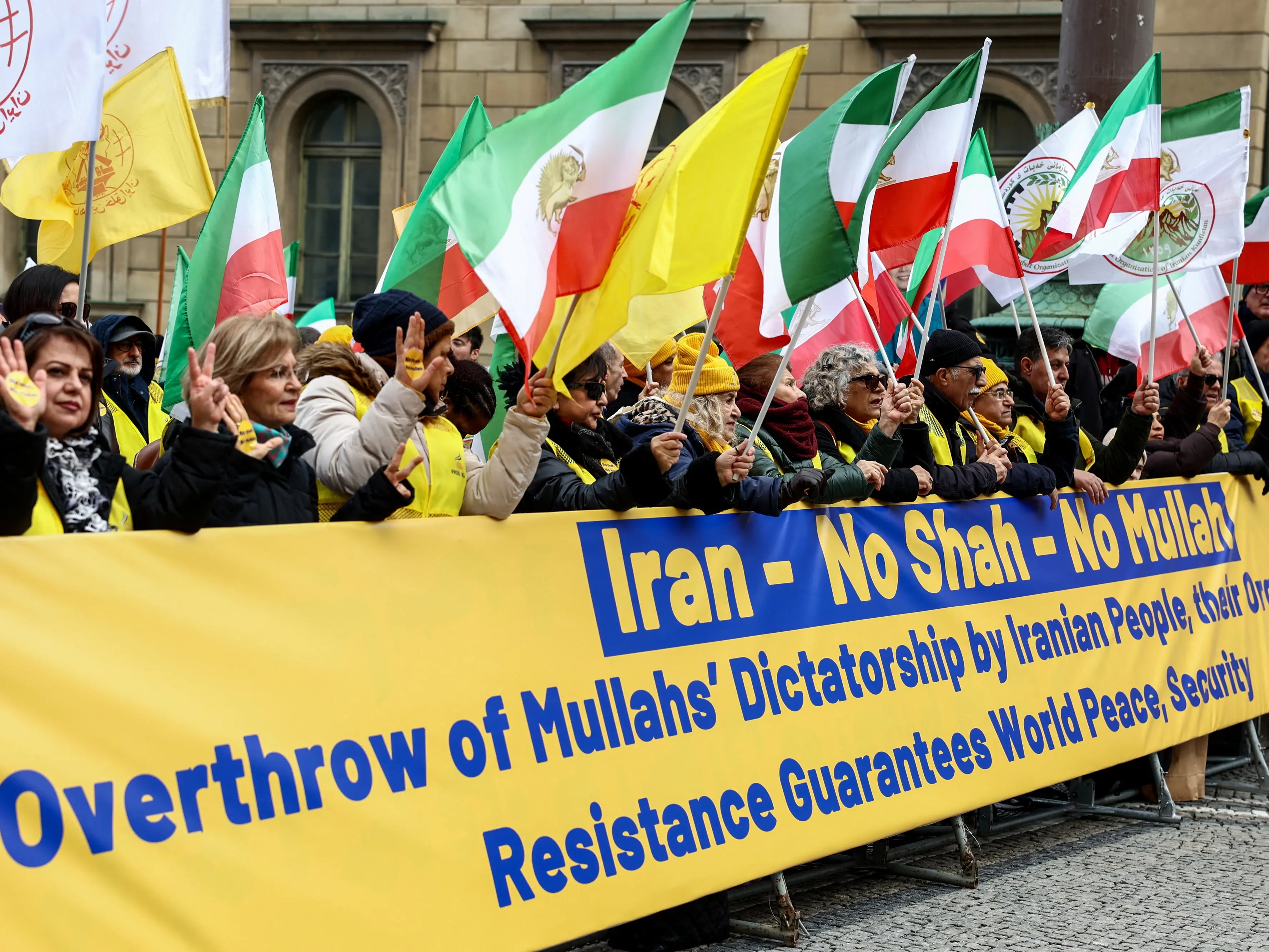
• A huge demonstration against Iran’s crackdown on protests drew 250,000 people in Munich on Saturday, according to police estimates.
The turnout was twice the number expected by organisers, a group known as the Munich Circle.
Organisers said the timing was deliberate, as decision-makers from around the world were in the city for the Munich Security Conference. Demonstrations in support of Iran’s pro-democracy movement were also reported from Toronto and Los Angeles.
The demonstrators expressed support for Pahlavi.
He addressed the crowd in person late in the day and reaffirmed his desire to lead Iran into a democratic future with free elections. He expressed his gratitude for the solidarity shown by many nations.
"We are not alone," he said.
The US-based Human Rights Activists News Agency says more than 7000 people have died in the crackdown by Iranian authorities on anti-government protests triggered by severe economic conditions. — Reuters/dpa