
PHOTO
Otago does not need the level of local governance it has, Trevor Goudie writes.
Leanne Marsh’s opinion piece in the Otago Daily Times (14.5.26) suggests that our district and city councillors take a wider perspective than just a district or two merging.
I fully agree with her comments and humbly offer a few of my own.
We simply do not need the level of representation that we currently have.
There is one elected member for every 7763 people in Christchurch. For the whole of Otago, it is one for 1827, within which Clutha falls as low as one for 855.
This comes at a cost as well, as all these members are paid, with the Otago cost exceeding that for Christchurch by some $935,677.
I have excluded the Otago Regional Council from this as I cannot easily extract the comparative Christchurch contribution to the Canterbury Regional Council. This does not change the picture.
No Otago authority rates at a lower level than Christchurch on a per-citizen basis.
There have been Otago politicians suggesting that it is OK to have the whole of Southland as a single authority, but do not see the same benefit for Otago, offering a fragmented solution.
If we in the South want to be taken seriously by central government, we have to speak with one louder voice, not a collection of whispers.
Comparing a unified Otago authority with Christchurch, it becomes easier to understand that even then, we are still almost a minor player.
Some elected members will say the government has not given us enough time to work out a plan. I say it has been generous.
How long does it take to get seven mayors into a room, set vested interests aside and consider what structure best serves Otago as a whole?
They cannot say that it will cost more. It is already evident that representation is excessive and savings could be made.
Since the current boundaries were set in 1989 we have seen the development of electronic communication tools, email, video conferencing and online platforms providing face-to-face interaction.
No longer does a councillor have to travel many kilometres to have an effective meeting with constituents. Distance has been shrunk, with contact between constituents and elected members easier.
At the moment central government is allowing local authorities to come up with their own plans for consolidation of resources and services.
Those with longer memories will remember this is that same scenario presented in 1986.
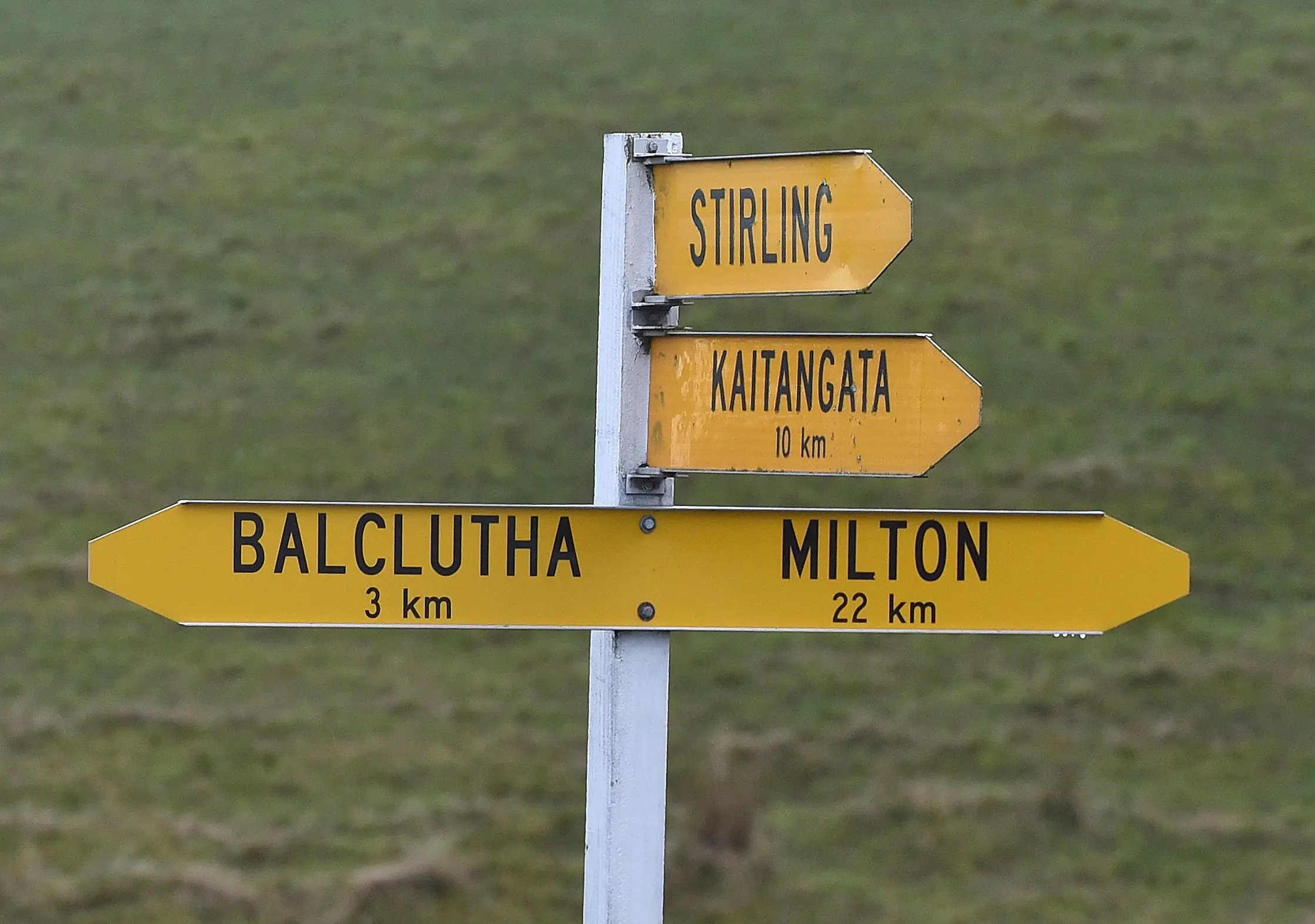
Then, in Otago, Bruce county amalgamated with the Milton and Kaitangata boroughs to form the Bruce district, only to be further amalgamated with additional towns and counties in 1989 by government decree to form the Clutha district we have today.
The unspoken message is thinking small is clearly not the desired outcome.
Some community infrastructure needs mass to provide resilience.
Communities working together can pool necessary resources where individually each would struggle.
This is where a larger body can co-ordinate what is required and direct the resources appropriately.
In the recent past, I have seen water supplies with only 24 consumers which were operationally merged into the close urban supply so that maintenance costs could be borne at manageable levels.
Merging smaller authorities into larger units is simply the same concept on a larger scale. What seems unmanageable to a smaller district can become achievable with the greater capacity of the larger body.
• Trevor Goudie KSM is a former accountant for the Central Otago District Council.