
PHOTO
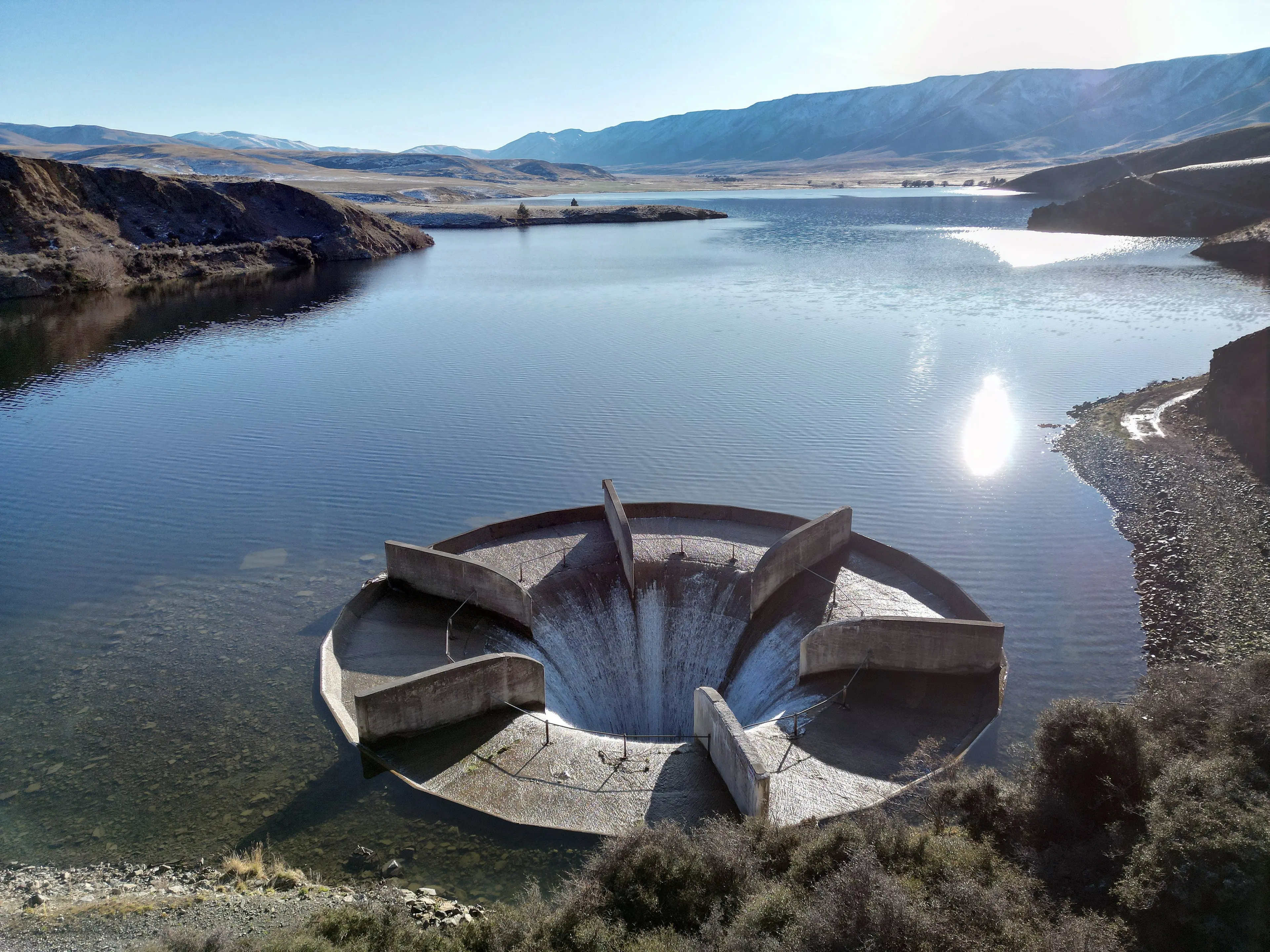
For many years, I have slipped away from home in the Cambrian Valley and driven the dusty gravel road to Falls Dam — only 20 minutes away to the frightening ‘‘Glory Hole’’ and dam itself, another half hour further on to the small fishermen’s village of largely DIY squatter cribs at the top end of the lake.
I should say ‘‘at the top end of where the lake should be’’ because for a large part of the year, summer and autumn especially, the ‘‘lake’’ behind Falls Dam is not there at all: what is there is an ugly brown mudflat stretching for many hundreds of metres, crossed only by a thin silver trickle of inflow from the Upper Manuherikia River feeding a stagnant puddle against the dam itself.
It is an unpleasant, disappointing sight. This mucky wasteland is caused by the simple logic of more water being drained from the dam for irrigation than the only supplying source, that Upper Manuherikia River, can supply.
What flows in at the top, and must flow out below the dam to preserve the minimum allowable river volume are about equal quantities for most of the year.
Irrigation storage depends on excessive volumes over and above the in/out flows — accumulating behind the dam and building up through rain and snow-melt when not needed.
When it is needed — in summer and autumn when things are hot and dry, when animals and crops need water Mother Nature is not providing, the stored water is called upon. But it quickly drains when those thirsty seasons are experienced, because at that same time the inflow at the top — the Upper Manuherikia — is low too.
So the irrigation take-off quickly empties the stored ‘‘lake’’ and leaves the vast and sterile , muddy wasteland.
It is especially distressing for me, because the backdrop to this seasonal abomination is the magnificently pleated high-rise wall of the Hawkdun Range and Oteake Conservation Park, one of Central Otago’s most celebrated and identifiable features.
Here the Hawkdun Range soars up from the most beautiful golden-tussocked plain, void of any visible human footprint, one of the few untouched valley expanses remaining in the province and broken only by an occasional willow tree which has managed to survive, its toes in the burbling crystal clear single stream of the Upper Manuherikia River.
It is this modest stream which was earth-dammed in the early 1930s where it forced through a narrow gorge — a make-work Depression scheme, one of several across Central Otago (eg Poolburn and Butcher’s Dam).
But being there, in the immense natural amphitheatre of this sacred place, looking to the distant western Omarama saddle — the muscled bulky shoulders of the St Bathans Range on one side, the Hawkduns so majestic on the other, one gets the feeling it has always been like this, unchanged for thousands of years, and that our brief lives are nothing here compared to the awesome permanence and beauty of nature.
It is this stunning natural quintessentially Central Otago landscape which the proposal to enlarge the dam to vastly increase its storage capacity will destroy forever.
If the project goes ahead, when there is sufficient inflow from the Upper Manuherikia River, all of this natural beauty will go under water — when the volume flowing in is sufficient to fill the dam.
And given the ever-decreasing snowfall and drier summers we are witnessing in recent decades the proposed lake will be an intermittent sight at best. For much of the year, as inflow fails to match irrigation demand, instead there will be an expansive mudflat, just like Falls Dam experiences in its far smaller incarnation today.
It will not be an inviting body of water with speedboats and waterskiers and other fantastical pleasurable imaginings: instead it will be so unsightly few will want to venture even close to it.
This is what a handful of irrigators wish for and what will be an inescapable result of a larger dam with four times more potential storage than at present. This is what the Central Otago District Council doesn’t want to be responsible for and seeks to palm off to a higher authority.
This is what will happen when taxpayers and ratepayers are required to pay so farmers, unprepared or unable to fund it, can increase their dairy herds in a landscape and pastoral practice for which nature won’t provide enough water.
Four times more storage, but no change to the volume flowing in, only a probable diminishing of that inflow with changes to snow melt and warmer, drier summers. Even today that small supply inward flow is not enough to avoid a drained, sterile, expanse of mudflat where the water should be or once was.
This Falls Dam proposal is a contentious issue in Central Otago — as if an open cast gold mine and the mutilation it brings to the landscape is not enough.
And, as with Santana, there is a PR campaign being waged by vested irrigation interests pushing its claimed benefits and sidestepping its inescapable detriments. Do the 90% of residents within the district who in a 2024 poll made clear that the reason they want to live in Central Otago was because of the attractions of its natural environment, really want to see a greater artificial greening of its distinctive landscape and the inevitable expansion of dairying?
Do they know how few farmers stand to benefit, when so much is being permanently sacrificed? Do they understand exactly who will pay for this scheme, and that it is their taxes and rates which will largely foot the bill?
Do they know that the CODC, their own elected representatives, are disregarding local opinion and the legal framework to hand the decision to Wellington?
Do they really want to see minimum water flows in the Manuherikia, quality controls of that water, and other existing protections under the Otago Land and Water Plan effectively ignored and the ecological health of the river deteriorate further, as it surely will?
The touted economic benefits of a raised Falls Dam will be shared by very few, the likely $100 million costs incurred shared by many who will know and see nothing of it except higher rates bills
It is far more logical to encourage on-farm storage, a system which is less expensive and far less damaging to precious environments. With on-farm storage farmers risk their own capital, manage the irrigation sensibly and rightly enjoy the financial benefits.
The era of larger scale schemes is well past. Central Otago cannot afford to lose any more of its unique landscape character to ill-considered projects like this.
Is a ghastly seasonal mudflat to be yet another of our generation’s gifts to the grandchildren, and theirs ?
I hope wiser heads will prevail, and one of the province’s most beautiful natural environments will be preserved forever.
• Sir Grahame Sydney is a Central Otago artist.