
PHOTO
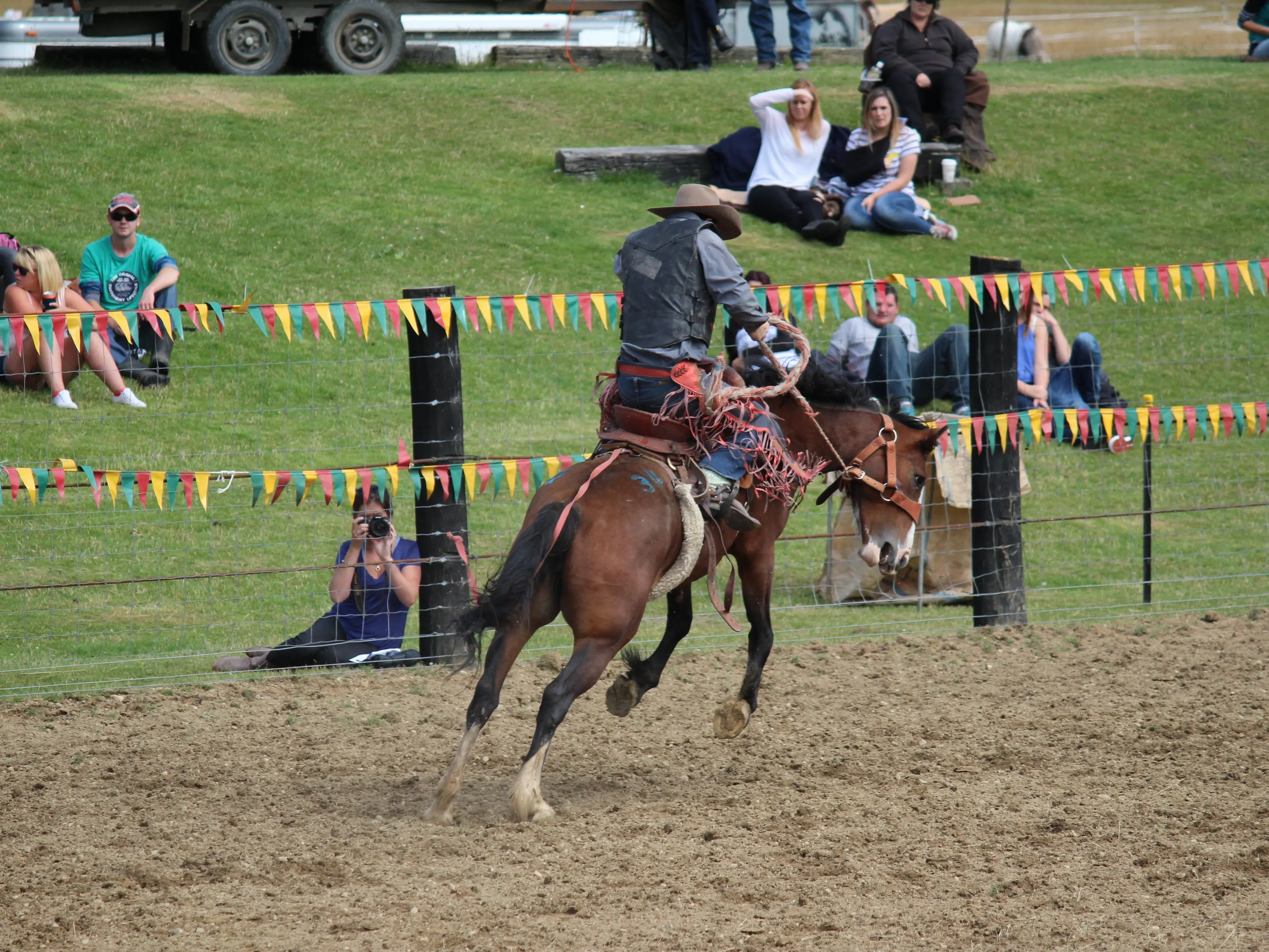
Increased attendance at rodeos in New Zealand and elsewhere has been attributed to a global rise in popularity of country music and modern western dramas such as 1883 and Yellowstone.
It is not new to romanticise a lifestyle, profession or activity after watching TV shows.
Grey’s Anatomy and ER are among those that inspired many into the medical field, for example.
In the 1950s and ’60s, the emergence of imported black-and-white TV westerns like Bonanza, The Virginian, Gunsmoke and The Lone Ranger were hugely popular in New Zealand.
In an era before animal sentience was widely recognised, some farmers fancied the cosplay opportunity, offering the chance to act out the character of an American cowboy or cowgirl, home-on-the-range style.
Costumes developed over time following the American style and include ever-fancier chaps, fringe, embellished boots and vests, the Rhinestone cowgirl look with all the "bling", sequins and sparkles — including additions to horse equipment and accessories.
Thousands of dollars can be spent on costumes.
It sounds like fun. Other groups also play out earlier eras in history. One such group dresses up in medieval and renaissance costumes in Cornwall Park, Auckland, focusing on pre-1600 history with combat games, archery, feasting, heraldry, dancing as well as arts and crafts.
Using live animals for cowboy cosplay is where the problem is.
To feign the Wild West bucking of earlier eras, contravening all contemporary humane animal handling techniques, a bucking or flankstrap is firmly tightened around the abdomen of horses.
To help curate "wild" reactions, riders ram spurs into the horse’s neck and shoulders.
Spurs do not need to be sharp to cause pain and injury — hit your own thumb with a hammer if you need to test this out — but clubs deny the impact of blunt-force trauma.
Tellingly, the rodeo association does not want these props banned.
Some of these horses are former racehorses, unwanted now.
Some are traumatised by cruelty, inexperienced handlers, or have undetected injuries.
To enact chasing and lassoing calves across the plains, handlers surround 4- or 5-month-old calves in a narrow chute. One handler is in the chute to provide reasons to flee.
An organiser admitted they rushed out to "get away from those pesky handlers".
We’ve video recorded handlers twisting their tails, punching, pinching, slapping, hitting them over the head.
They rush out all right and we all know what comes next.
Unfortunately for animals, earlier members of the National Animal Welfare Advisory Committee were unable to differentiate cosplay that should not involve animals from actual animal welfare, granting rodeo legitimacy.
Unable to think about what the hell they were approving, they even issued a code of welfare for this abuse — led by the rodeo association itself — a code which directly contravenes the Animal Welfare Act.
They could think as far as to recognise rodeos as entertainment, not sport, as rodeos like to call it, but could not take that next step.
Fantasy-play is colliding with contemporary recognition of animal sentience.
It is ludicrous — and cruel — to allow this to continue.
You don’t need to be an animal behavioural scientist to recognise it — what we see with our own eyes informs us.
Fans of Yellowstone attending rodeos are swept up in the fantasy playing out before them.
Announcer jokes about animal distress and confusion, saying bulls don’t want to leave the arena because they’re enjoying the attention, makes crowds laugh.
It is misleading, to stop you thinking about what you’re seeing.
If you’re a new fan of rodeo, it might be worth stopping and thinking about what it is that you’re supporting.
Real animals are filled with fear — and sometimes killed — for these games.
• Lynn Charlton is spokeswoman for Stop the Bucking Rodeo NZ.