
PHOTO
It is always healthy in a democracy to question development. It is less healthy to pretend that lawful, regulated industries somehow become sinister the moment they are proposed near one’s vineyard.
New Zealand does not tolerate mineral exploration by accident; it actively encourages it through statute. New Zealand Petroleum & Minerals (NZPAM) administers a regime under the Crown Minerals Act explicitly designed to promote responsible mineral development for the benefit of all New Zealanders.
That is not a loophole. It is the law of the country in which New Zealanders live.
On ‘toxic chemicals’
Yes, mining uses chemicals. So does modern life.
Cyanide, endlessly invoked with theatrical concern, is tightly regulated, chemically understood, and degrades rapidly in sunlight and air. It is not sprinkled on cornflakes.
If eaten on toast, it would indeed harm you, just like glyphosate, chlorothalonil, copper sulphate or paraquat — all widely used (or historically used) in New Zealand agriculture, including viticulture. These substances are sprayed, deliberately, across our most celebrated landscapes.
The difference? Mining chemicals are contained, monitored, audited and regulated under some of the strictest environmental controls in the country.
Ironically, broader chemical use across other primary industries passes largely without comment, while already tightly regulated mining activities become the focus of disproportionate alarm.
On seismic doom and tailings catastrophes
New Zealand has already answered this question, twice.
The Macraes gold mine has operated for over 40 years. The Waihi gold mine has done the same.
Where are the disasters? Where are the poisoned rivers? Where are the abandoned wastelands?
They do not exist, because modern mining works.
Globally, look to Western Australia: one of the most seismically and climatically challenging mining jurisdictions on Earth. Hundreds of goldmines operate safely, quietly and profitably. You never hear about them because nothing goes wrong. That is the point.
Bendigo will be no different, not because mining companies are saintly, but because modern mining regulation makes recklessness impossible.
Fast-track does not mean shortcut
This is perhaps the most misunderstood, and most misrepresented, point.
Fast-track does not remove environmental assessment, public scrutiny, engineering standards or accountability. It removes duplicative delay, not due diligence.
The proponent, Santana Minerals Ltd, has explored under permits granted by the Crown, paid for access and compliance, invested tens of millions of dollars in studies, employed New Zealanders, complied with every requirement placed before it, and applied to develop a project explicitly encouraged by law.
Calling that a "shortcut" is like accusing someone of cheating after they follow every rule and still win.
The myth of ‘foreigners stealing our gold’
Another well-worn line is that this is an "Australian company" taking New Zealand’s resources offshore. That argument collapses under even casual scrutiny.
The overwhelming majority of money generated by a modern goldmine stays in New Zealand: the entire operating cost base is domestic, salaries and wages are paid to New Zealand workers, contractors, engineers, transport, power, fuel and services are sourced locally, royalties and company tax are paid to the Crown and billions of dollars flow directly into government revenue over the life of the mine.
Profit, the small slice after all of that is paid, is what remains. Even then, nearly half of that profit accrues to New Zealanders, because about 45% of the share register is held by New Zealand shareholders.
The other bit goes to the investors, who will have paid hundreds of millions of dollars (invested into a jurisdiction that outwardly encourages mineral exploration under law) to help get the project up and running: a bill that would never be footed by New Zealanders alone.
The company is listed on the NZX, the chief executive is a New Zealander and about 95% of the staff are New Zealanders.
This is not a fly-in-fly-out extraction exercise. It is a New Zealand workforce, operating in New Zealand, under New Zealand law, for the benefit of New Zealanders who are rapidly wanting to be part of the story.
There is signal worth paying attention to and it is not coming from celebrity-hosted fundraisers with curated wine lists. While opponents gather for a four-course meal in the Dunstan Mountains to raise money for lawyers, Santana entered the top 10 most traded stocks in the New Zealand-owned Sharesies trading app last week.
That reflects thousands of ordinary New Zealanders making a deliberate decision to back this project with their own money. This is not theatre; it is participation.
Away from the performance, the conclusion is unavoidable: the silent majority is backing a lawful, tightly regulated development because it makes sense.
To suggest otherwise is not nationalism, it is misinformation.
Losses if project stopped
Who actually pays the price of obstruction? Not the well-housed, the well-fed, or the already wealthy.
Opposition dressed as "environmental virtue" would deny thousands of New Zealanders, including more than 15,000 current New Zealand shareholders, the lawful right to participate in a permitted industry, more than 400 workers well-paid jobs, regional communities long-term economic stability, and the New Zealand government approximately $2.5billion in taxes and royalties — money that funds hospitals, schools, roads and social services.
It is difficult to take lectures about risk seriously by those residing in multimillion-dollar estates, who will never bear the economic consequences of stopping the project.
Perspective matters
New Zealand is already mining. It encourages mining through law. It regulates mining to world-leading standards.
It has been mining responsibly for decades. OceanaGold is one of the largest employers in Central Otago, anchoring jobs, contractors and supply chains that quietly keep the local economy functioning.
To suddenly feign alarm, only when a project appears near pinot noir, is not environmental stewardship. It is selective outrage.
That outrage is often accompanied by a worrying indifference to basic facts. In a recent radio interview, actor and winemaker Sir Sam Neill publicly questioned whether arsenic occurs naturally in Central Otago.
It does. Otago schist has natural elevated arsenic levels across the region: beneath homes, vineyards and in the ash people clean from their fireplaces every winter. This is settled science, not a mining invention.
This is 2026. We do not mine like it is 1926. We mine carefully, transparently and under rules that reflect who we are as a country.
With respect: get over it.
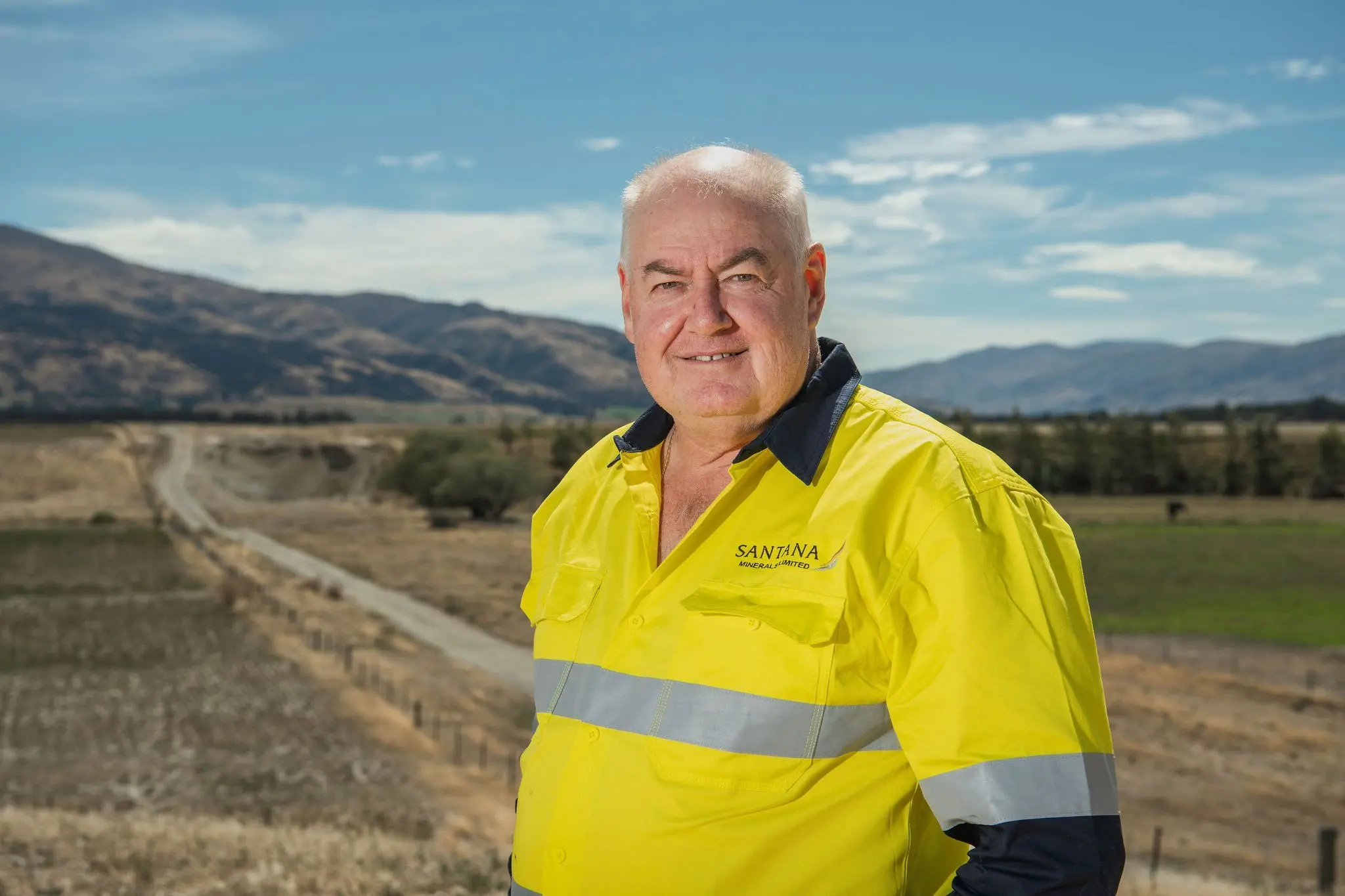
• Peter Cook is the non-executive chairman of Santana Minerals Ltd. He has more than 40 years’ experience in the mining and resources sector, in Australia and New Zealand.