
PHOTO
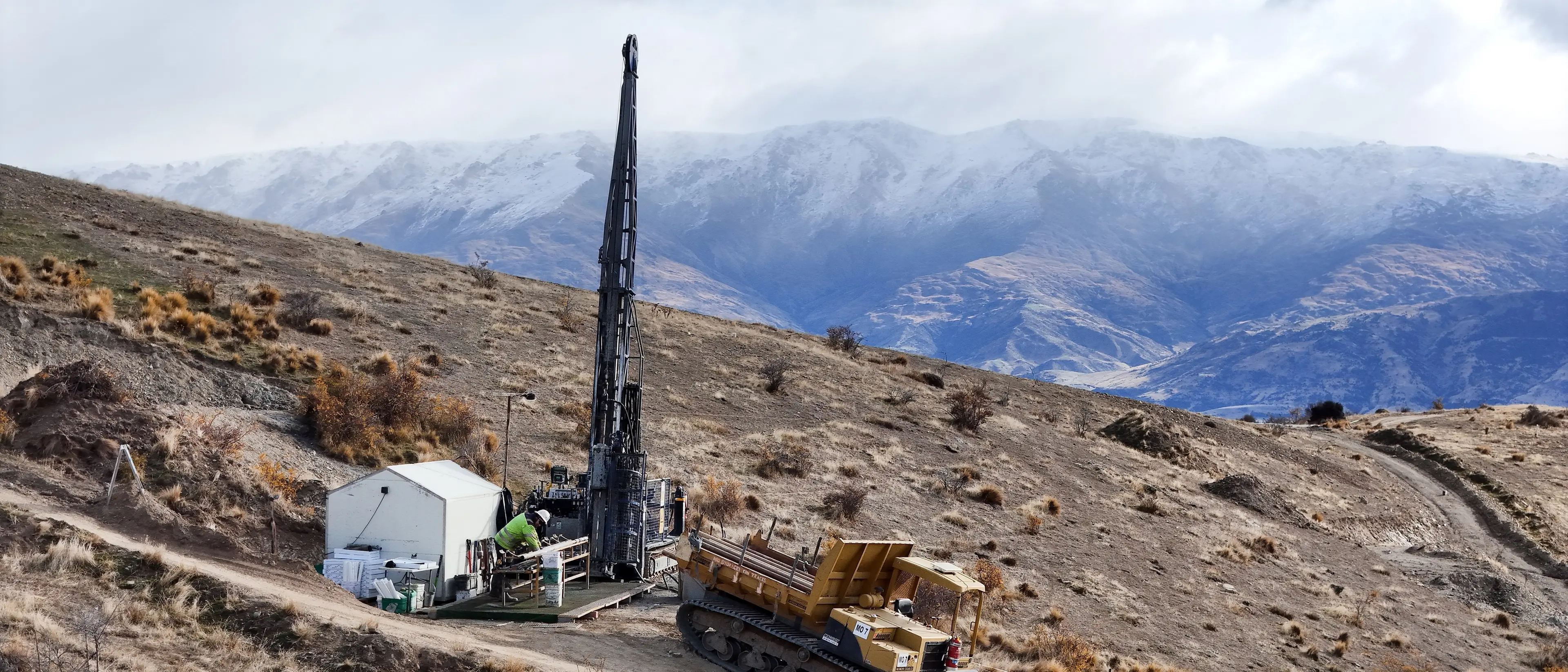
Central Otago’s Bendigo is renowned for its award-winning wines, outstanding landscapes and fine merino wool.
People come from all over the country and the world to spend time in this special place.
Tourism and Hospitality Minister Louise Upston has just launched "The Southern Way", a campaign to encourage more tourists.
Shamefully, at the same time, the MP for Waitaki, Miles Anderson, is promoting extractive industries in the heart of our unique Central Otago landscape.
The great irony is that Bendigo is a place full of fantastic opportunity but is now also at real risk because of the government’s dogmatic denial of local voices and concerns.
The risk is that we may lose much of what makes our premier wine region stand out, lose outstanding landscapes and destroy what is unique and special for our community, replacing it with constant rock blasting, lights, heavy machinery and a transient workforce.
Are the tourists Louise Upston hopes to attract those who want to see a modern recreation of Middle Earth’s Mordor?
Mr Anderson recently penned an op-ed in the ODT (22.12.25) claiming to bring "facts and balance" to the debate over the proposed Bendigo gold mine.
He talks about balance, but he has failed to count what will be lost if Santana gains consent through the most unbalanced process for major projects since Rob Muldoon’s Think Big.
Unfortunately, the "facts" Mr Anderson refers to on the economic benefits are solely reliant on Santana Minerals’ own estimations of the mine’s contribution to jobs and the economy. He ignores the cost (likely in the billions) of lost wineries, diminished tourism, social upheaval and environmental damage.
There’s no balance and the "facts" are selective. Instead, Mr Anderson puts a heavy weighting in favour of the private interests seeking to undercut standard consenting processes, for a golden ticket to get its project off the ground in a very limited timeframe.
His colleague, Shane Jones, denigrates and insults anyone opposed to Santana’s proposal. Community voices such as Sustainable Tarras and the Central Otago Environmental Society have been sidelined and the participation of mana whenua has been limited.
Mr Anderson stated no stone would be left unturned in the regulatory obligations to operate a world-class facility. What he fails to mention is that this project is not just turning stones, it is excavating four massive pits, the largest being 1km wide and 200m deep, in the Otago countryside.
It comes with a huge 2km-long tailings dam (to be left in perpetuity), filled with toxic wastes including arsenic and nearly two tonnes a day of cyanide. A tailings dam, built with rocks, not concrete, in proximity to the Dunstan Fault, which has the potential to deliver large, destructive earthquakes.
Imagine the consequence of the collapse of the tailings dam: toxic waste flowing across vineyards and farmland into the Clutha River.
Then there’s the slower but no less destructive impact of toxic dusts blowing across the region and chemicals leaching into aquifers and the river on an ongoing basis.
It’s easy to lose a sense of the scale of this mining in the debate. It’s been estimated that Santana would need to extract and smash 210 tonnes of rock to extract five and a-half teaspoons of gold. So if, as Mr Anderson claims, Santana could produce "1.1 million ounces of gold", then something like 210,000,000 tonnes of rock would need to extracted, smashed and processed.
Damage from such extensive open-cast mining cannot be fixed by simply planting trees afterwards. It is irreversible and will cause near-permanent damage to the landscape.
The "overall wellbeing of Otago" should not be reliant on a volatile high gold price and the short-term profits of offshore mining companies.
Our winegrowers, farmers, tourism operators, cycling and walking trails, and outstanding landscapes deserve better, as Sir Ian Taylor has written (ODT 20.1.26).
Otago has a thriving future ahead of it, filled with sustainable industries in viticulture, horticulture and farming, renewable energy, sustainable tourism, manufacturing, education, science and construction.
We can’t afford to simply give up on all that.
The Green Party will revoke any consent handed out under the fast-track process for the Bendigo gold mine and we will support local efforts in Central Otago to build on the existing strengths and identities to build a legacy we can be proud of.
— Scott Willis is a Green list MP.