
PHOTO
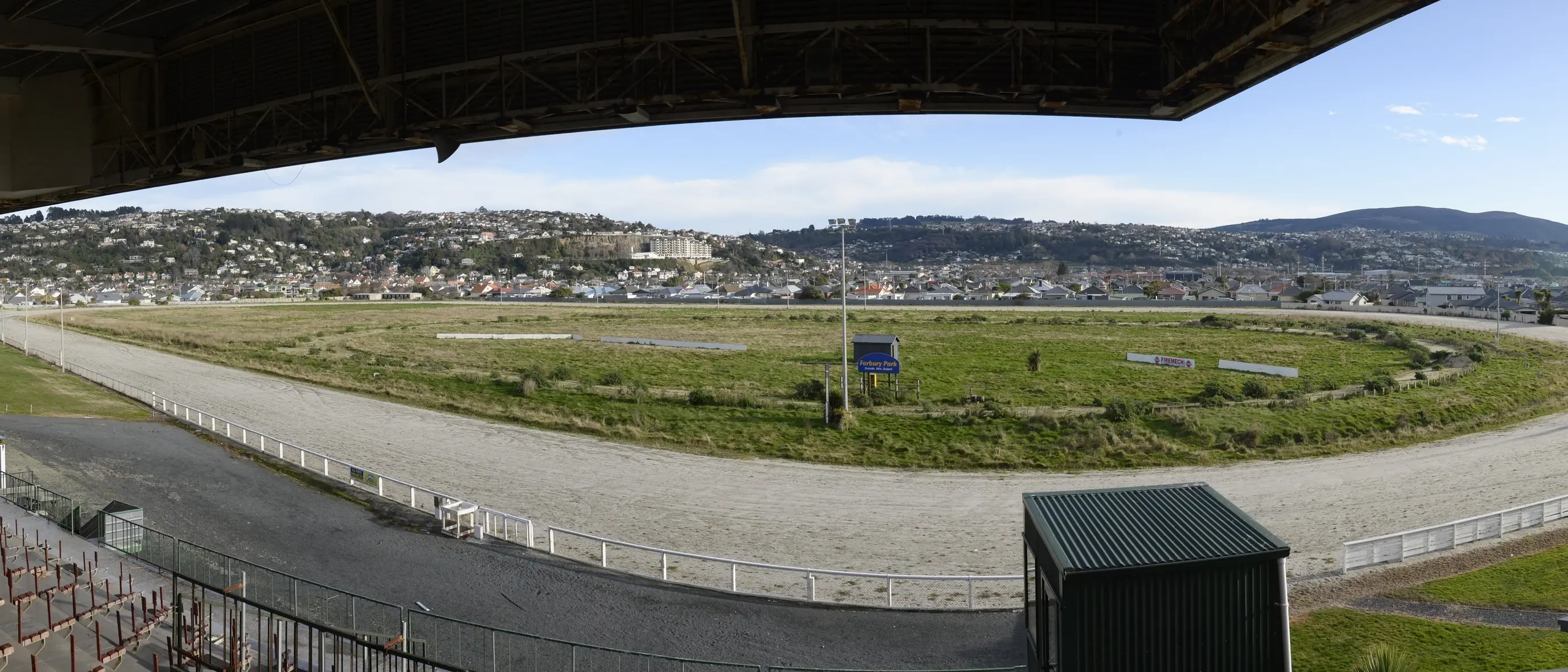
Forbury Park held its last race two years ago. There was public discussion about its future at the time, but it has all gone very quiet.
The facility lies unused, yet full of potential. I wonder then if anyone besides me was concerned to read the reports on the legal action being taken by a developer who believes that he has an agreement to buy over half the available area for a housing project.
This raises the issue of decisions being made in private forums when what is required is a more robust public debate about the future of the site. While housing is a pressing need, the 12ha size of the site allows for a multitude of possibilities, many of which could sit comfortably alongside each other and address multiple social and environmental needs.
In South Dunedin, much of the housing stock is old and sub-standard, which has implications for wellbeing. Forbury Park presents a major opportunity to address this problem, by the construction of affordable housing which offers a diverse range of styles to meet various needs in the community.
As well as owner-occupier dwellings, provision needs to be made for social housing, with interest invited from alternate models such as the 5000sq m Toiora High St co-housing project. It most definitely should not be the preserve of a select few property developers seeking to make their fortunes. It is easy to say and possibly sounds a little naive, but it will require active management by local authorities (and possibly central government) to create the right environment for equitable development to take place.
Housing must be part of the future for Forbury Park. However, it would be missing other opportunities if the site was used solely to provide housing, and nothing else.
A major challenge for South Dunedin will continue to be mitigating the ongoing effects of climate change, and reducing the flood risk. As a significant part of Forbury Park sits at an elevation between high and low tides, an opportunity exists to utilise some of the area as a water retention facility that can absorb runoff in times of heavy rainfall, thus preventing flooding over the surrounding area.
If this was to be in the form of a reinstated wetland, there would be many environmental and social benefits. A wetland would provide a habitat for native vegetation, creating an environment which would attract native birds. Some green areas surrounding and paths around it would add a natural element to the built environment. Bird life would spill over into surrounding neighbourhoods. The natural fall in elevation from Bathgate Park, through Tonga Park, to Forbury makes this a workable plan.
Urban wetlands have been successfully established, at Dunedin’s Kaikorai Common (2400sq m) and in Auckland at Michaels Ave reserve (5500sq m) in Ellerslie.
It would require significant investment and assistance from government, but it would form part of the long-term future resilience of the area, and if done right, will have social, recreational, and environmental benefits, as well as preventing property loss, damage, insurance payouts and disruption to people’s lives resulting from further flooding.
The Dunedin Rugby Football Club, based at Kettle Park, sits atop an old landfill which contains toxic material and is at threat of being exposed by coastal erosion. To be remediated, the club would likely have to relocate.
A possible serendipitous solution would be to relocate the club to Forbury Park, next to the school. Two rugby fields would take up 2ha of the available land.
Green spaces will be needed if housing developments proceed.
The timing of the Forbury Park opportunity, aligning as it does with work on the South Dunedin Future, the DCC Coastal Plan, and concerns relating to climate change response, coastal erosion and drainage infrastructure upgrade, is a once-in-a-lifetime confluence of issues.
What is at stake is enormous: if good decisions are made, the result will be a significant, holistic contribution to a thriving community living in healthy homes with adequate green spaces and recreational areas.
It will require connected thinking and methodical, informed decision making to arrive at a plan in which the present and future needs of the community are taken into account.
It would be short-sighted to rush into a single-use (e.g. housing) development of the site. As a city, we are still paying the price for previous years’ short-sighted actions. Instead, let’s have creative, science-based planning taking place among city leaders and businesspeople.
If we get this right, we could create a sustainable, environmentally and socially compatible solution to a number of issues, that would be a model for other cities.
— Steve King is a South Dunedin resident and an advocate for a "sustainable, inclusive future" for the area.